Most people walk into a recycling yard, hand over their metal, and accept whatever number comes back. But do you actually know how that number gets calculated? The difference between a yard that weighs and grades your material accurately — and one that doesn't — can mean real money left on the table, especially if you're hauling in aluminum, copper, or catalytic converters regularly.
Understanding how yards evaluate your scrap puts you in a stronger position. Whether you're tracking the aluminum scrap price today, trying to get the best scrap metal prices in Baltimore, or just want to stop guessing what your load is worth, this guide breaks down exactly what happens when your metal hits the scale.
Why Weighing and Grading Matter More Than Most Sellers Realize
Scrap metal isn't priced like produce by the bag. Every load gets evaluated based on two things: weight and grade. Get either of those wrong — or let a buyer get them wrong — and your payout drops. It's that simple.
Weight is straightforward in theory. You pull onto a certified truck scale (called a platform scale or drive-over scale), and the yard records your gross weight. After you unload, they weigh the empty truck. The difference is your net weight, also called the tare. But the details matter: Is the scale certified and inspected? Are wet or contaminated materials being deducted correctly? Is the yard transparent about how they handle mixed loads?
Grading is where things get more complicated — and where most sellers lose money without knowing it. A yard that grades your #1 copper as #2 copper, or calls your clean aluminum scrap "contaminated," will pay you significantly less. Knowing the grading system gives you the ability to push back.
How Recycling Yards Actually Grade Scrap Metal: A Category-by-Category Breakdown
Different metals follow different grading systems. Here's what you need to know for the most common materials:
Aluminum
Aluminum grades vary widely, and the aluminum scrap price today reflects that spread. Clean aluminum (free of paint, anodizing, or attachments) fetches the highest rate. Mixed aluminum or painted aluminum grades lower. Yards look for:
- Cleanliness — Attached steel bolts, plastic inserts, or rubber seals pull your grade down
- Alloy type — Cast aluminum (like engine blocks) versus sheet aluminum (like siding or gutters) are priced differently
- Contamination — Wet, oily, or painted aluminum can be graded down or have a moisture deduction applied
If you're selling aluminum in bulk — think window frames, auto parts, or industrial extrusions — separating by type before you arrive pays off. A yard in Baltimore scrap metal services that accepts mixed loads may grade everything to the lowest common denominator.
Copper
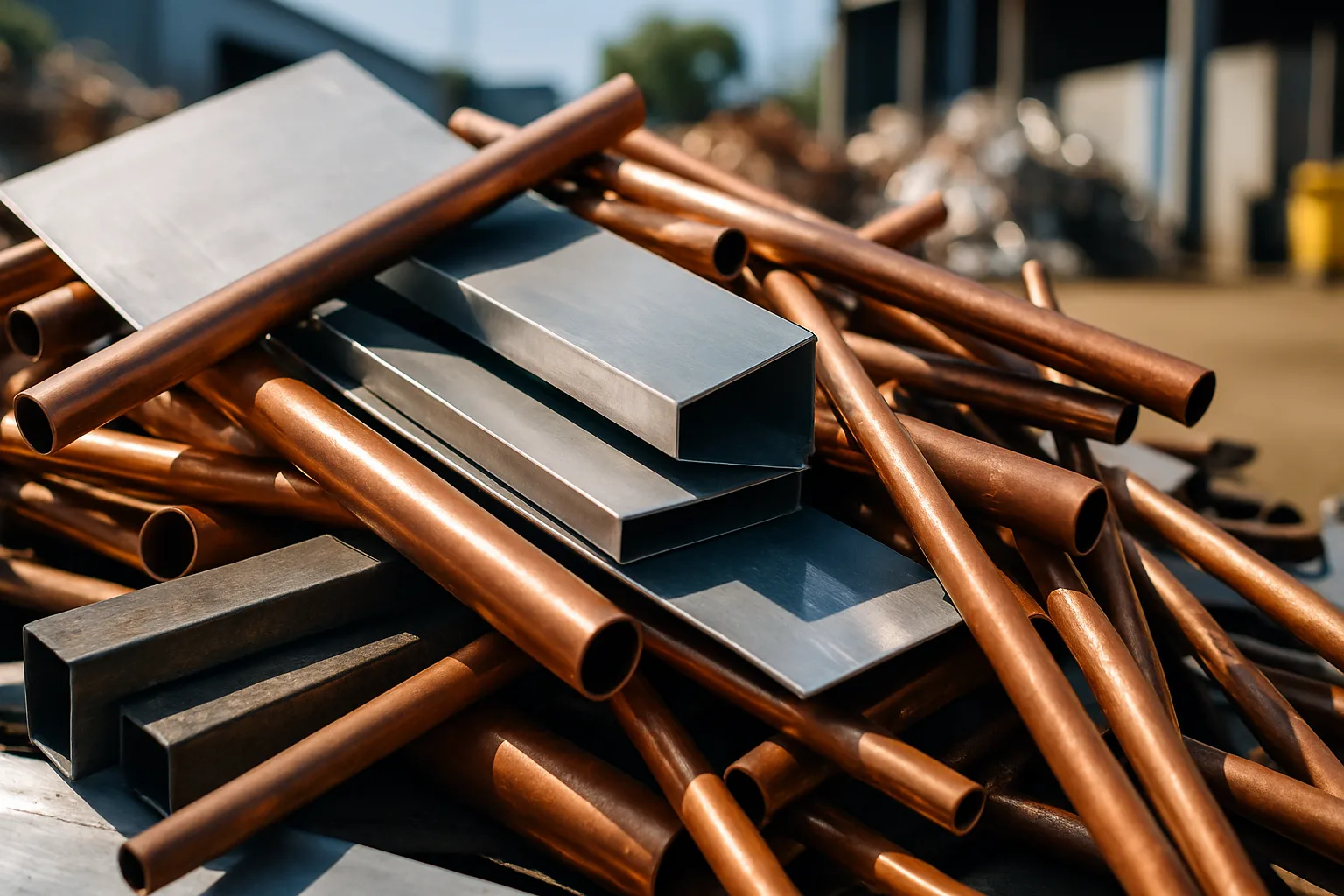
Copper has one of the most detailed grading systems in the industry. The main grades you'll encounter:
- Bare bright copper — Clean, uncoated, unalloyed copper wire. Highest price tier.
- #1 copper — Clean copper pipe or wire, no fittings, no solder, minimal oxidation
- #2 copper — Copper with solder joints, light oxidation, or minor attachments
- Insulated copper wire — Priced by recovery percentage (how much copper is inside the insulation)
Stripping your wire before you sell can increase your payout significantly — but only if your time is worth less than the price difference. Run the math first.
Steel and Ferrous Metals
Steel is graded largely by size, thickness, and cleanliness. Heavy melting steel (HMS) gets separated into HMS #1 and HMS #2 based on thickness. Shredded steel, cast iron, and prepared steel each carry different values. Yards use magnets to quickly sort ferrous from non-ferrous, so don't try to pass mixed loads as clean steel — they'll catch it.
Catalytic Converters
If you want to sell catalytic converters online or at a local yard, understand this: cats are not priced by weight alone. They're evaluated based on the precious metals inside — platinum, palladium, and rhodium (called PGMs). Graders use serial numbers, visual inspection, and sometimes XRF analyzers to identify the converter model and estimate PGM content.
Different makes and models yield drastically different values. A foreign cat from a Prius can be worth many times more than a domestic cat from a half-ton pickup. If you're selling converters, platforms like get competitive bids for your scrap metal through SMASH put your inventory in front of multiple vetted buyers — which means more accurate price discovery rather than one yard's take-it-or-leave-it quote.
The Scale Inspection: What Honest Yards Do (and What to Watch For)
Certified scales are required by law in most U.S. states, including Maryland. A legitimate yard should have their scale calibrated and inspected on a regular basis — typically annually — by a certified weights and measures authority. In Maryland, that falls under the Maryland Department of Agriculture's Weights and Measures program.
Here's what the process should look like at an honest yard:
- Drive-on weight recorded — Your loaded truck weight is captured and printed or logged
- Unload your material — In a designated area, often sorted by material type
- Tare weight recorded — Your empty truck weight is taken after unloading
- Net weight calculated — The difference is your sellable weight
- Grade assigned — A grader inspects the material, often as you unload
- Price calculated and documented — You receive a payout slip or BOL with weights, grades, and price per unit
Red flags to watch for: yards that don't offer printed weight tickets, refuse to let you observe the grading process, or give you a verbal quote without documentation. In Baltimore and across Maryland, you have the right to request your scale ticket. A yard that won't provide one is worth walking away from.
Best Scrap Metal Prices in Baltimore: How Competition Changes the Game
Here's the uncomfortable truth about getting the best scrap metal prices in Baltimore — or anywhere in Maryland: a single yard gives you a single price. That's not a market. That's one data point.
The old way of selling scrap is a phone call, a drive across town, and whatever that yard decides to pay. If you don't like it, you're already there. Most sellers take the number.
The smarter approach is to create competition before you unload. That means having your material documented — photos, weights, grades, serial numbers for cats — before you commit to any buyer. When multiple vetted buyers are looking at the same verified load, you get actual price discovery instead of one yard's margin-protected quote.
That's exactly how platforms like SMASH operate. Instead of calling one buyer, you put your documented inventory in front of multiple buyers simultaneously. The auction format does the work. More buyers means better price discovery — especially for higher-value material like catalytic converters, non-ferrous loads, and copper. You can sell your scrap metal on GetMyScrap and get connected to the right buyers without the guesswork.
How to Prepare Your Scrap Before You Sell — and Why It Affects Your Grade
Preparation is the single biggest thing sellers control. Yards grade what they see. Show up with clean, sorted, documented material and you're negotiating from a position of strength. Show up with a mixed, wet, unsorted load and you're accepting whatever they decide.
Here's a practical prep checklist before you head to a yard or list a load online:
- Sort by metal type — Don't mix copper with aluminum, or steel with stainless. Mixed loads get graded to the lowest value present.
- Remove attachments — Pull plastic, rubber, and steel hardware off aluminum and copper where practical
- Keep it dry — Wet material gets moisture deductions. Store your scrap covered if possible.
- Photograph everything — Especially for cats, cores, and non-ferrous loads. Visual documentation protects you in disputes.
- Record serial numbers on cats — Converters with verified serials get more accurate bids. A VIN lookup helps confirm vehicle history and cat type.
- Know your approximate weight — Even a rough estimate helps you spot a scale discrepancy at the yard
Taking thirty minutes to sort and document your load before you sell can be the difference between a baseline yard price and a competitive market price. If you want to get a fair price for your scrap today, walk in prepared — or list online where buyers compete for your material.
What Transparency Looks Like When You Sell Scrap Metal
You should never leave a yard wondering how they calculated your payout. A transparent transaction includes a printed or digital weight ticket, a written grade designation for each material type, a price-per-pound or price-per-unit breakdown, and a final settlement document. That's the standard. Anything less and you're flying blind.
For higher-value material — especially when you sell catalytic converters online or move large non-ferrous loads — documentation isn't just helpful, it's protection. If a dispute arises over grade or weight, you need paper. Photo documentation, packing lists, and signed BOLs are the baseline for any serious transaction.
Platforms built for the scrap industry, like SMASH, handle this automatically. Inventory tools, serial tracking, photo documentation, and auto-invoicing mean the paperwork is part of the process — not an afterthought. When you're ready to move your next load, explore scrap metal selling guides to understand exactly what buyers are looking for and how to document your material properly.
Selling scrap in Baltimore or anywhere in Maryland doesn't have to be a guessing game. Know how your metal gets weighed. Know how it gets graded. And put it in front of buyers who compete for it. That's how you stop leaving money on the curb. When you're ready, request a pickup and get a fair price for your scrap metal at getmyscrap.com — where the process is straightforward and your material gets evaluated honestly.
Frequently Asked Questions
Q: How do I know if a recycling yard is giving me an accurate weight?
Ask for a printed scale ticket every time. In Maryland, commercial scales must be certified and inspected by the state's Weights and Measures program. If a yard won't provide a weight ticket, take your load elsewhere. You're entitled to documentation of what they weighed.
Q: What affects the aluminum scrap price today at local yards?
The aluminum scrap price today is driven by London Metal Exchange (LME) benchmarks, local supply and demand, and the grade of your specific material. Clean, uncoated aluminum always fetches more than painted or mixed aluminum. Contamination, moisture, and attached hardware all push your grade — and your payout — down.
Q: How do I get the best scrap metal prices in Baltimore without calling every yard?
Document your load with photos, weights, and grades before you commit to any buyer. Then put that documented load in front of multiple buyers through a platform like SMASH, where vetted buyers compete rather than you negotiating with one yard at a time. Competition reveals the real market price.
Q: Can I sell catalytic converters online instead of at a local yard?
Yes — and for most sellers, it produces better outcomes. When you sell catalytic converters online through a platform with vetted buyers, your serial-verified converter reaches multiple buyers simultaneously. A single yard gives you one price; an auction-style platform creates competition. Documented serial numbers and photos improve your bid accuracy significantly.
Q: What's the difference between #1 and #2 copper, and does it matter for my payout?
It matters a lot. #1 copper — clean pipe or wire with no solder, fittings, or heavy oxidation — commands a higher price per pound than #2 copper, which includes soldered joints or minor attachments. The spread between grades can be meaningful over volume. Strip fittings and clean your copper before selling if the time investment makes sense for your load size.
Stay current on scrap metal market trends and industry insights — follow SMASH on LinkedIn for regular updates from inside the recycling industry.