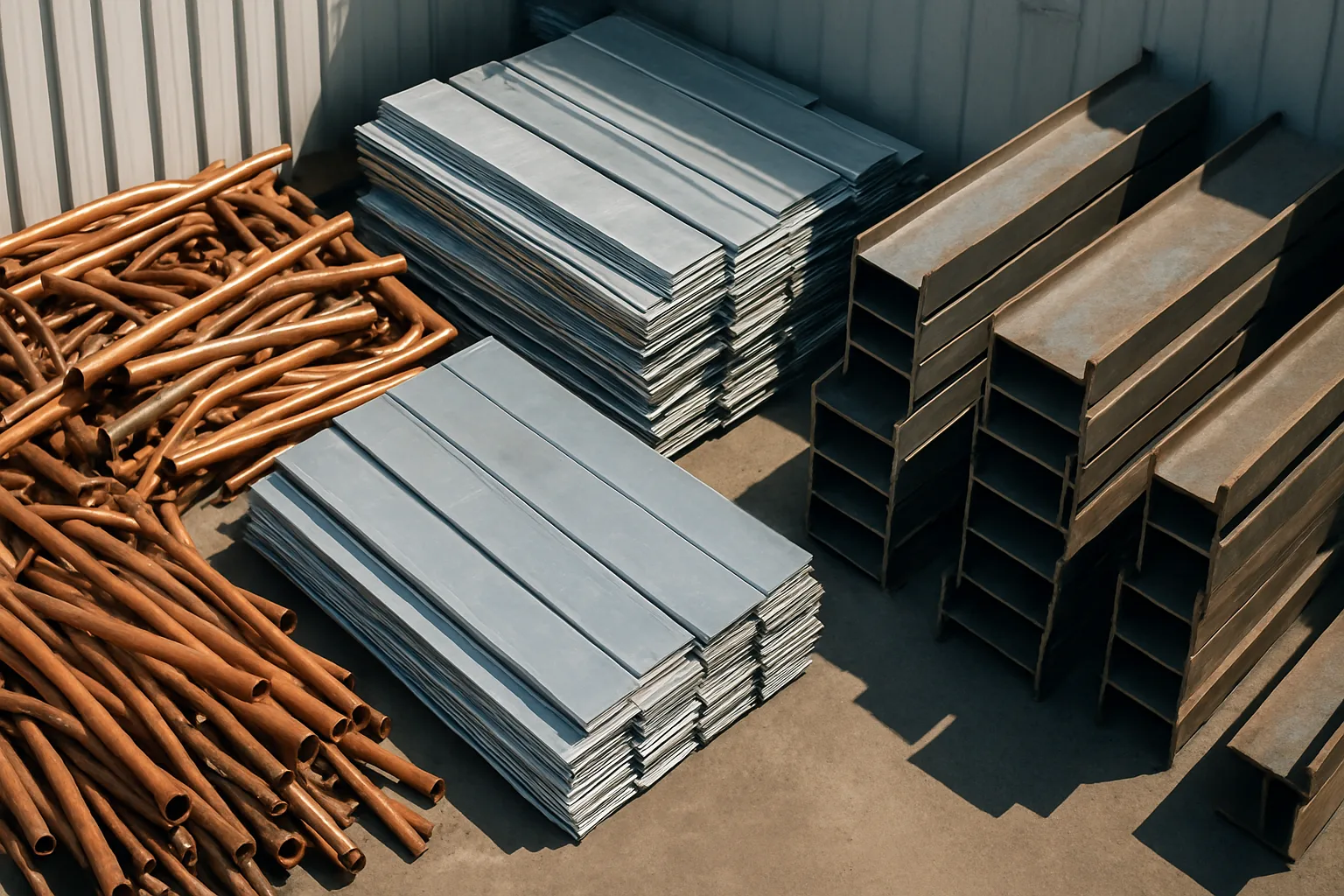
Most people selling scrap don't know the difference between what they have — and that gap costs them money. Whether you're clearing out a shop in Chicago, scrapping old equipment in Illinois, or running a yard that moves tons per week, knowing what you're working with changes everything. Ferrous and non-ferrous metals play by completely different rules: different prices, different buyers, different markets. If you're using a B2B scrap metal marketplace to move material, that distinction matters more than ever.
This guide breaks it down. No fluff. Just what you need to know to sell smarter.
What Makes a Metal Ferrous or Non-Ferrous?
The answer is simpler than most people expect. Ferrous metals contain iron. Non-ferrous metals don't. That single difference drives almost every other distinction — price, corrosion resistance, weight, recyclability, and buyer demand.
The fastest field test? Use a magnet. If it sticks, you've got ferrous. Steel beams, cast iron engine blocks, rebar, sheet iron — all ferrous. If the magnet slides off, you're likely holding copper, aluminum, brass, stainless steel, or another non-ferrous material. It's not a perfect test (some stainless steel is non-magnetic, for example), but it gets you 90% of the way there on the floor of a yard or a job site.
Here's a quick breakdown:
- Ferrous metals: Steel, cast iron, wrought iron, carbon steel, alloy steel
- Non-ferrous metals: Copper, aluminum, brass, bronze, lead, zinc, stainless steel, nickel, titanium
- Specialty/hybrid: Catalytic converters (platinum group metals — PGMs — recovered from a steel shell)
Ferrous Scrap: High Volume, Lower Price Per Pound — But Don't Dismiss It
Ferrous scrap is the backbone of the global steel industry. Every steel mill that uses an electric arc furnace runs on recycled scrap. The market is massive, and demand is consistent. That said, ferrous prices per pound are typically much lower than non-ferrous. You're dealing in bulk — often measured in tons, not pounds — and margins are driven by volume and logistics efficiency.
If you want to know how to sell scrap iron effectively, the first thing to understand is that price is heavily tied to regional steel demand, energy costs, and export markets. When mills are running hot, ferrous prices climb. When they're idle or over-inventoried, prices soften fast. This is not a market to guess your way through with one phone call to one buyer.
Common ferrous grades you'll encounter:
- #1 Heavy Melt (HMS 1): Clean steel, ¼" and up, no attachments
- #2 Heavy Melt (HMS 2): Lighter gauge, may have light coatings
- Cast iron: Engine blocks, radiators, old stoves, machinery
- Shredder feed / auto shred: Cars, light iron, mixed ferrous
- Busheling / Bundles: Sheet steel punchings and clippings from manufacturing
Buyers care about contamination levels, moisture, and prep. A clean, properly sorted load moves faster and fetches better pricing — even on ferrous.
Non-Ferrous Scrap: Where the Real Value Sits
If ferrous is volume, non-ferrous is value. Copper, aluminum, and brass command significantly higher prices per pound. A few hundred pounds of clean copper wire can be worth more than several tons of mixed steel. That's why non-ferrous material deserves more attention when you're sorting, documenting, and pricing a load.
For anyone looking to sell your scrap metal on GetMyScrap, non-ferrous is often where the conversation starts. These metals are more liquid in the commodity market, trade in real time against LME (London Metal Exchange) benchmarks, and attract more competitive buyer interest when listed properly. That's exactly why using a platform that brings multiple buyers to the table changes your outcome.
High-value non-ferrous categories to know:
- Bare bright copper wire: The top grade — uncoated, unalloyed, clean
- #1 copper: Clean tubing and wire, no insulation, no fittings
- #2 copper: Slightly oxidized or with small amounts of solder/fittings
- Aluminum extrusion / cast: Different grades, priced differently
- Brass (yellow, red): Faucets, valves, fittings — sold by grade
- Stainless steel: Grade matters — 304 vs. 316 are different conversations
Proper grading and documentation aren't optional if you want the best price. Buyers bidding on a load sight-unseen need photos, weight estimates, and grade accuracy. That's where platforms built for the industry — with photo documentation tools and real buyer verification — separate themselves from a cold call to a single yard.
Catalytic Converters: A Category of Their Own
Catalytic converters sit at an interesting intersection. The outer shell is ferrous — stamped steel. But the value lives inside: a ceramic or metallic substrate coated with platinum, palladium, and rhodium (PGMs). These are some of the most volatile and valuable commodities in the scrap world.
If you want the best price for catalytic converters, selling them through a catalytic converter auction format is one of the most effective strategies available. Why? Because PGM prices swing dramatically based on mining output, EV adoption trends, and industrial demand. One buyer offering you a flat rate on cats is using their own spread. Competition closes that spread.
Platforms like the SMASH scrap metal auction marketplace are built specifically for this kind of material. VIN lookup tools, serial number tracking, photo documentation — these features exist because the cat market demands accountability and precision. A properly documented load of cats moves faster, draws more bids, and reveals the real market value instead of one buyer's margin.
Chicago yards moving volume on cats know this. The difference between a flat offer and a competed auction isn't trivial. And for high-volume operations in Illinois, those differences add up across hundreds of units.
How a B2B Scrap Metal Marketplace Changes the Game for Both Categories
Whether you're moving ferrous tons or non-ferrous pounds, the old model — call one buyer, take the price, move on — leaves money on the table. Not always dramatically. But consistently. And in a business with tight margins, consistency matters.
A B2B scrap metal marketplace introduces competition. Multiple vetted buyers. Auction format. Transparent pricing. No subscription fees — if the platform only wins when you win, the incentives are aligned. That's a fundamentally different dynamic than a handshake deal with your regular buyer who already knows what the market looks like and doesn't need to tell you.
For get a fair price for your scrap today — whether you're sorting steel in a Chicago yard or moving mixed non-ferrous from a demolition project — the platform matters as much as the material. Documented inventory gives buyers more confidence. More confidence means stronger bids. Stronger bids mean better price discovery for you.
Want to go deeper on strategy? Explore scrap metal selling guides to sharpen your approach before your next load goes out.
Sorting, Selling, and Getting Paid: Practical Tips for Chicago Scrap Sellers
Chicago is one of the largest industrial markets in the country. Manufacturing scrap, demolition material, auto parts, and institutional metal waste move through this city every day. That volume creates opportunity — but only if you're organized. Here's what actually moves the needle:
- Sort before you sell. Mixed loads always price to the lowest-grade material present. Separate ferrous from non-ferrous. Separate grades within non-ferrous. The time investment pays off.
- Document everything. Photos, weights, grade descriptions. Buyers on a marketplace make decisions based on information. Better information = stronger bids.
- Don't anchor to one relationship. Your regular buyer isn't your business partner — they're a counterparty. Competition reveals the market. One buyer hides it.
- Know your cats. If you're handling catalytic converters, track by VIN or serial number. It protects you legally and makes the material more sellable.
- Time your loads when you can. Ferrous prices move with mill demand. Non-ferrous tracks LME benchmarks. Watching the market — even loosely — can influence when you list a load.
- Use platforms built for scrap. Generic B2B marketplaces don't understand BOLs, packing lists, or grade nuances. Use tools designed for this industry.
If you're in the Chicago area and want a pickup arranged, Chicago scrap metal services through GetMyScrap are built to handle exactly this kind of material — sorted or mixed, ferrous or non-ferrous.
The market for scrap metal recycling Illinois is active. Mills are buying. Processors are moving material. The question is whether you're capturing the real price or leaving margin behind.
Ready to find out what your load is actually worth? Sell your scrap metal on GetMyScrap and let competition do what it's supposed to do. SMASH brings vetted buyers to the table — no guessing, no single-buyer dependency, no subscription fees.
Frequently Asked Questions
Q: What's the easiest way to tell if scrap metal is ferrous or non-ferrous?
Use a magnet. Ferrous metals (steel, iron) attract magnets. Non-ferrous metals (copper, aluminum, brass) don't. It's not a perfect system — some stainless steel grades are non-magnetic — but it's a fast, reliable first sort on the floor or at a pickup site.
Q: Is non-ferrous scrap always worth more than ferrous?
Per pound, yes — almost always. Copper, aluminum, and brass command significantly higher per-pound prices than steel or iron. However, ferrous scrap moves in much larger volumes. A yard might move hundreds of tons of ferrous for every ton of copper. Both matter; they just operate on different scales.
Q: How does a B2B scrap metal marketplace work for selling catalytic converters in Chicago?
You document your cats — photos, VIN or serial numbers, counts — and list them on a platform like SMASH. Vetted buyers compete for the load in an auction format. Instead of accepting one flat offer, you let the market set the price. Chicago operations moving volume on cats consistently find this format more transparent than traditional one-buyer deals.
Q: Do I need to sort my scrap before using a scrap metal pickup service?
Sorting helps — a lot. Mixed loads always get priced to the lowest-grade material in the mix. Even a basic ferrous/non-ferrous separation before pickup can meaningfully improve what you're offered. If sorting isn't possible, a good pickup service will document and grade on-site, but you'll typically see better returns when material arrives pre-sorted.
Q: Are scrap metal prices in Illinois different from national averages?
Regional prices vary based on proximity to mills, transportation costs, and local buyer competition. Illinois has significant industrial infrastructure and demand, which generally keeps ferrous prices competitive. Non-ferrous tracks more closely to LME benchmarks nationally, but local demand still influences what buyers offer. Using a marketplace with multiple bidders is the fastest way to benchmark what the Illinois market is actually paying right now.
Scrap metal prices fluctuate daily based on commodity markets, regional demand, and material grade. Always verify current rates before selling. This article reflects general market knowledge as of July 2026.
Stay current on scrap metal market trends and industry news — follow SMASH on LinkedIn for regular updates, pricing insights, and tips from inside the industry.