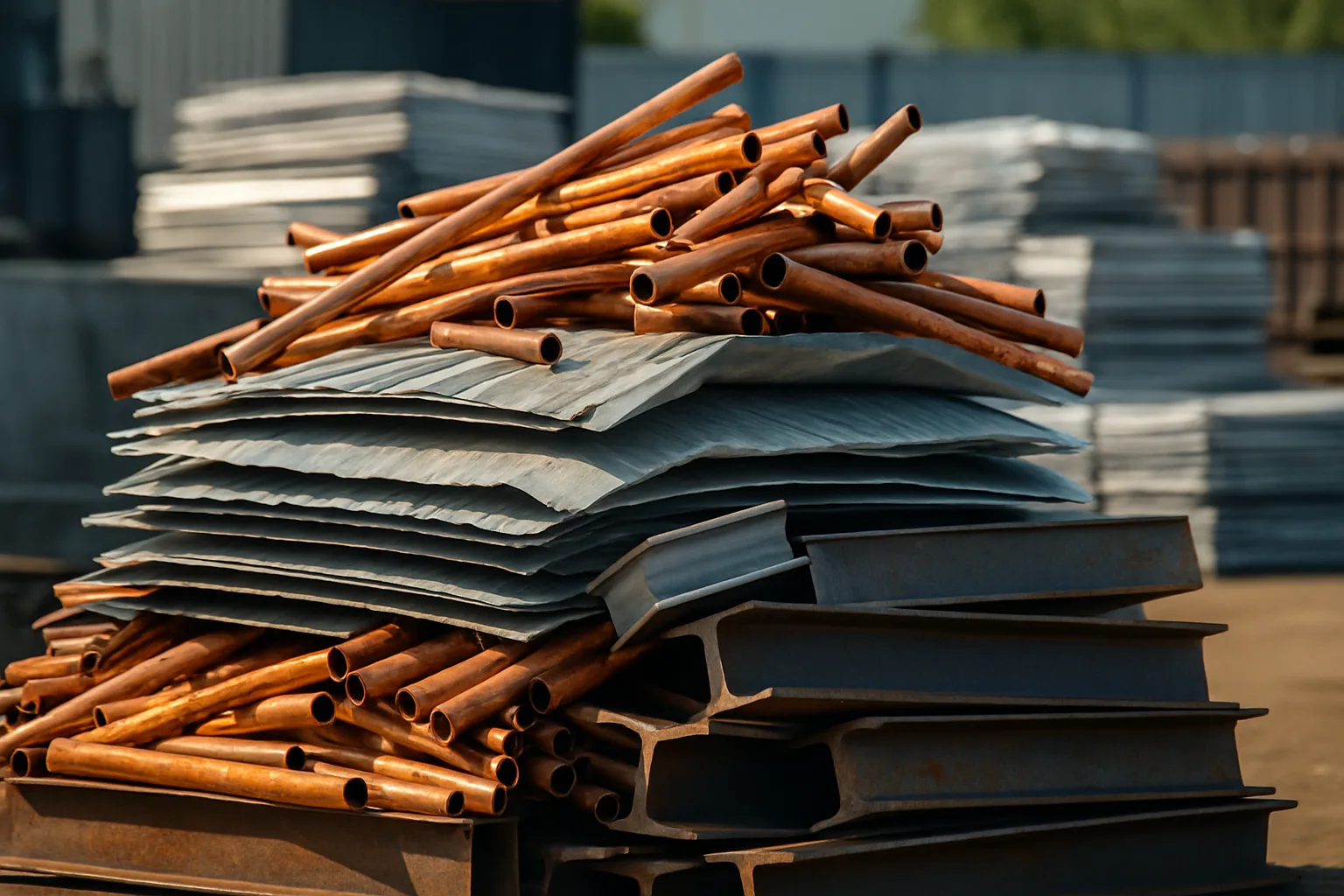
Why Your Aluminum Scrap Price Today Has Nothing to Do With Your Zip Code
You pulled a load of aluminum off a job site. You call your local yard. The price feels low — lower than last month. Nobody explains why. That's the part that drives scrap sellers crazy. The aluminum scrap price today isn't set by your yard. It's set by forces operating thousands of miles away, and understanding them puts money back in your pocket.
Global commodity markets move constantly. Tariffs shift. Currencies fluctuate. Chinese manufacturing demand spikes or slows. A port strike on the West Coast ripples into your yard's buy price before the week is out. Whether you're a solo hauler in Baltimore or running a full-service recycling yard in Maryland, these macro forces directly affect what you get paid at the scale.
How Global Commodity Markets Set Your Local Scrap Price
Scrap metal isn't priced in a vacuum. Aluminum, copper, steel, and other non-ferrous metals trade on global commodity exchanges — most notably the London Metal Exchange (LME) and the Chicago Mercantile Exchange (CME). When those benchmark prices move, scrap dealers across North America adjust their buy prices within days, sometimes hours.
Here's the basic chain of events:
- Global demand shifts — say, a major automotive manufacturer ramps up production in Asia, increasing aluminum demand.
- LME aluminum prices rise in response to tighter supply.
- U.S. smelters and mills raise the price they'll pay for scrap aluminum to compete for material.
- Scrap yards raise their buy prices to attract loads from sellers like you.
- You get a better number at the scale — if you know to ask for it.
The reverse happens just as fast. When demand softens, the signal travels down the same chain and your buy price drops. Most sellers don't track any of this. That's the information gap platforms like the SMASH scrap metal auction marketplace are designed to close.
The 2026 Market Factors Pushing Aluminum and Copper Prices Right Now
As of August 2026, a few specific forces are worth understanding if you're trying to time a sale or just make sense of your last yard visit. The ongoing reshoring of U.S. manufacturing — particularly in electric vehicles and grid infrastructure — has kept non-ferrous demand elevated. Aluminum and copper are critical inputs for EV components, charging infrastructure, and transmission upgrades. That structural demand isn't going away.
At the same time, tariff policy continues to create volatility. Import and export restrictions on scrap and primary metal move the domestic price independently of global benchmarks. A tariff that restricts scrap exports, for example, can temporarily suppress domestic buy prices because the material has fewer markets to move into. These aren't abstract policy debates — they show up in your aluminum scrap price today in real time.
Currency also matters more than most sellers realize. A strong U.S. dollar makes American scrap more expensive for foreign buyers, which can reduce export demand and pull domestic prices down. A weaker dollar does the opposite. None of this is within your control, but knowing it helps you understand the why behind price swings that otherwise seem random.
What This Means for Sellers Looking for the Best Scrap Metal Prices in Baltimore
Baltimore sits in a strong geographic position for scrap. The Port of Baltimore handles significant metal cargo, and Maryland's industrial base — manufacturing, construction, and automotive — generates consistent scrap volume. That density of material and buyers means competition exists. But most sellers never see it because they're working through a single yard with a single buyer and zero price discovery.
If you're trying to get the best scrap metal prices Baltimore has to offer, the first step is understanding that your local yard's buy price is a floor, not a ceiling. Yards set buy prices based on what they need to move material profitably. They are not obligated to share every dollar the market would support. More buyers, more competition, better price discovery — that's the mechanic that actually lifts your number.
That's exactly why sellers in Maryland increasingly use tools that put their loads in front of multiple vetted buyers simultaneously. When five qualified buyers bid on your aluminum, you find out what the market will actually pay. When one buyer quotes you over the phone with no competition, you find out what that one buyer is willing to offer that day. Those are very different numbers.
If you're ready to stop guessing, sell your scrap metal on GetMyScrap and let the market tell you what your material is worth.
How to Use Market Timing to Sell Smarter — Not Just Faster
You don't need a Bloomberg terminal to make smarter decisions about when to sell. A few basic habits make a real difference:
- Track LME prices weekly. Free resources publish aluminum and copper spot prices daily. Spend five minutes on Monday morning to build a baseline. You'll start to see patterns fast.
- Watch tariff news. In 2026, U.S. trade policy is active and changes create price windows. A tariff announcement can move scrap buy prices within 48 hours.
- Don't let loads sit during falling markets. If you have a load ready and prices are trending down, move it. Holding material in a declining market costs real money.
- Build relationships with multiple buyers. Single-buyer dependency is the same risk in scrap as it is in any other business. Diversify your buyer pool.
- Document your loads properly. Photo documentation, accurate weights, and clear material grades give buyers confidence to bid higher. A well-documented load of clean aluminum gets more competitive bids than a mystery pile.
The sellers who consistently get the best price aren't necessarily moving the most weight. They're moving the right material, at the right time, to the right buyers — with enough documentation to support confident bidding. Platforms like SMASH are built around exactly that structure: vetted buyers, competitive auctions, photo documentation, and no subscription fees. You only pay when you sell.
Selling Scrap Metal Online vs. the Traditional Yard Walk-In
Selling scrap the old way means driving to a yard, waiting in line, accepting a posted price, and hoping it's fair. It works. But it doesn't maximize value, and it costs you time you could spend hauling more material.
When you sell scrap metal online, the process flips. You document your load, list it with specs and photos, and buyers come to you. No cold calls. No guessing. No single buyer with all the leverage. For non-ferrous loads — aluminum, copper, brass, catalytic converters — the difference in realized price can be meaningful, especially on larger volumes.
For Baltimore and Maryland sellers moving consistent volume, this isn't just a convenience play. It's a margin play. If you're Baltimore scrap metal services searching for an edge over the walk-in model, the combination of better documentation, a larger buyer pool, and competitive bidding is a concrete operational upgrade — not a theory.
Want to see how your current pricing stacks up? Get a fair price for your scrap today and find out what real market competition looks like for your material.
Catalytic Converters: Where Global Prices Hit Hardest at the Local Level
If you sell catalytic converters, you already know the market is volatile. Platinum group metals (PGMs) — platinum, palladium, and rhodium — trade on global exchanges and move sharply based on automotive industry demand, mining output in South Africa and Russia, and emission regulation timelines. These aren't slow-moving commodity markets. PGM prices can shift 10-15% in a matter of weeks.
For sellers trying to get the best price for catalytic converters, this means the timing of your sale matters enormously. It also means a single buyer quoting you off a price sheet is almost certainly not giving you the top of the market. The price sheet is usually calibrated to protect the buyer's margin, not maximize your return.
Using a competitive auction format for cats — with verified serial tracking and VIN lookup — gives buyers the data they need to bid accurately and competitively. Better data leads to better bids. That's not a slogan. It's how price discovery actually works when you remove information asymmetry from the equation. Explore scrap metal selling guides to learn more about getting the most from your catalytic converter loads.
Frequently Asked Questions
Q: What is the aluminum scrap price today in Baltimore?
Aluminum scrap prices change daily based on LME benchmarks, regional demand, and the specific alloy or grade you're selling. Clean aluminum sheet, cast aluminum, and extruded aluminum all carry different values. The best way to find today's current price is to contact multiple buyers or use a platform that generates competitive bids — posted prices at a single yard are a starting point, not the full picture. Always verify current rates before selling, as prices fluctuate.
Q: Why do scrap metal prices change so often?
Scrap prices follow global commodity markets, which respond to manufacturing demand, currency exchange rates, tariff policy, and supply chain conditions in real time. A shift in Chinese industrial output, a port disruption, or a new trade policy announcement can move prices within 24-48 hours. This is why staying informed — even at a basic level — gives you a real advantage as a seller.
Q: How do I get the best scrap metal prices in Maryland?
The most reliable way to get the best scrap metal prices in Maryland is to create competition among buyers. Don't rely on a single yard or a single phone call. Document your loads accurately with weights and photos, know the grade of material you're selling, and use platforms that put your load in front of multiple vetted buyers simultaneously. More competition equals better price discovery — every time.
Q: Can I sell scrap metal online from Baltimore?
Yes. Online scrap platforms allow Baltimore sellers to list loads, connect with vetted buyers across the region, and receive competitive bids without being limited to local yard walk-in prices. This is especially effective for non-ferrous loads — aluminum, copper, brass, and catalytic converters — where the price difference between a single buyer and a competitive auction can be significant.
Q: Does the global economy really affect what I get paid at a local scrap yard?
Directly and quickly. Local scrap yards price their buys based on what smelters and mills will pay them, which is set by global commodity benchmarks. When LME aluminum or copper prices move, yard buy prices typically follow within days. Understanding this connection helps you time sales smarter and recognize when a posted price is below where the market actually sits.
The global scrap market is complex, but your approach to selling doesn't have to be. Know what drives prices, document your loads well, put your material in front of multiple buyers, and stop leaving money on the table with single-buyer transactions. When you're ready to make a move, get a fair price for your scrap today — request a pickup at getmyscrap.com and find out what your material is actually worth in a competitive market.
Stay ahead of scrap market trends and industry news — follow SMASH on LinkedIn for regular updates on commodity prices, buying and selling strategies, and what's moving the market right now.
```