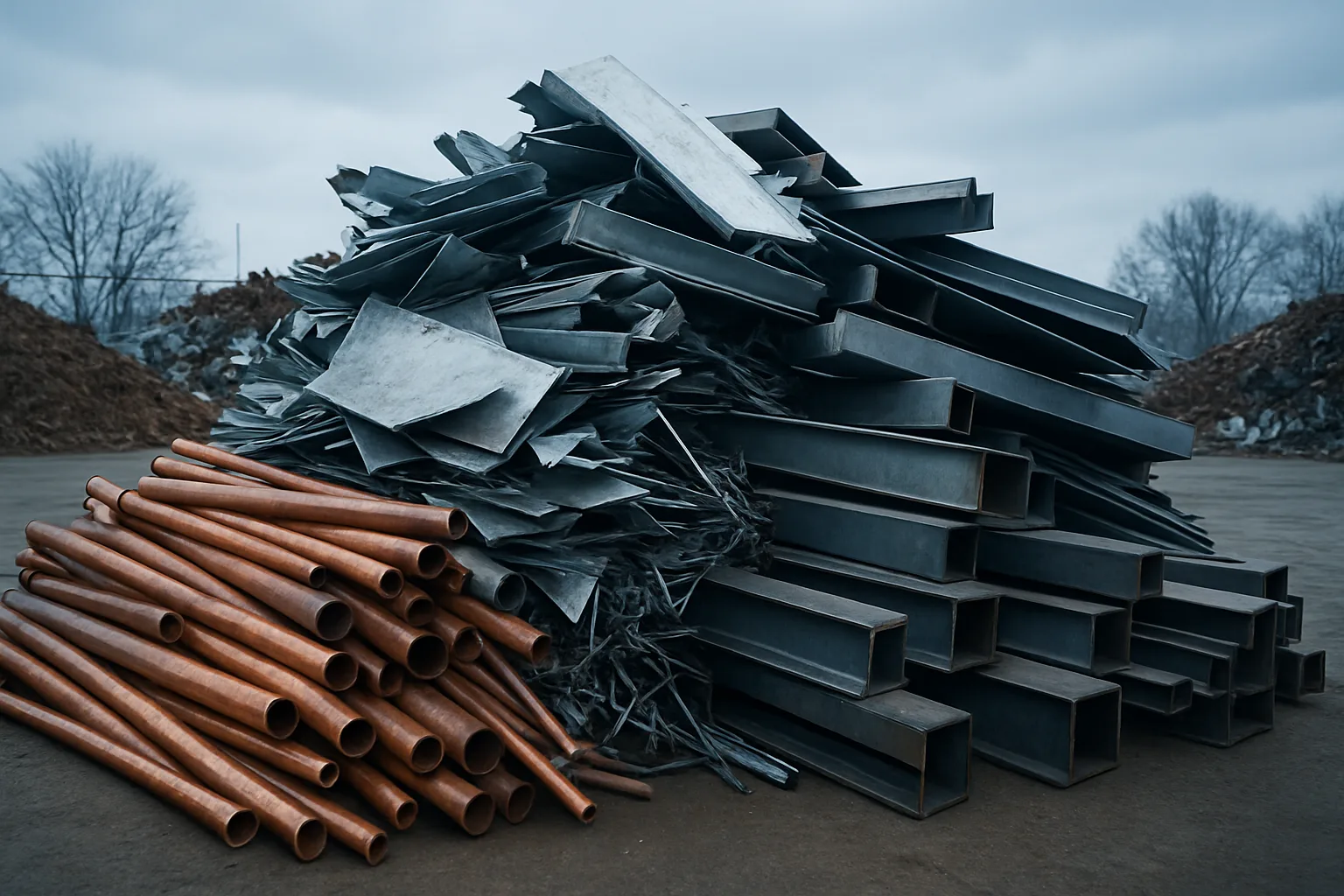
Most people toss a dead alternator in a bin and forget about it. That's leaving money on the table — and it happens every day in shops across Baltimore.
Auto parts like radiators, alternators, starters, and AC compressors are packed with valuable metals. Copper windings, aluminum housings, steel cores — these materials don't disappear when a part stops working. They get recycled, remelted, and put back into the supply chain. The question isn't whether your old parts have value. It's whether you're getting paid what they're worth.
If you run a shop, a salvage yard, or a fleet operation in Baltimore or anywhere in Maryland, understanding how these parts break down at the metal level changes how you think about your scrap. And using a B2B scrap metal marketplace to sell that material changes what you actually get paid.
What's Actually Inside a Radiator or Alternator
Before you can price scrap auto parts correctly, you need to know what you're selling. These aren't just hunks of metal — they're composites of multiple alloys, each with its own scrap value.
Radiators are typically made from aluminum fins bonded to brass or copper tanks, or in newer vehicles, full aluminum construction. Copper-brass radiators carry more value per pound than aluminum-only units because copper commands a significantly higher price per pound on the commodity market. The copper scrap market fluctuates, so checking current rates before you sell matters — but copper radiators are consistently among the more valuable auto parts in any scrap load.
Alternators are more complex. The housing is usually cast aluminum. Inside, there are copper windings around an iron rotor and stator. Some buyers pay a per-unit price for whole alternators. Others want them broken down — stripped copper versus the aluminum shell versus the steel core. Which approach gets you more money depends on the buyer, the volume you're moving, and whether you have the labor to process them.
- Alternator copper windings: High-value stripped copper wire
- Alternator aluminum housing: Cast aluminum, lower value per pound but heavier
- Radiator fins (aluminum): Clean aluminum if free of plastic tanks
- Copper-brass radiators: Higher value, especially when drained and clean
- Starters: Similar composition to alternators — copper, aluminum, steel
- AC compressors: Steel body, sometimes with copper components
The metal content is real. The value is real. What's often broken is how these parts get sold — a single call to a single buyer, a take-it-or-leave-it price, and no visibility into whether that number is fair.
How Auto Parts Are Recycled Into Raw Metal
When a radiator or alternator reaches a recycler, the process depends on whether it's being sold whole or processed. Whole units often go to a secondary processor who strips them down before the metal is sold upstream. Processed material — stripped copper, clean aluminum — goes directly to smelters or mills.
For copper-bearing parts like radiators and alternator windings, the copper gets separated, graded by purity, and sold as a commodity. A clean copper radiator with no plastic or steel contamination fetches more than a radiator that's been tossed in dirty. Grade matters. Preparation matters. The difference between a clean load and a dirty load isn't just cosmetic — it affects the price you're offered.
Aluminum components go through a similar process. Cast aluminum from alternator housings gets sorted from sheet aluminum or extruded aluminum because each alloy grade has different characteristics at the smelter level. Mixed aluminum sells for less than sorted aluminum. If you're moving volume, sorting your loads by material type pays off.
Steel components — rotors, stators, iron cores — typically get processed as ferrous scrap. Steel prices are lower per pound than copper or aluminum, but ferrous scrap from auto parts moves in high volume. It adds up fast for a busy shop.
The Problem With Single-Buyer Pricing for Scrap Auto Parts
Here's the reality most shops run into: you call your regular yard, they quote you a price, you take it. Maybe that price is fair. Maybe it isn't. You have no way of knowing because you never asked anyone else.
That's not a knock on the yard. It's a structural problem. When one buyer sets the price and you have no competing offers, you're negotiating blind. The buyer has information you don't — what the commodity market is doing, what they're paying to process your material, what margin they're building in. You're working from a number they gave you.
A scrap metal auction platform flips that dynamic. Instead of one call and one price, your load gets in front of multiple vetted buyers. They compete. The price discovery happens in the open. You can see what the market actually wants to pay for your radiators, your alternators, your copper load — not just what one contact thinks they can buy it for.
Platforms like compare scrap metal bids from verified buyers on SMASH give sellers — shops, yards, dismantlers — access to a buyer pool instead of a single relationship. That's how a B2B scrap metal marketplace changes the economics. More buyers means better price discovery. Competition can help reveal the market.
Selling Scrap Auto Parts in Baltimore — What to Know
Baltimore sits in a strong position for scrap metal recycling. The region has active yards, industrial buyers, and a steady flow of auto parts from dealerships, independent shops, and fleet operators across Maryland. Demand for copper, aluminum, and ferrous scrap is consistent here.
But consistent demand doesn't mean you're automatically getting a consistent fair price. The market moves. Copper prices shift. Aluminum rates follow LME benchmarks. What you got paid for a radiator six months ago might be higher or lower than what the market bears today. If you're not checking rates before you sell, you're pricing on memory instead of data.
For shops in Baltimore moving regular volume — say, alternators and starters from weekly teardowns — the math on using a marketplace versus a single-buyer relationship gets significant fast. It's not just about any one load. It's about building a process that captures market value consistently over time.
If you're looking for Baltimore scrap metal services, getting connected to buyers who actively compete for your loads is the difference between leaving money in the bin and putting it in your pocket.
You can also sell your scrap metal on GetMyScrap and get connected to the right buyers for your specific material type — whether that's copper radiators, stripped alternators, or mixed auto parts loads.
Preparing Your Auto Parts Load to Get the Best Scrap Price
Preparation isn't glamorous, but it directly affects your payout. Buyers price uncertainty into their offers. A well-documented, sorted, clean load gives buyers more confidence — and that confidence shows up in bids.
Here's what makes a difference when you're selling radiators, alternators, and similar parts:
- Drain fluids before delivery. Coolant in a radiator adds weight and contamination. Buyers will either discount for it or deduct at the scale. Drain it.
- Sort by metal type. Copper-brass radiators in one pile. Aluminum radiators in another. Mixed loads get priced at the lower material's rate.
- Decide whole vs. stripped. Whole alternators are easier to move, but stripped copper windings may fetch more. Know your volume and your labor cost before you decide.
- Document your load. Photo documentation of your material gives remote buyers enough confidence to bid competitively. A SMASH listing with photos and accurate weights gets better engagement than a vague description.
- Know your weights. Rough weights before you sell let you compare price-per-pound offers accurately. A higher per-unit offer isn't always better if the weight is off.
- Check current rates. Copper prices move. Aluminum moves. Before any significant load, check where the commodity market sits. Disclaimer: Scrap metal prices fluctuate daily based on commodity market conditions. Always verify current rates before selling.
None of this is complicated. It's just the difference between selling like a professional and selling like someone who wants it gone. If you're exploring scrap metal selling guides, the fundamentals of load preparation come up over and over — because they consistently affect price.
Why a B2B Scrap Metal Marketplace Makes Sense for Auto Parts Volume
If you generate auto parts scrap on a regular schedule — a busy shop, a dismantler, a fleet yard — the single-buyer model has a compounding cost. Every load you sell without competition is a load where you didn't know if you got the best price. Over a year, that adds up.
A B2B scrap metal marketplace like SMASH is built for exactly this situation. No subscription fees. No commitment to sell every load through the platform. You list what you have — radiators, alternators, copper windings, mixed auto parts — vetted buyers see it, and you get competing offers. The auction format creates real price competition instead of a single number you have to accept or reject blind.
SMASH handles photo documentation, auto-invoicing, and buyer vetting so you're not managing logistics on top of your existing operation. For scrap metal recycling in Maryland, that means less friction between your yard and the sale. You focus on the metal. The platform handles the buyer side.
When you're ready to get a fair price for your scrap today, the process is straightforward. List your material, let buyers compete, and see what the market actually values your load at — not what one contact decided to offer you this morning.
Auto parts scrap is real money. Radiators and alternators from a busy shop add up quickly. The question is whether you're capturing that value or leaving it on the table. Get a fair price for your scrap metal — request a pickup at getmyscrap.com and stop guessing what your load is worth.
Frequently Asked Questions
Q: How much is a scrap alternator worth in Baltimore?
Alternator scrap prices depend on whether you're selling whole units or stripped components. Whole alternators typically sell by the pound as mixed metals, while stripped copper windings command a higher per-pound rate. Prices shift with the copper and aluminum commodity markets, so always check current rates before you sell. A B2B scrap metal marketplace gives you competing offers so you can see what the market is actually paying.
Q: Are copper-brass radiators worth more than aluminum radiators?
Yes, generally. Copper-brass radiators contain higher-value metals and typically fetch a better price per pound than aluminum-only units. Clean, drained copper-brass radiators are desirable to buyers and should be sorted separately from aluminum radiators to avoid being priced at the lower rate. Contamination — fluids, plastic tanks still attached — reduces your payout.
Q: What is a B2B scrap metal marketplace and how does it work?
A B2B scrap metal marketplace connects sellers — shops, yards, dismantlers — with multiple vetted buyers through a competitive bidding process. Instead of calling one yard and accepting their price, you list your material, buyers submit competing bids, and you see what the open market will pay. SMASH operates as a scrap metal auction platform where competition drives better price discovery for sellers.
Q: Can I sell scrap auto parts if I don't have a large load?
Volume thresholds vary by buyer and platform. Smaller loads may be better suited for local Baltimore yards, while larger or more specialized loads — clean copper radiators, processed alternator copper — perform well on auction platforms where buyers are sourcing specific materials. Aggregating a few weeks of material before listing often results in stronger bids than selling small quantities continuously.
Q: Do scrap metal prices in Maryland change daily?
Yes. Scrap metal prices follow commodity markets — copper, aluminum, and steel prices move based on global supply and demand. What a yard pays today may differ from what they paid last week. Checking current rates before you sell, and using a competitive platform to get multiple offers, protects you from selling into a market you don't have full visibility into. Always verify current prices with buyers before committing to a sale.
---Stay ahead of the scrap metal market — follow SMASH on LinkedIn for industry updates, market insights, and tips on getting the most from every load you sell.