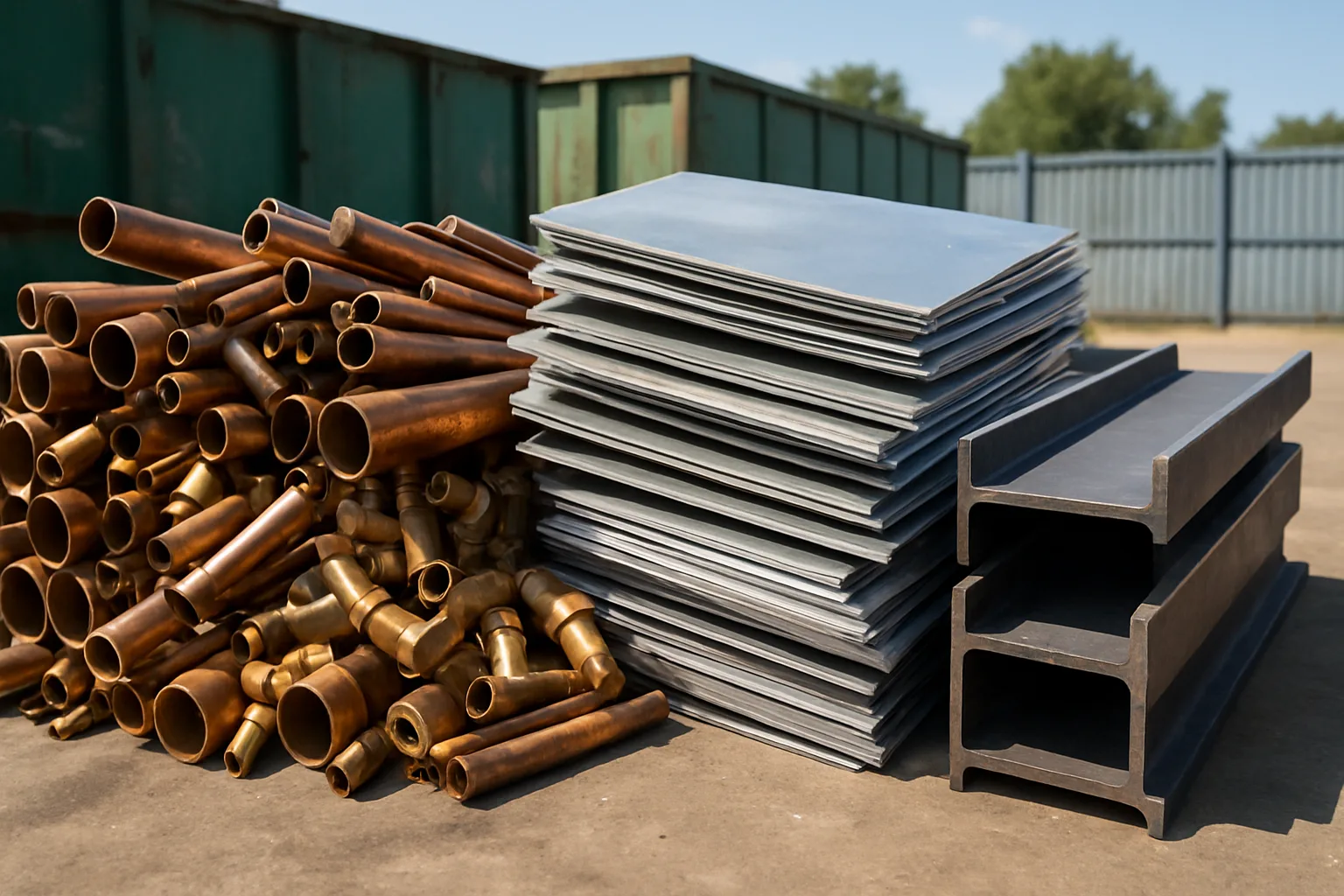
Brass and bronze are hiding in plain sight — in your garage, your job site, your plumbing stack, and your scrap pile. Most people walk right past them. That's money left on the ground.
If you want to understand scrap metal prices today, brass and bronze are worth knowing well. They're non-ferrous alloys, meaning they don't rust and they hold real value at the yard. But knowing what they're worth — and where to find them — takes more than a quick Google search. This guide breaks it down.
What Are Brass and Bronze, and Why Do They Matter to Scrap Sellers?
Brass is an alloy of copper and zinc. Bronze is copper and tin. They look similar — both are warm, golden-toned metals — but they're not the same material, and most scrap yards price them differently. Knowing which one you're holding can change your payout.
Both metals sit comfortably in the non-ferrous category, which matters because non-ferrous metals consistently command better prices than steel or iron. Brass and bronze are used in plumbing fittings, electrical components, decorative hardware, marine parts, bearings, bushings, and valves. That means they show up in residential, commercial, and industrial scrap streams regularly.
- Yellow brass: The most common. Found in plumbing fittings, door hardware, and light fixtures.
- Red brass: Higher copper content, so it typically pays more. Common in older water pipes and valves.
- Bronze: Denser than brass. Found in heavy bearings, bushings, marine hardware, and industrial equipment.
- Brass turnings: Shavings and chips from machining operations. Priced lower per pound due to contamination risk.
The spread between brass and red brass can be meaningful at scale. If you're bringing in a few hundred pounds, proper sorting pays off. Don't let a yard lump everything together unless you know what you have and you're comfortable with the blended rate.
Where to Find Brass and Bronze Scrap — Common Sources You May Be Overlooking
You don't need a demolition contract to accumulate meaningful weight in brass and bronze. These metals turn up in everyday situations — you just need to know what you're looking for.
Plumbing work is one of the richest sources. When older homes get replumbed with PEX or PVC, the copper and brass fittings, valves, and gate valves pulled from the walls have real scrap value. A single bathroom renovation can yield several pounds of brass fittings alone. In Austin, where older homes in neighborhoods like Hyde Park or South Congress are regularly being updated, that material moves through frequently.
HVAC and mechanical work generates brass components too — service valves, refrigerant line fittings, and pressure gauges all contain brass. Electricians pull brass connectors and terminals. Machinists generate brass turnings and cutoffs. If you work in any of these trades, you're generating brass scrap as a byproduct of your regular work.
Other places to source brass and bronze:
- Old fire hose fittings and nozzles
- Spent shell casings (commonly called "spent brass" — check local regulations)
- Decorative hardware from furniture and cabinetry
- Bronze plaques, monuments, and memorial markers (only legitimately sourced material)
- Marine hardware and propellers
- Industrial pump bodies and impellers
- Electrical bus bars in older commercial panels
The Austin metro area has significant construction and renovation activity, which keeps a steady stream of copper and brass moving through the scrap market. Texas as a whole is a major scrap-generating state — the industrial base, the construction volume, and the oil and gas infrastructure all contribute to non-ferrous supply.
What Is Brass and Bronze Worth? Understanding Scrap Metal Prices Today
Brass and bronze prices track copper prices closely, since copper is the primary component in both alloys. When copper is strong, brass and bronze follow. When copper pulls back, so do they.
Scrap metal prices today vary based on the grade, condition, cleanliness, and current market conditions. Prices fluctuate daily — sometimes significantly — based on global commodity markets, currency movements, and demand from mills and foundries. Always check current posted rates before bringing in a load. What's true this week may not be true next week.
That said, here's a general framework for how brass and bronze grades are typically ranked by value at the yard:
- Red brass / high-grade brass: Highest payout due to elevated copper content. Clean, no iron, no lead solder.
- Yellow brass (clean): Solid value. Fittings, hardware, sorted and free of steel bolts or nipples.
- Bronze (solid): Bearings, bushings, propellers — typically prices close to yellow brass, sometimes higher depending on copper content.
- Dirty brass / yellow brass with iron: Priced lower. Valves with steel stems, brass with attached iron components.
- Brass turnings: Lowest in the brass family. Mixed chips and shavings from machining — harder to process, higher moisture and contamination risk.
The gap between clean and dirty material can be significant. Spending 20 minutes cleaning your brass — removing steel nipples, iron attachments, and non-metallic inserts — can meaningfully change your per-pound rate. It's one of the easiest ways to improve your return without doing anything complicated.
Platforms like the SMASH scrap metal auction marketplace are built to bring real buyer competition to non-ferrous loads exactly like this. More buyers seeing your material means better price discovery — that's how you stop guessing and start knowing what the market will actually pay.
How to Sell Brass and Bronze Scrap in Austin and Get the Best Price
Getting the best price for your brass and bronze comes down to a few controllable factors: preparation, documentation, and where you sell.
Most people drop a mixed load at the nearest yard and take whatever they're offered. That works. But it's not optimized. The yards that pay the most are often not the most convenient, and the posted rate on the board isn't always the final rate for larger or cleaner loads.
Here's how to approach selling brass and bronze scrap effectively:
- Sort by grade before you go. Keep red brass separate from yellow. Keep clean hardware away from valve bodies with iron stems. Separate bronze from brass if you can identify it.
- Photograph your material. Good photos help when selling remotely or through an auction platform. Buyers want to see what they're bidding on.
- Weigh it yourself if possible. Know your approximate weight before you pull up to the scale. It keeps the transaction honest and gives you a baseline.
- Get more than one price. Whether that's calling multiple yards or using a platform with multiple buyers, competition reveals market value.
If you're in the Austin area, Austin scrap metal services through GetMyScrap make the process straightforward — from pickup scheduling to getting a fair rate without the runaround. You don't need to load your truck and make three stops across town to find a competitive price.
SMASH takes this further for larger commercial loads. Vetted buyers, auction format, documented inventory — the whole process is designed so sellers aren't leaving money behind because they only talked to one buyer. That matters when you're moving serious weight in non-ferrous material.
Scrap Metal Recycling in Texas — Why the Market Is Active Right Now
Texas runs one of the most active scrap metal markets in the country. Construction doesn't slow down here the way it does in colder regions. Industrial output across the Gulf Coast and Permian Basin keeps ferrous and non-ferrous material flowing. And the sheer size of the state means there's volume — real volume — moving through yards on a regular basis.
For brass and bronze specifically, the plumbing and HVAC trades in Texas generate consistent supply. Commercial construction in Austin has been running hard, and that activity creates scrap material that needs to move efficiently. Contractors who know how to capture that material — and sell it correctly — are putting real money back into their operations.
If you're a contractor, a property manager, or an individual with accumulated scrap, don't let it sit. Non-ferrous metal doesn't gain value on your floor. The market is active now, and getting material priced and moved is straightforward when you use the right tools.
When you're ready to sell your scrap metal on GetMyScrap, the process is built around making it easy — not overwhelming. Whether you have a single load of brass fittings or a truckload of mixed non-ferrous, you can get a fair price for your scrap today without the usual friction. And if you want to dig deeper into the process before you get started, explore scrap metal selling guides to understand grading, pricing, and how to maximize your return.
Recycling brass and bronze isn't just about the check — it's keeping valuable material out of landfills and back into productive use. That's what scrap metal recycling in Texas does well, and it's a loop worth being part of.
When your material is documented, sorted, and in front of real buyers through a platform like SMASH, you're not guessing at the market anymore. You're participating in it.
If you've got brass or bronze sitting in your yard, your shop, or your job trailer — now is a good time to move it. Request a pickup at getmyscrap.com and get a fair price without the runaround.
Frequently Asked Questions
Q: What are scrap metal prices today for brass and bronze in Austin?
Brass and bronze prices fluctuate daily based on copper market movements and buyer demand. Yellow brass, red brass, and bronze each carry different per-pound rates, with red brass typically paying the most due to its higher copper content. Check with local Austin yards or platforms like GetMyScrap for current posted rates before bringing in your material.
Q: How do I know if I have brass or bronze scrap?
Both are copper-based alloys with a warm golden or reddish tone. Brass is typically more yellow and found in plumbing fittings, hardware, and decorative items. Bronze tends to be darker and denser — common in industrial bearings, bushings, and marine hardware. If you're unsure, bring a sample to your local yard and ask them to identify it before pricing.
Q: Is there free scrap metal pickup near me in Austin, Texas?
Yes — GetMyScrap offers scrap metal pickup options in the Austin area. Pickup availability and minimums vary depending on your location and the volume of material. The best way to find out is to submit your load details through getmyscrap.com and get a response quickly.
Q: Does it matter if my brass has steel parts attached?
Yes, it matters significantly. Brass with attached iron or steel components is classified as "dirty brass" and pays less per pound than clean, sorted material. Taking the time to remove steel nipples, iron stems from valves, and non-metallic inserts before you sell can noticeably improve your payout — especially on larger loads.
Q: Can I sell brass and bronze through an auction platform like SMASH?
Yes. Platforms like SMASH are designed for exactly this — getting multiple vetted buyers to compete on your non-ferrous material. This is especially useful for larger loads where the difference between one buyer's offer and the market rate can be meaningful. More competition means better price discovery, which benefits the seller.
Follow SMASH on LinkedIn for weekly scrap metal market updates, non-ferrous pricing insights, and industry news across North America.