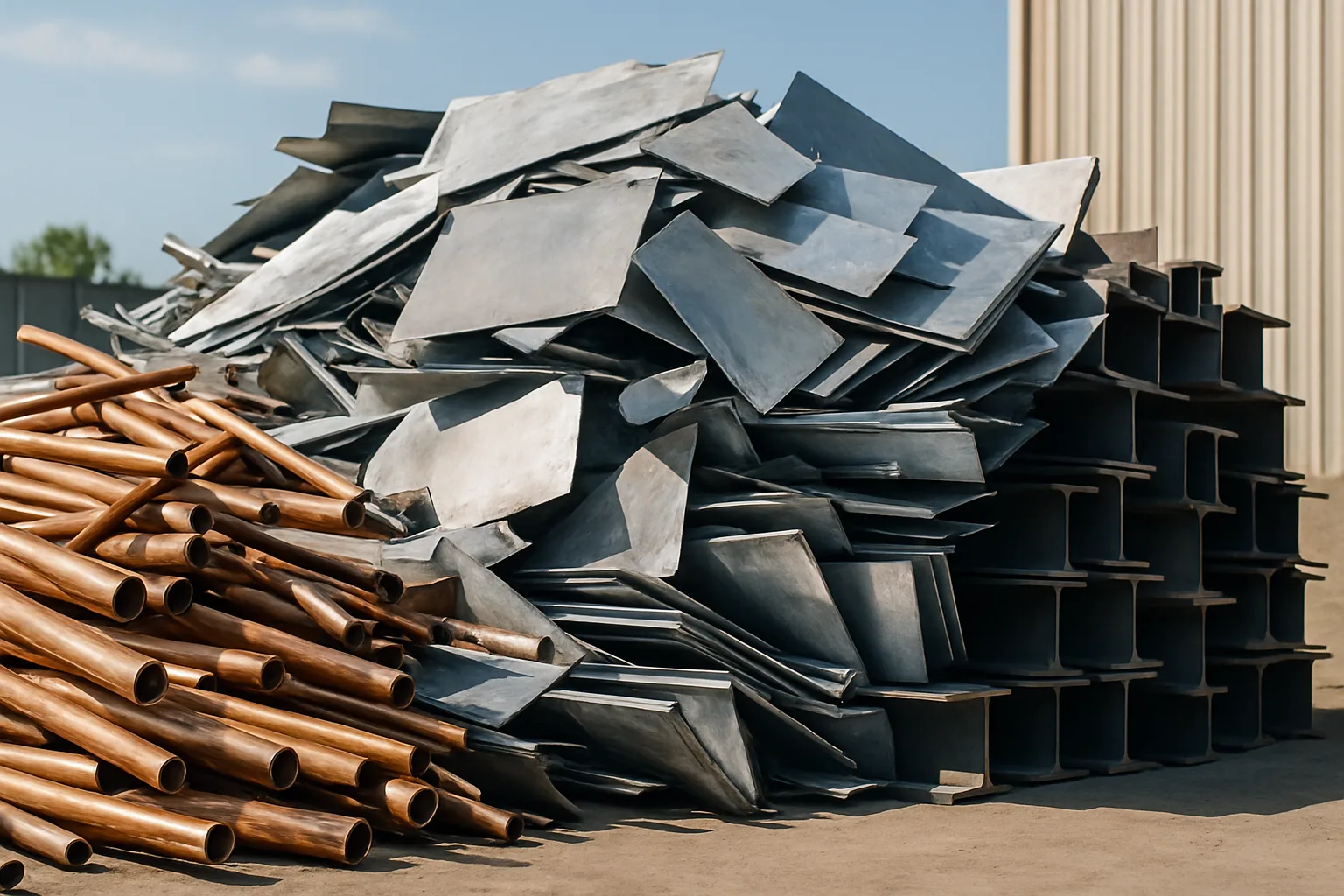
Construction and demolition sites are some of the richest sources of scrap metal in North America — yet most contractors leave serious money on the table. If you're managing a job site in Cincinnati or anywhere across Ohio, the metal coming off that structure isn't just debris. It's inventory. And if you're not treating it that way, you're paying to haul away something that could pay you back.
This article breaks down exactly what metals come off C&D sites, what they're worth, and how a B2B scrap metal marketplace changes the equation for contractors, demo crews, and recycling operations alike.
What Construction and Demolition Sites Actually Generate
A single commercial demolition project can produce tens of thousands of pounds of recoverable metal. Residential teardowns aren't far behind. The mix depends on the building's age, type, and use — but most sites generate a consistent range of materials that scrap yards and buyers want.
Here's what you're likely pulling off a typical C&D site:
- Structural steel — beams, columns, decking, rebar. Heavy tonnage, lower per-pound value, but volume adds up fast.
- Copper wire and plumbing — one of the highest-value metals on any site. Old commercial buildings especially carry significant copper in electrical systems and HVAC lines.
- Aluminum — window frames, curtain walls, roofing panels, conduit. Lighter than steel but worth considerably more per pound.
- Cast iron and stainless steel — pipes, fire suppression components, commercial kitchen equipment in restaurant or food service demolitions.
- HVAC cores and coils — copper and aluminum combined in a single unit. These move quickly when priced right.
- Catalytic converters — if the demo crew is also stripping vehicles or heavy equipment on site, cats come into play. More on that below.
The challenge isn't finding the metal. It's getting the best price for it without burning time calling around to a dozen yards, getting low-balled, and settling because you have a haul-away deadline.
Why the Old Way of Selling C&D Scrap Fails Contractors
Most contractors and demo operators default to a simple process: call the closest scrap yard, take the offered price, and move on. That process works — but it doesn't work well. You're pricing your material against a single buyer with no competitive pressure and no transparency about what the market actually looks like that day.
Scrap metal prices fluctuate. Copper can swing significantly week to week. The price you got three months ago on a similar load might be off by 20% today — in either direction. If your only data point is one yard's quoted price, you have no way of knowing whether you're leaving money behind.
There's also the documentation problem. C&D scrap often comes in mixed loads. If your packing list is vague or your photos are poor, buyers discount heavily to protect themselves. Sloppy documentation is a self-inflicted price cut.
A B2B scrap metal marketplace changes both of those problems at once. You list your load with proper documentation, vetted buyers compete, and you see what the market is actually willing to pay. That's price discovery — not guesswork.
How Platforms Like SMASH Help C&D Operations Sell Smarter
SMASH was built for exactly this kind of commercial scrap sale. When you're moving a mixed load off a demolition site — copper pipe, structural steel, aluminum framing — you need buyers who understand what they're looking at and are ready to move fast. SMASH connects sellers with a vetted network of buyers across North America, and the auction format means competitive bids, not a single take-it-or-leave-it offer.
Here's why that matters for C&D operators specifically:
- No subscription fees. You don't pay to list. SMASH only wins when you win.
- Inventory documentation tools. Photo documentation, serial tracking, and detailed packing lists give buyers confidence — and confident buyers bid higher.
- Speed. Demo crews work on tight timelines. An auction platform that moves quickly fits the job site rhythm.
- Transparency. You see the bids. You see what buyers are paying for your specific materials. That data has value beyond the single sale.
If you're operating in Cincinnati and managing regular demolition volume, find the best price for your scrap on SMASH and stop letting one yard set the price for your entire operation.
Sell Scrap Metal Cincinnati: Local Market Context for Ohio Demolition Crews
Cincinnati sits in a strong position for scrap metal sales. The Ohio River corridor has industrial history baked into its infrastructure, which means demolition projects here often turn up high-grade materials — older copper plumbing, cast iron systems, and structural steel from mid-century commercial construction that wasn't built with lightweight substitutes.
Ohio's manufacturing base also means the regional buyer market is active. There are buyers looking for consistent volume, non-ferrous loads, and specialty materials across the state. The problem is that most sellers — even experienced contractors — never access that broader buyer network. They stick with whoever is geographically close and familiar.
If you've been searching for a scrap yard near me open now just to move a load fast, that's understandable. But it's also leaving opportunity behind. For one-off emergency hauls, your nearest yard makes sense. For regular commercial volume off C&D sites, you need a platform that reaches more buyers than your zip code contains.
You can start by exploring Cincinnati scrap metal services to understand what's available locally — and where a marketplace approach fits into your operation.
Catalytic Converters on C&D Sites: Don't Miss the High-Value Pieces
Demolition work sometimes overlaps with vehicle or heavy equipment stripping — especially on industrial sites, warehouse clearances, or properties that include fleet vehicles. If your crew is pulling catalytic converters as part of that work, those deserve separate handling from your bulk ferrous and non-ferrous loads.
Cats contain platinum group metals (PGMs) — platinum, palladium, and rhodium. The value varies widely depending on the make, model, and condition of the converter. A catalytic converter auction format, like what SMASH facilitates, is specifically designed to surface that value through competition rather than a flat per-unit buyout offer.
Key things to know if you're selling cats off a C&D or industrial clearance job:
- Documentation matters. VIN lookup and serial tracking help buyers assess value accurately. Documented cats attract more competitive bids.
- Mix and condition affect pricing. Don't assume all cats from a site are the same grade. Sort them where possible.
- The auction format works in your favor. More buyers competing for the same lot means better price discovery on high-value material like cats.
If you want to sell my scrap catalytic converters from a commercial clearance job, an auction platform gives you access to buyers who specialize in this material — not just a general yard that prices cats as an afterthought.
Documentation and Process: How to Maximize Value on Every C&D Load
The difference between a well-documented load and a sloppy one is real money. Buyers price in uncertainty. If they can't tell from your listing what they're getting, they protect themselves with a lower offer. Good documentation removes that uncertainty — and that discount.
Before you list any commercial C&D load on a B2B scrap metal marketplace, do this:
- Photograph everything. Multiple angles. Show the material clearly. Separate non-ferrous from ferrous if possible.
- Create an accurate packing list. Estimated weights by material type. What it is, where it came from, condition.
- Sort before you list. Mixed loads sell for less than sorted loads. If you can separate copper from aluminum from steel, you'll recover more per pound across the board.
- Know your weights. Don't estimate wildly. Buyers discount heavily when weights feel unreliable.
- Understand your timeline. If you have flexibility, you can wait for better bids. If you need the site cleared, communicate that — vetted buyers understand job site logistics.
For teams doing this regularly, these habits become part of the demo workflow — not extra work, just smart process. You can explore scrap metal selling guides for more detail on how to prep loads for the best possible outcome.
The goal is simple: treat the scrap as inventory from the moment the wrecking ball hits. Every pound of copper, every ton of steel, every core you pull has a market value. Your job is to access that value — not accept the first number someone gives you.
If you're ready to stop guessing and start selling smart, sell your scrap metal on GetMyScrap and connect with buyers who are actively looking for commercial C&D volume across Ohio and beyond.
The scrap coming off your next job site is worth more than you think. Get a fair price for your scrap today — request a pickup at getmyscrap.com and let competition work in your favor.
Disclaimer: Scrap metal prices fluctuate based on commodity markets, regional demand, and material condition. All pricing information is general in nature. Check current rates before making any selling decisions.
Frequently Asked Questions
Q: What types of scrap metal are most valuable on a construction or demolition site?
Copper is consistently the highest-value metal on most C&D sites — especially in older commercial buildings with copper plumbing and electrical wiring. Aluminum (window frames, conduit, roofing panels) also commands strong prices. Structural steel and rebar generate value through volume rather than per-pound rates. Catalytic converters, if present, are high-value items that warrant separate handling through a specialized auction process.
Q: How does a B2B scrap metal marketplace work for contractors?
A B2B scrap metal marketplace like SMASH lets you list your scrap loads — with photos, weights, and packing lists — and receive competitive bids from vetted buyers across North America. Instead of calling one yard and accepting their price, you create competition. More buyers bidding on your material means better price discovery and more transparency about what your scrap is actually worth in the current market.
Q: Is it worth sorting scrap metal before selling, or should I just move it as a mixed load?
Sorting almost always pays off. Mixed loads are priced conservatively because buyers have to account for the cost of sorting themselves. If you separate copper from aluminum from steel before listing, you'll typically recover more per pound across each category. Even basic separation — ferrous versus non-ferrous — makes a meaningful difference on commercial-volume loads.
Q: Where can I sell scrap metal in Cincinnati, Ohio?
Cincinnati has local scrap yards that handle walk-in and commercial volume, but for larger C&D loads, a B2B scrap metal marketplace gives you access to a broader buyer network across Ohio and beyond. Cincinnati scrap metal services can help you understand your local options, while platforms like SMASH add competitive bidding on top of whatever your local market offers.
Q: How do I get the best price for catalytic converters from an industrial clearance job?
Document them thoroughly — photos, serial numbers, VIN lookup where applicable. Avoid lumping them into a bulk scrap sale where they'll be undervalued. A catalytic converter auction format surfaces real market value by putting multiple specialized buyers in competition for your lot. Platforms like SMASH are built to handle exactly this type of high-value, specialized material.
Follow SMASH on LinkedIn for scrap metal market updates, price trends, and industry insights delivered straight to your feed.