Construction Sites Are Sitting on a Fortune in Scrap Metal — Are You Capturing It?
Every demolition crew swinging a hammer in Fort Lauderdale is generating something valuable — and most of it ends up sorted wrong, priced wrong, or sold to the first buyer who shows up with a truck. If you manage a construction or demolition site, understanding what scrap you're producing — and what it's actually worth — is money left on the table or money in your pocket. The steel scrap price today moves fast, and the difference between knowing your material and guessing it can be significant.
Construction and demolition (C&D) debris is one of the largest sources of recyclable scrap metal in North America. From structural steel beams to copper wiring, rebar to aluminum window frames, these sites generate a range of metals that yards across Florida and beyond are actively bidding on. The question isn't whether your site has value. The question is whether you're capturing it.
What Metals Do Construction and Demolition Sites Actually Generate?
Not all C&D scrap is the same. The mix depends heavily on the type of structure being demolished or built — a commercial high-rise tears down very differently than a 1960s residential bungalow. Knowing what you have before you call a buyer is the first step to getting a fair price.
Here's a breakdown of the metals most commonly pulled from C&D sites:
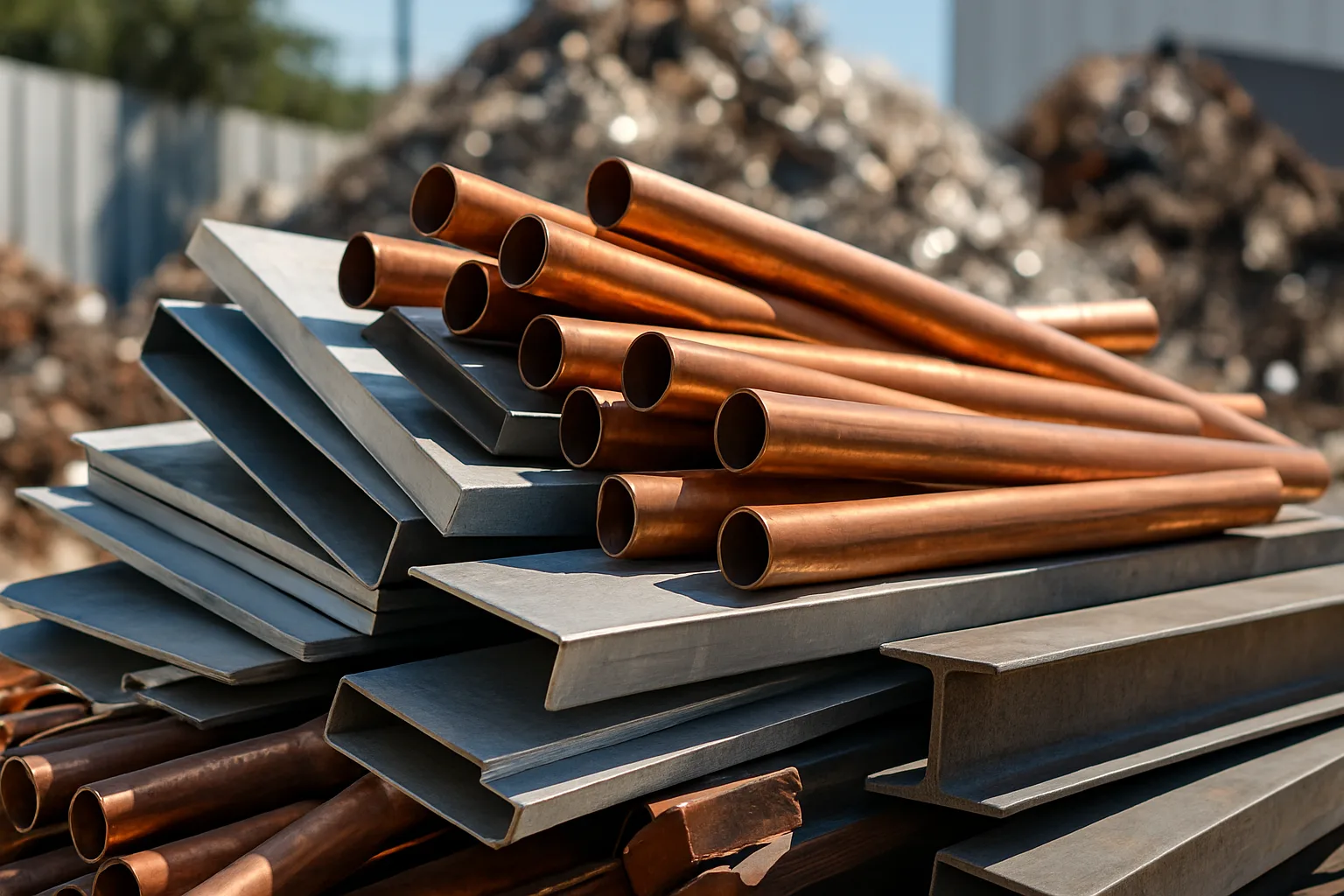
- Structural steel: Beams, columns, and decking from commercial builds. Heavy, high-volume, and consistently in demand. The steel scrap price today directly affects how much your structural material is worth at the scale.
- Rebar: Pulled from concrete demolition. Often bundled and sold by the ton. Quality varies depending on contamination from concrete.
- Copper pipe and wiring: Found in plumbing and electrical systems. One of the highest-value metals per pound on any site. Even short runs of copper pipe add up fast.
- Aluminum: Window frames, doors, HVAC ducting, gutters. Lighter than steel but worth tracking separately — aluminum scrap prices run on their own market.
- Cast iron: Older buildings often yield cast iron radiators, pipes, and fittings. Heavy, lower value per pound, but significant by volume.
- Stainless steel: Pulled from commercial kitchens, medical facilities, and industrial builds. Sells at a premium over mild steel.
- HVAC components: Motors, compressors, and coils contain a mix of copper, aluminum, and steel — often sold as prepared or unprepared grades.
The key is separation. Mixed loads get docked at the yard. Clean, separated loads — copper with copper, aluminum with aluminum — command better pricing. This isn't just good practice; it's the difference between the yard's buying price and the best available market price for each grade.
Why Scrap Metal Prices Today Fluctuate on Active Job Sites
If you've been selling scrap from job sites for any length of time, you already know this: the price you got last month is not the price you'll get today. Scrap metal prices today are tied to global commodity markets, domestic mill demand, export conditions, and fuel costs. They move week to week — sometimes day to day.
For a C&D contractor in Florida, this creates a real challenge. You're on a project timeline. You can't always wait for the ideal market window to sell a load of rebar or structural steel. But you can stop leaving money behind by understanding a few market realities:
- Steel prices are driven by mill demand. When domestic mills are buying aggressively, scrap steel prices rise. When they're over-supplied, prices drop. Pay attention to the direction of the market, not just the spot price.
- Copper moves on its own cycle. Copper pricing tracks global demand — particularly from manufacturing and construction in Asia and Europe. It often moves independently from steel.
- Preparation matters more than you think. Shredded or torch-cut steel fetches different prices than whole structural sections. Ask your buyer what grade they're paying for before you load the truck.
- Timing a large load can pay off. If you're sitting on multiple tons of structural steel, even a few days' difference in the market can change your payout meaningfully.
Platforms like SMASH Scrap — where verified buyers bid on your metal — are built specifically for this situation. Instead of one phone call to one buyer, you list your material and let the market respond. Competition between vetted buyers does the price discovery work for you.
Scrap Metal Inventory Management on Active Job Sites
Here's where most C&D operations lose money without even realizing it. You're pulling copper off the third floor while rebar is getting loaded into a mixed container on the ground. Two weeks later, you've got one invoice for a "mixed metal load" and no idea what any individual grade actually sold for. That's not a business — that's guessing.
Solid scrap metal inventory management starts on the site, not at the yard. That means:
- Designating separate collection points for ferrous and non-ferrous materials as demolition progresses
- Photographing loads before they leave the site — this protects you and gives buyers confidence in what they're bidding on
- Tracking weights by category, not just total tonnage
- Keeping packing lists or BOLs for every load that leaves the site
- Recording where each material came from within the structure — useful for grading disputes
This isn't bureaucracy. This is how you go from taking whatever the yard offers to actually negotiating from a position of knowledge. When you can show a buyer exactly what you have — by grade, by weight, with photos — you get a different conversation than "we've got a bunch of mixed demo metal, what'll you give us?"
If you want to sell your scrap metal on GetMyScrap, having your inventory documented before you reach out makes the entire process faster and more accurate. You're not starting from scratch — you're presenting a package.
Fort Lauderdale C&D Sites and the Local Scrap Market
Fort Lauderdale and the broader South Florida market have seen consistent construction activity through 2026 — commercial developments, infrastructure upgrades, and ongoing residential density projects are all feeding the regional scrap supply. That means more competition among sellers at the local yard level, which makes it more important — not less — to understand what your material is actually worth.
Yards in and around Fort Lauderdale are buying the same grades as yards across North America, but local logistics matter. Fuel costs, haul distances, and regional mill demand all affect what a buyer is willing to pay for a load of rebar or structural steel sitting in Broward County. Florida's heat and humidity also affect how quickly ferrous material can degrade — surface rust on structural steel can affect grade classification if loads sit too long without cover.
For large C&D loads in Florida, the smartest move is to get multiple buyers in the conversation before you commit to a sale. That's exactly what SMASH scrap metal auction format is designed to do — bring competitive bids to your material instead of you calling around and hoping for a fair number.
If you're ready to stop guessing and start selling with data behind you, get a fair price for your scrap today — document your material, know your grades, and let buyers compete for your load.
How to Get the Best Scrap Metal Prices From Your Next C&D Project
Whether you're a general contractor, a demolition subcontractor, or a site manager with leftover structural material, the process for getting better prices is the same. It's not complicated. It just requires doing things in the right order.
- Sort early. Don't wait until you're loading the truck to separate ferrous from non-ferrous. Build separation into your daily demolition workflow.
- Document everything. Photos, weights, grades. If you can't describe what you have, a buyer will describe it for you — usually in their favor.
- Check the market before you sell. The steel scrap price today is not the steel scrap price from three weeks ago. A quick check before you call buyers can save you from selling into a dip.
- Get multiple bids. One buyer giving you a number is one data point. Three buyers is a market. More buyers competing for your load means better price discovery — full stop.
- Use a platform built for volume. For large C&D loads, auction-format selling through a platform like SMASH gets your material in front of vetted buyers who are actively looking to purchase.
You can also explore scrap metal selling guides to get deeper on specific grades, preparation tips, and how to read the market before your next sale.
The old way — one call, one buyer, take it or leave it — works fine if you don't care about the difference. Most contractors running real volume on active sites care a lot about the difference. Getting your process right on the inventory and sales side is as important as any other part of your operation.
If you've got a C&D load ready to move in Fort Lauderdale or anywhere in Florida, don't settle for the first number you hear. Document your material, check the current market, and let competitive bids do the work. Request a pickup and get a fair price for your scrap metal at getmyscrap.com — it's the straightforward way to turn demo debris into real dollars.
Frequently Asked Questions
Q: What is the steel scrap price today for construction demolition material?
Steel scrap prices fluctuate daily based on mill demand, export conditions, and market supply. Demolition steel — including rebar and structural sections — is typically priced differently than shredded or prepared steel. Check current rates with multiple buyers before committing to a sale, and always confirm which grade your material qualifies for. Prices change frequently — always verify current rates before selling.
Q: How do I find the best scrap metal prices near me in Fort Lauderdale?
The best way to find competitive pricing in Fort Lauderdale is to contact multiple buyers rather than relying on a single yard's posted prices. Online platforms that bring multiple vetted buyers to your material — like SMASH — help reveal the actual market for your specific grades. Local yard prices in South Florida reflect regional demand and logistics, so getting more than one bid always makes sense for large loads.
Q: What scrap metals are most valuable from a demolition site?
Copper consistently commands the highest price per pound and is found in plumbing, electrical systems, and HVAC components. Stainless steel and aluminum also sell at premiums over standard mild steel or rebar. Separating these materials on-site before sale — rather than selling as a mixed load — significantly improves your payout.
Q: Can I get scrap metal picked up directly from a construction or demolition site?
Yes. Many scrap buyers and haulers offer direct site pickup for C&D material, particularly for large loads of structural steel, rebar, or non-ferrous metals. Having your material sorted and documented before the pickup increases efficiency and reduces the chance of grade disputes at the scale. GetMyScrap can help coordinate pickup for your site — visit getmyscrap.com to request a quote.
Q: How does scrap metal inventory management help me get better prices?
When you can tell a buyer exactly what you have — grade, weight, condition, and photos — you remove uncertainty from their pricing. Buyers pay more when they know what they're getting. Mixed or undocumented loads typically get priced at the lowest common grade. Good inventory management on your end translates directly to better bids on theirs.
Follow SMASH on LinkedIn for ongoing scrap metal market updates, pricing trends, and industry news across North America.