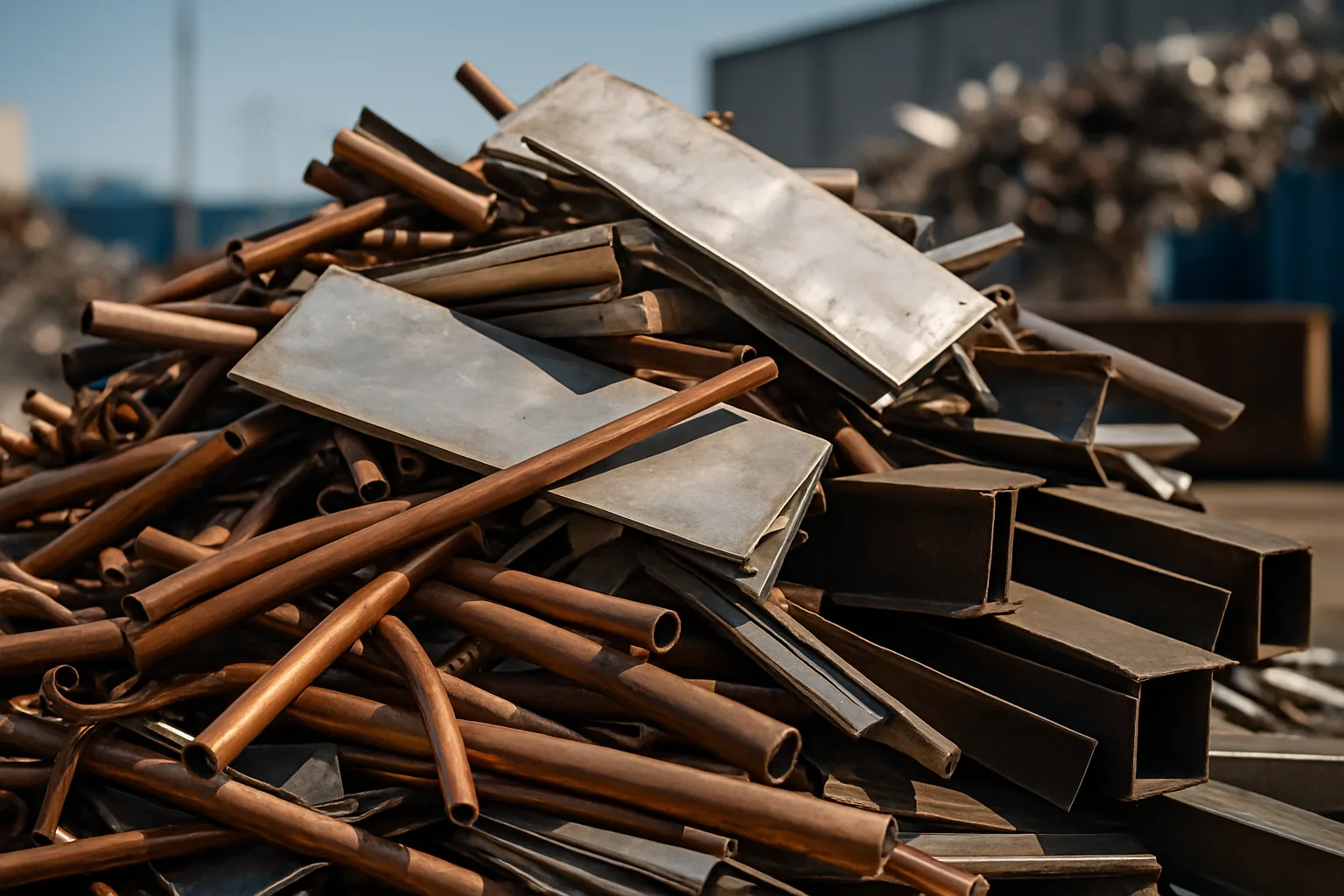
Most people selling scrap metal leave money on the table — not because they're naive, but because they don't know prices change every single day. The aluminum scrap price today is not the same as it was yesterday, and it definitely won't be the same next week. If you're hauling loads out of Gary, Indiana, that gap matters.
This guide breaks down how scrap metal prices move, what drives them, and how to stop guessing and start selling smarter — whether you're clearing out a garage, running a demolition crew, or offloading catalytic converters and copper wire on a regular basis.
Why Scrap Metal Prices Fluctuate Daily
Scrap metal isn't priced like groceries. There's no fixed shelf price. Every morning, buyers and processors adjust their numbers based on a web of global and regional factors. By the time you load your truck, the number on the board could already be different from what you saw online an hour ago.
Here's what actually moves the needle:
- Commodity exchanges: Aluminum, copper, and steel futures trade on the London Metal Exchange (LME) and COMEX. When those markets swing, scrap prices follow — usually within 24 to 48 hours.
- Domestic mill demand: Steel mills and aluminum smelters adjust their buy prices based on their current inventory and production schedules. High demand means better scrap metal prices near me — low demand means the opposite.
- Export activity: A strong export week can tighten local supply fast. Yards competing for material will often bump their buy prices to fill containers.
- Fuel and logistics costs: Transportation costs affect how much buyers can pay at the gate. When diesel spikes, margins tighten and buy prices sometimes dip.
- Currency fluctuations: Because metals are globally traded in USD, a stronger dollar can dampen export demand, which softens domestic scrap values.
Understanding these drivers doesn't require a finance degree. It just means you stop treating scrap like a fixed-rate commodity and start treating it like the real market it is.
Aluminum Scrap Price Today — What You Need to Know Before You Sell
Aluminum is one of the most actively traded scrap metals in North America. It's lightweight, high-value relative to its weight, and in constant demand from both domestic producers and export buyers. The aluminum scrap price today varies depending on grade — and grade differences are not small.
Common aluminum grades you'll encounter:
- Clean sheet aluminum: Higher value, often from window frames, gutters, or sheet stock
- Cast aluminum: Engine blocks, wheels, and machine parts — slightly lower per pound than clean sheet
- Aluminum cans (UBC — Used Beverage Cans): Traded in bulk, often by the pound or ton
- Irony aluminum: Mixed with steel or other metals — discounted significantly
- Extruded aluminum: Door frames, ladders, tubing — mid-range value
The difference between getting paid for clean sheet vs. irony aluminum on the same load can be significant. Sort your material before you bring it in. Yards pay more when they don't have to sort it themselves. If you're not sure how to grade your aluminum, platforms like SMASH Scrap — where verified buyers bid on your metal can help you understand what you actually have before you commit to a price.
Disclaimer: Aluminum scrap prices fluctuate daily based on market conditions. Always verify current rates before selling.
Best Scrap Metal Prices in Gary, Indiana — How to Find Them
Gary sits in a unique position. Located in northwestern Indiana at the edge of the Chicago metro area, the city has a long industrial history — and that means serious scrap infrastructure. Steel has been part of Gary's DNA for over a century. That industrial density creates real competition among buyers, which can work in your favor if you know how to use it.
But here's the problem most sellers run into: they call one yard, get a number, and take it. That's not a market — that's a guess dressed up as a quote. The best scrap metal prices in Gary don't come from a single phone call. They come from competition.
A few ways to sharpen your price:
- Call multiple yards on the same day. Prices shift, and not all yards adjust at the same time. A yard that hasn't updated their board yet might be offering yesterday's higher rate.
- Know your grades. If you walk in with unsorted material, you're accepting the yard's lowest-common-denominator price. Sorted loads get better numbers.
- Use online platforms. When you sell your scrap metal on GetMyScrap, you're not locked into one buyer's opinion of what your load is worth. Multiple buyers see your material and the market sets the price.
- Document your load. Photos, weights, and material descriptions give buyers confidence. Confident buyers bid higher.
Gary's proximity to major industrial corridors in Indiana means there's consistent demand for ferrous and non-ferrous material. Use that geography to your advantage.
Copper, Catalytic Converters, and Other High-Value Scrap
Not all scrap is created equal. Copper and catalytic converters are two categories where the gap between an informed seller and an uninformed one is especially wide.
Copper scrap is one of the most valuable metals by weight in the recycling market. Like aluminum, it's graded — and the grades matter. Bare bright copper wire commands the highest price. Mixed copper with insulation, solder, or other materials gets discounted. Before you haul copper to the yard, strip what you can. That extra 15 minutes of prep can translate directly into dollars per pound.
Catalytic converters are a different animal. They contain platinum group metals (PGMs) — platinum, palladium, and rhodium — and their scrap value is determined by assay, not visual inspection. The best price for catalytic converters comes from buyers who specialize in PGM recovery, not general scrap yards that are just reselling them upstream anyway. If you're sitting on a pile of cats, get a fair price for your scrap today from buyers who actually process the material.
A few things to know about selling catalytic converters in Indiana:
- Identification requirements have tightened across most U.S. states — bring your ID and be ready to document the source of your material
- Serial numbers and vehicle information help buyers verify legitimacy and can improve your offer
- Volume matters — a single cat sells for less per unit than a documented lot of 20 or 50
How to Sell Scrap Metal Online and Get a Better Price
The shift to selling scrap metal online is real, and it's accelerating. Buyers who used to rely entirely on walk-in traffic are now competing digitally for loads. That competition benefits sellers.
When you sell scrap metal online through a platform like SMASH, you're not just posting a listing and hoping. The platform connects your documented load — with photos, weights, material grades, and any relevant serial or VIN data — to a network of vetted buyers. Those buyers bid. Competition reveals the market. You see what your material is actually worth, not just what one buyer is willing to offer on a Tuesday morning.
The process is straightforward:
- Document your load — photos, weights, material types, condition
- List it through the platform
- Vetted buyers review and bid
- You accept the best offer
- Auto-invoicing handles the paperwork
No subscription fees. SMASH only wins when you win. For sellers in Gary and across Indiana who are tired of single-buyer pricing, this is a better model. You can also explore scrap metal selling guides to sharpen your process before your next load.
Timing Your Sale — When Prices Are Typically Stronger
Scrap metal prices don't move randomly. There are patterns worth understanding, even if they're not guarantees.
Early in the week tends to see more active buying as yards plan their weekly inventory and shipping schedules. End of month can bring stronger prices if processors are short on their volume targets. Post-holiday periods sometimes see price corrections as industrial activity resumes. Infrastructure-heavy seasons — spring and early summer — often push demand for copper and steel as construction ramps up.
None of this is a hard rule. Markets surprise everyone. But if you have flexibility on when you sell, it's worth paying attention to the rhythm of the market rather than just selling whenever you have a full truck. Watch commodity news, check daily price boards, and don't let urgency force a sale on a bad day when waiting 48 hours might improve your return.
The best scrap metal prices in Indiana — including Gary — go to sellers who treat this like a business, not a one-time transaction. Documentation, timing, competition, and grade knowledge all compound over time into real money.
Ready to stop guessing and start getting paid what your scrap is worth? Get a fair price for your scrap today — request a pickup at getmyscrap.com and let the market work for you instead of against you.
Frequently Asked Questions
Q: What is the aluminum scrap price today in Gary, Indiana?
Aluminum scrap prices change daily based on commodity markets, local demand, and material grade. There's no single fixed price — clean sheet aluminum, cast aluminum, and mixed aluminum all trade at different rates. Check with multiple buyers or use an online platform to get current competitive offers before committing to a sale.
Q: How do I find the best scrap metal prices near me in Indiana?
The most effective approach is to create competition. Contact multiple yards, document your material properly, and consider using a platform like SMASH where vetted buyers bid on your load. In Gary and across Indiana, buyer competition exists — you just need to activate it rather than defaulting to a single phone call.
Q: Is selling scrap metal online worth it compared to dropping off at a local yard?
For larger loads or high-value materials like copper, catalytic converters, or sorted non-ferrous metals, selling online through a platform that creates buyer competition often yields better results than a single yard offer. For small loads of mixed material, a local yard drop-off may be more practical. The value of online platforms increases with load size and material quality.
Q: What's the best way to get a good price for scrap catalytic converters?
Sort and identify your converters — serial numbers and vehicle information help buyers assess PGM content. Sell to buyers who specialize in catalytic converter processing rather than general scrap yards that will just resell them. Volume lots typically command better per-unit pricing. Always bring valid ID and be prepared to document the source of your material per Indiana regulations.
Q: How often do scrap metal prices change?
Most yards update their prices daily, sometimes more frequently when commodity markets are volatile. The aluminum scrap price today can be meaningfully different from yesterday's price — especially during periods of active trading on the LME or COMEX. Check prices the same day you plan to sell, not the day before.
Follow SMASH on LinkedIn for regular scrap metal market insights, industry updates, and tips to get more from every load you sell.