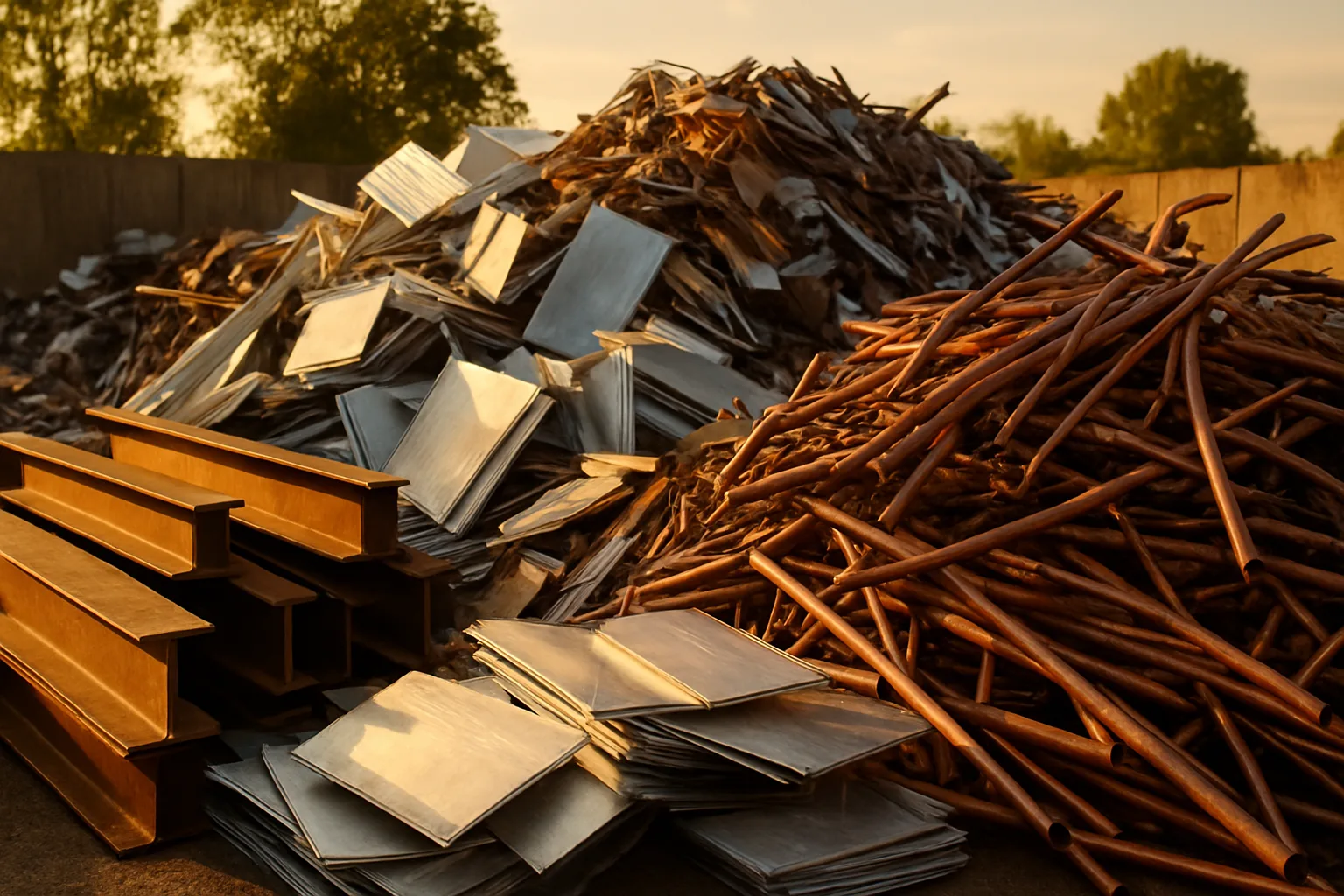
What happens in a steel mill in Shanghai or a copper mine in Chile doesn't stay there. It travels through commodity markets, currency exchanges, and trade policies — and lands directly in the price a scrap yard in Raleigh, North Carolina pays you for your load. If you've ever wondered why your copper payout dropped between Tuesday and Friday with no obvious reason, the global economy is usually the culprit.
This isn't theoretical. Scrap metal is a globally traded commodity. The price you see on a local yard's board is downstream of London Metal Exchange (LME) futures, Chinese manufacturing data, and U.S. trade policy decisions made in rooms most yard operators never enter. Understanding that chain helps you make smarter decisions about when to sell, what to hold, and how to stop leaving money on the table.
For yards and individual sellers alike, a B2B scrap metal marketplace built on real-time competition changes the equation. But first, let's break down exactly how the global economy connects to what you're getting paid locally.
---Why Scrap Metal Prices Aren't Set at Your Local Yard
Most sellers assume the yard sets the price. They don't — not really. Local buyers are price takers, not price makers. They watch commodity indices, freight costs, and buyer demand upstream of them. When LME copper moves, scrap copper moves with it, usually within 24 to 72 hours. The yard adjusts its buy price to protect its margin. You feel it before you understand it.
Here's the chain in plain terms:
- Global demand shifts — China's manufacturing sector slows, or it surges. Either way, demand for raw copper, aluminum, and steel changes immediately.
- Commodity futures respond — LME and COMEX prices move. Traders price in expectations, not just current supply.
- U.S. mills and smelters adjust their offers — Domestic processors update what they'll pay for incoming scrap to protect their margins.
- Regional buyers respond — Yards in North Carolina and across the Southeast adjust their buy prices within days.
- You get paid less (or more) than last week — With no explanation from the guy at the scale window.
The gap between what sellers expect and what the market actually reflects is where money disappears. A B2B scrap metal marketplace like SMASH brings price discovery into the open — buyers compete, and you see what the market actually will pay, not just what one buyer feels like offering.
---The Macro Factors That Move Scrap Metal Prices in 2026
The commodity landscape in 2026 is shaped by a handful of persistent forces that directly affect scrap payouts in markets like Raleigh. Knowing these doesn't require a finance degree. It just requires paying attention.
1. China's Appetite for Secondary Metals
China remains the world's largest consumer of copper, aluminum, and steel. When Chinese industrial output expands, global demand for processed metal rises. Secondary scrap — your copper wire, your aluminum rims, your stainless — becomes more attractive because it's cheaper to process than virgin ore. When Chinese demand contracts, those markets soften globally, and your local yard buy price follows.
2. U.S. Trade Policy and Tariffs
Tariff structures directly affect domestic scrap flows. Import duties on foreign steel, for example, can increase demand for domestic scrap as a substitute input for U.S. mills. That tightens domestic supply and pushes prices up. Policy reversals or new trade agreements can flip this dynamic quickly. What Washington does affects what you get paid in Raleigh.
3. Currency Strength
A stronger U.S. dollar makes American scrap exports more expensive for foreign buyers. That reduces export demand, which softens domestic prices. A weaker dollar does the opposite — foreign buyers get more for their money, U.S. scrap becomes attractive, and export demand pulls prices up domestically. Watch the dollar index if you're trying to time a large load sale.
4. Energy Costs and Logistics
Fuel prices shape freight costs, which shape scrap economics directly. Higher diesel costs mean higher transport costs for yards moving material to mills. That margin squeeze gets pushed back to the seller. In a market like North Carolina — where material often moves by truck to regional mills — freight is a real factor in what you actually net per ton.
5. Catalytic Converter PGM Markets
Platinum group metals (PGMs) — platinum, palladium, rhodium — are the engine of catalytic converter value. These metals are priced globally, tied to mining output in South Africa and Russia, and influenced by automotive industry demand. In 2026, EV adoption growth has softened some PGM demand compared to peak years, but combustion engine vehicle volume still keeps the cat market active. A catalytic converter auction on a platform like smashscrap.com exposes your cats to vetted buyers who track PGM prices daily — which is how you stop underpricing your cores.
---What This Means for Sellers in Raleigh, North Carolina
Raleigh sits in a region with active industrial, construction, and demolition activity. The Research Triangle's ongoing growth means ongoing scrap generation — copper from electrical work, aluminum from commercial builds, steel from demo projects. That material has real value, but that value fluctuates with markets most local sellers never track.
The practical impact for Raleigh scrap metal services users is straightforward: the same load of copper wire can generate meaningfully different payouts depending on when you sell and who you sell to. Holding material during a softening market costs you money. Moving material when PGM prices are elevated on cats — if you know the market — captures value others miss.
What most sellers in the area don't have is access to competitive bidding. One yard, one price, take it or leave it. That's the old model. A B2B scrap metal marketplace puts your load in front of multiple vetted buyers simultaneously. The market sets the price, not one buyer's mood or margin requirement.
---How SMASH Connects Local Sellers to Real Market Value
SMASH was built on a simple premise: more buyers competing for your load means better price discovery. That's not a marketing claim — it's how markets work. When one buyer sets your price, you get that buyer's price. When five buyers compete, you get closer to the actual market price.
For yards and commercial sellers moving volume, the difference is real money. Documented inventory — photos, weights, BOLs, serial tracking — gives buyers confidence. Confident buyers bid higher. Vague listings with no documentation leave money on the table every time.
Key features that matter for sellers navigating a volatile commodity market:
- Auction format — Competition between vetted buyers, not a single take-it-or-leave-it offer.
- Inventory documentation tools — Photos, weights, packing lists, and serial tracking that give buyers what they need to bid aggressively.
- Catalytic converter auction — Cats are graded, documented, and auctioned to buyers who track PGM daily. No more guessing what your cores are worth.
- VIN lookup — Accurate vehicle identification for auto parts and cat matching.
- Auto-invoicing — Clean paperwork that moves transactions fast.
- No subscription fees — SMASH only wins when you do.
When global commodity prices move, the sellers who respond fastest and sell to the most competitive buyers capture the best returns. SMASH is built for that speed and transparency.
---Timing Your Sales Around Market Conditions
You can't perfectly time commodity markets. No one can. But you can build habits that work with market cycles rather than against them.
Watch commodity indices weekly, not just when you're ready to sell. LME copper spot price, COMEX aluminum, and PGM spot prices are publicly available. Even a general sense of direction — trending up, trending down, choppy — helps you decide whether to move material now or hold for two weeks.
For non-ferrous metals like copper and aluminum, even small price swings on large loads are significant. A $0.10 per pound move on 5,000 pounds of copper is $500. That's real money, and it's captured by sellers who pay attention and sell into competitive markets.
For catalytic converters specifically, the PGM market can swing sharply. A load of mixed cats sitting in your yard during a palladium run is worth more than the same load sold in a soft week. Auctions create urgency and competition on both sides — buyers who want your cats bid knowing others are watching too.
If you're ready to stop guessing and start selling into a real market, sell your scrap metal on GetMyScrap and see what competitive bidding actually looks like for your material.
---Stop Leaving Money on the Table — The Market Is Bigger Than One Yard
Local yards serve a purpose. They're convenient, they're fast, and for small loads, they're often the right call. But for commercial sellers, yards moving volume, or anyone sitting on a meaningful load of non-ferrous or catalytic converters, one local buyer is almost never your best option.
The global economy sets the ceiling on what your scrap is worth. Your job is to capture as much of that value as possible — not hand the gap to a single buyer with no competition keeping them honest. Documentation, transparency, and competitive bidding are the tools that close that gap.
In Raleigh and across North Carolina, the sellers winning in today's market aren't the ones with the best relationships at one yard. They're the ones who treat scrap as what it is: a commodity with a real, knowable market price that competition helps reveal.
Ready to find out what your load is actually worth? Get a fair price for your scrap today — and let the market, not one buyer, set the number. Request your pickup at getmyscrap.com and stop selling blind.
For more on navigating scrap markets, timing your sales, and getting the most from your material, explore scrap metal selling guides built for sellers who want real answers.
---Frequently Asked Questions
Q: Why do scrap metal prices change so often in Raleigh?
Scrap metal is a globally traded commodity tied to LME and COMEX futures, foreign demand (especially China), and U.S. trade policy. Local yards in Raleigh adjust their buy prices in response to these upstream market movements, sometimes within 24–72 hours. That's why the price you saw last week may not be the price you get today.
Q: What is a B2B scrap metal marketplace and how does it help me?
A B2B scrap metal marketplace like SMASH connects sellers — yards, commercial accounts, and volume sellers — with multiple vetted buyers who compete through an auction format. Instead of one buyer setting your price, the market sets it. More competition typically means better price discovery and stronger payouts on documented loads.
Q: How do I get the best price for catalytic converters near Raleigh?
Cats are priced on PGM content — platinum, palladium, and rhodium — which fluctuates with global mining supply and automotive demand. The best approach is to document your cats thoroughly (photos, unit counts, vehicle sourcing) and sell through a catalytic converter auction where buyers who track PGM prices daily are competing for your material. Selling to a single buyer with no competition almost always undervalues your load.
Q: Is there a scrap metal pickup service that comes to me in North Carolina?
Yes. Services like GetMyScrap coordinate scrap metal pickup for sellers in North Carolina who have material they can't or don't want to transport themselves. For commercial volume and documented loads, platforms like SMASH can connect you with buyers and logistics support that get your material moving efficiently.
Q: When is the best time to sell scrap metal for cash?
There's no universally "best" time, but watching commodity direction helps. When LME copper and non-ferrous metals are trending up, moving material quickly into a competitive market captures that upswing. When markets are softening, holding material — if you have storage — can protect your return. The key is selling into a marketplace with real buyer competition, not just whatever one local yard is offering on a given day.
---Follow SMASH on LinkedIn for scrap metal market updates, industry insights, and commodity price trends: linkedin.com/company/scrap-metal-auction-sales-hub.
Disclaimer: Scrap metal prices fluctuate daily based on global commodity markets. All price references in this article are directional only. Check current rates before making any selling decisions.