Copper Scrap Prices in San Antonio Are Moving — Here's How to Make Sure You're Getting Paid Right
Most people selling scrap metal leave money on the table. Not because they're careless — because they called one buyer, got one number, and assumed that was the market. In a city like San Antonio, where construction activity, manufacturing, and auto recycling keep scrap volumes high, that's a costly assumption. Scrap metal recycling San Antonio sellers have real options. The key is knowing how to use them.
This is a market report for June 2026. Prices are moving. Copper is volatile. Catalytic converter values remain unpredictable. Steel and aluminum have their own pressures. We'll break down what's happening, what to watch for, and — more importantly — how to find a buyer who actually pays what your material is worth.
Disclaimer: All metal prices fluctuate daily based on global commodity markets. The ranges referenced in this article are general market context for mid-2026. Always check current rates before selling.
What the Scrap Metal Market Looks Like Right Now in Texas
Mid-2026 has brought continued volatility to the scrap commodity market. Copper remains one of the most closely watched metals — global demand from electrification, grid infrastructure, and manufacturing keeps upward pressure on the base price, but short-term swings happen fast. In Texas, yards are active buyers, but the spread between what a walk-in seller gets and what a commercial account receives can be significant.
Aluminum is steady but unspectacular. If you're moving aluminum extrusions, rims, or cast aluminum, you're not looking at record numbers right now — but volume matters, and sorting your material correctly before you sell makes a measurable difference. Steel and iron remain high-volume, lower-margin metals. The real money in a mixed load is almost always in the non-ferrous content.
Catalytic converter values are still all over the map. Precious metal content — platinum, palladium, rhodium — drives the price, and that content varies wildly by make, model, and year. If someone quotes you a flat price on a cat without identifying it, you're probably not getting full value. Platforms like compare scrap metal bids from verified buyers — that's where transparency starts to matter.
Copper Scrap Prices in San Antonio: What's Affecting Your Number Today
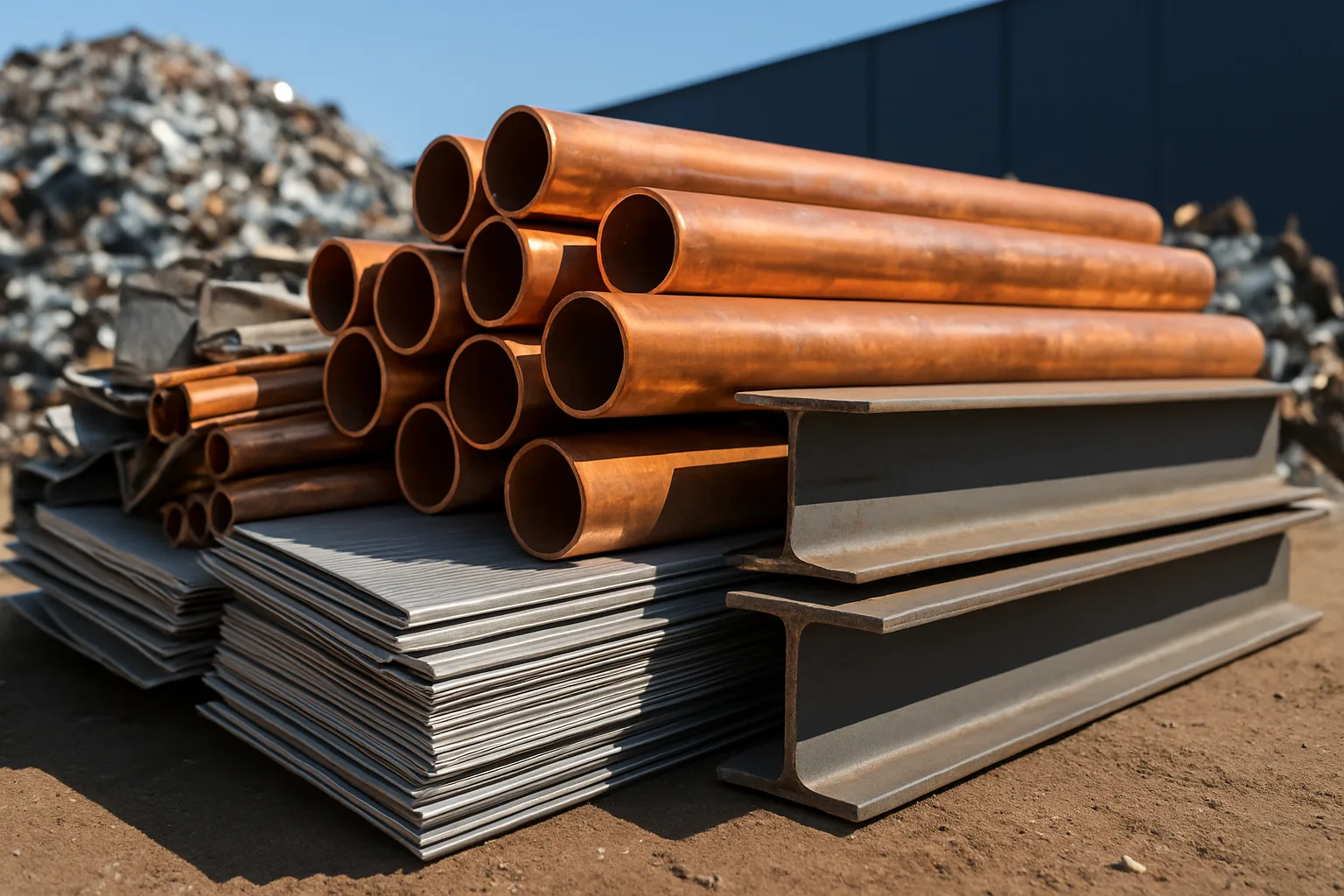
Copper is the metal most sellers obsess over — and for good reason. The difference between #1 bare bright copper and #2 copper wire can be significant per pound, and most residential sellers are working with mixed grades without realizing it. In San Antonio, you'll find yards willing to buy copper daily, but the prices posted on a sign out front and the price a prepared, documented seller gets are often different things.
Here's what affects your copper payout right now:
- Grade and cleanliness. Stripped, bare bright copper commands the top price. Insulated wire, corroded pipe, and mixed copper drop into lower grades. Knowing which you have — and presenting it sorted — protects your number.
- Volume. A handful of fittings and a hundred pounds of wire get priced differently. Larger loads have more negotiating room.
- Who you're selling to. One buyer. One price. That's not a market — that's a quote. Copper scrap prices in San Antonio vary between buyers. The only way to know you're getting the best available price is to create competition.
- Documentation. Some buyers pay more when material is documented — especially for commercial sellers. Photos, weights, and sourcing information build confidence and can move the price.
The copper scrap price today shifts with the LME (London Metal Exchange) and COMEX. If you're a regular seller, tracking these indexes gives you a reference point before you walk into any yard. Don't go in blind.
How to Find the Best Scrap Metal Buyer Near You — And Why "Near Me" Isn't the Whole Story
Typing "scrap metal recycling near me" into a search engine gives you a map. That's a starting point, not a strategy. Distance matters when you're hauling heavy loads, but proximity alone doesn't mean a yard pays well. A buyer twenty minutes away might consistently pay more than the one across the street — and if you're moving meaningful weight, that difference adds up fast.
The smarter approach: treat your scrap load like inventory, not a favor. You wouldn't sell a truck without getting a few offers. Your copper, aluminum, and cats deserve the same logic. Here's a practical process:
- Know what you have before you call. Sort your material. Separate ferrous from non-ferrous. Pull the insulation off copper wire if you have the time — you'll likely recover the cost of that labor in price per pound.
- Get multiple quotes. Call at least two or three buyers. Better yet, use a platform that does this automatically. SMASH connects sellers with vetted buyers across North America — no subscription, no guessing.
- Document your load. Photos and weights aren't just for big commercial loads. Even a personal truckload benefits from documentation. Buyers price with more confidence when they can see what they're bidding on.
- Understand the offer. Is that price per pound with or without the weight of the bag? Is there a shrinkage factor applied to insulated wire? Ask. A good buyer explains their pricing.
- Check pickup options. If you can't transport a large load, scrap metal pickup services exist. Some buyers will come to you — especially for larger volumes of copper, aluminum, or catalytic converters.
For sellers in San Antonio, local San Antonio scrap metal services can connect you with buyers who know the local market — and platforms like SMASH add competitive pressure that single-buyer transactions simply don't have. If you want to sell your scrap metal on GetMyScrap, the process is built around getting you a real market price, not a take-it-or-leave-it number.
Catalytic Converters: Still the Most Misunderstood Scrap Sale in Texas
Selling catalytic converters in Texas requires more attention than most metals. The value is real — some units carry meaningful precious metal content — but the spread between a fair price and a lowball offer is wider here than almost anywhere else in scrap. Sellers who don't know their serial number or can't identify the unit often get a generic "we'll take them all for X" offer. That's not pricing — that's a gamble on the buyer's side.
If you're sitting on catalytic converters from salvage vehicles, fleet maintenance, or auto recycling, here's what you need:
- The serial number or OEM part number from the cat itself
- The make, model, and year of the vehicle it came from
- Photos of the unit — both the serial number and the body condition
- A buyer who uses real assay data or a recognized pricing database
Platforms like SMASH use serial tracking and photo documentation to give buyers the information they need to bid accurately. More accurate information means more competitive bids. If you're asking "what's the best price for catalytic converters near me," the answer depends heavily on whether you can identify what you have. Do that work first — it pays.
Sell Scrap Metal Online: What That Actually Means for San Antonio Sellers
Selling scrap metal online doesn't mean shipping a box of copper pipe across the country. It means using digital tools to bring buyers to your material — and creating the competition that drives price discovery. For San Antonio sellers with large loads, commercial volumes, or specialty materials like cats and non-ferrous, an online auction-style platform changes the math.
Here's the old way: you call your one buyer. They give you a number. You take it or drive to the next yard and repeat. The new way: you list your material with documentation, vetted buyers bid, and you see what the market actually pays. No subscription fees. No guessing. SMASH operates exactly this way — and it's built for commercial sellers who move real volume, not occasional side-of-the-road loads.
If you want to get a fair price for your scrap today, the best move is combining local knowledge (what's moving in San Antonio, which yards are active buyers) with the competitive pressure of a platform that works for you. That combination — local market awareness plus competitive bidding — is where sellers consistently see better outcomes.
You can also explore scrap metal selling guides to sharpen your approach before your next sale — whether that's understanding copper grades, pricing catalytic converters correctly, or preparing a mixed load for the best possible result.
Practical Tips for Getting the Best Scrap Metal Prices in Texas Right Now
The market is active. Yards in Texas are buying. Here's how to position yourself to capture the best available price today:
- Sort before you sell. Mixed loads get downgraded. A sorted load of clean #1 copper gets paid at #1 rates. The separation takes time — it almost always returns more than that time costs.
- Don't haul non-ferrous to a yard that specializes in steel. Know your buyer's focus. A yard that moves tons of structural steel may not have the best price for bare bright copper or aluminum extrusions.
- Time your sale when you can. Copper prices in particular can shift meaningfully week to week. If you're not under pressure to liquidate, watching the LME for a few days before selling a large load is worth it.
- Use photo documentation. Even for smaller loads. A buyer who can see your material before bidding is a buyer with more confidence — and more confidence tends to translate to better prices.
- Ask about pickup. If your load is too heavy to move economically, ask whether the buyer will come to you. For commercial volumes, many buyers will. For individuals, platforms like GetMyScrap connect you with pickup services that make it practical.
- Get your price in writing. Before you drop a load at a yard, confirm the per-pound rate and any deductions. A verbal quote is a starting point. A written one is what you get paid.
The market rewards prepared sellers. That's true in San Antonio, across Texas, and across North America. If you show up with sorted, documented, identified material and you're willing to let multiple buyers see it, you're already ahead of most sellers. The rest is execution.
When you're ready to move your next load, sell your scrap metal on GetMyScrap — request a pickup, get real market pricing, and stop guessing what your material is worth.
Frequently Asked Questions
Q: What is the best way to find scrap metal recycling near me in San Antonio?
Start with a search for local yards, but don't stop at proximity. Compare prices from at least two or three buyers before committing. For commercial volumes or specialty metals like catalytic converters and copper, using a platform like SMASH or GetMyScrap brings multiple vetted buyers to your load without you having to make a dozen calls.
Q: How do copper scrap prices in San Antonio compare to the national market?
Local copper scrap prices generally track the national commodity market (COMEX/LME) with a regional adjustment based on transportation costs, local demand, and yard competition. San Antonio is an active market with multiple buyers, which means competition exists — but you have to create it. A single-buyer transaction rarely reflects the full market price available to you.
Q: What's the best way to sell catalytic converters for the best price in Texas?
Identify your units before you sell. The serial number or OEM part number on each catalytic converter is what buyers use to determine precious metal content and price accurately. Sellers who walk in with unidentified, mixed cats almost always get a lower aggregate price than those who've done the identification work. Photo documentation and using a platform that supports serial tracking — like SMASH — gives you the best shot at competitive bids.
Q: Can I sell scrap metal online if I'm located in San Antonio?
Yes. Selling scrap metal online means using digital platforms to connect with vetted buyers and create competitive bidding — not shipping your material across the country. For local sellers with meaningful volumes of copper, aluminum, or catalytic converters, platforms like SMASH and GetMyScrap allow you to list documented loads and receive bids from buyers who serve the Texas market.
Q: Do scrap metal prices fluctuate, and when is the best time to sell?
Prices fluctuate constantly — copper in particular can move significantly in a short period based on global commodity markets, currency movements, and industrial demand. There's no perfect formula for timing, but tracking the LME copper price and COMEX before selling a large load gives you a reference point. If you're not under time pressure, a few days of price awareness before selling a significant load of copper or non-ferrous metal is generally worth the wait.
Stay current on scrap metal market trends and pricing insights by following SMASH on LinkedIn — real industry updates, no filler.