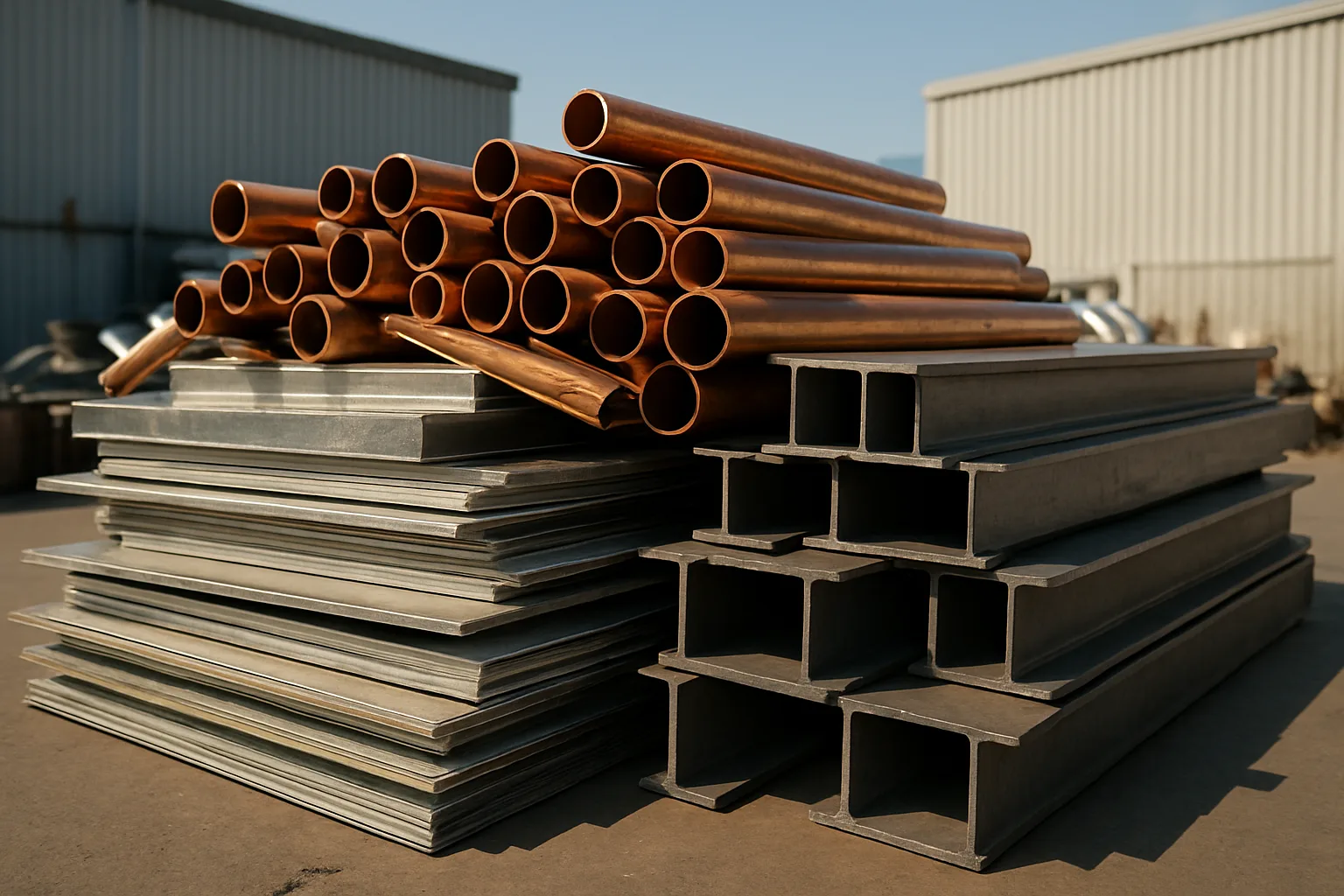
Why Salt Lake City Is One of the Best Places to Start a Scrap Metal Side Business in 2026
Most side hustles require upfront inventory, a storefront, or a platform that takes a cut before you see a dime. Scrap metal collection requires none of that. You find material other people are throwing away, bring it to a buyer, and get paid. That's the whole model. And right now, with scrap metal prices Salt Lake City holding steady across ferrous and non-ferrous categories, the timing for starting a collection side business in Utah is genuinely solid.
This isn't a get-rich-quick pitch. It's a practical breakdown of how to start small, what to collect, how to price your hauls, and how platforms like SMASH are changing the way serious sellers approach the market. Whether you're pulling copper wire from a remodel job or loading up a truck with aluminum extrusion, the fundamentals are the same.
What You Actually Need to Get Started
The barrier to entry is low — but it's not zero. Before your first pickup, you need a few things in place. Most of them cost little or nothing.
- A truck or trailer: You don't need to own one. Borrowing a pickup or renting a trailer for a Saturday haul is a legitimate starting point.
- Gloves, boots, and eye protection: Scrap yards in Utah and most states require basic PPE. You'll also want them when you're loading cut copper pipe or sheet aluminum.
- A basic scale: Knowing your weights before you pull into the yard gives you leverage in the conversation. Even a simple hanging scale for smaller loads helps.
- A phone with a camera: Document every load. Photo documentation matters more than most new collectors realize — especially if you're moving up to non-ferrous or catalytic converters.
- A scrap yard near me that's open on your schedule: Check hours before you show up. Yards in the Salt Lake City metro have variable hours, and some are cash-only on certain material types.
Once you have those basics covered, you're operational. The real work is finding material consistently — and that comes down to relationships and sourcing.
Where to Source Scrap Metal in Salt Lake City and Across Utah
New collectors often make the mistake of waiting for scrap to come to them. The better move is to build a sourcing network early. Salt Lake City has a dense mix of construction activity, light manufacturing, and residential turnover — all of which generate recyclable metal on a regular basis.
Here are the most reliable sourcing channels for a side business in Utah:
- Construction and demo crews: Framing crews, electricians, and plumbers generate copper wire, copper pipe, and aluminum conduit constantly. Offer to haul it away for free in exchange for the material. Most are happy to say yes.
- Appliance removal: Washers, dryers, and refrigerators contain steel, aluminum, and copper motors. Post on local Facebook groups or Nextdoor offering free appliance pickup.
- HVAC contractors: Old AC units are packed with copper coil and aluminum fins. This is some of the most valuable material a side collector can access without specialized equipment.
- Auto salvage and end-of-life vehicles: Catalytic converters, aluminum wheels, and copper wiring harnesses are all in play. If you want the best price for catalytic converters, documentation matters — serial tracking and photo documentation are increasingly required by reputable buyers.
- Estate sales and demo cleanouts: Older homes in the Salt Lake City area often contain legacy copper plumbing. Estate liquidators sometimes just want it gone.
Consistency beats volume when you're starting out. Two or three reliable sourcing relationships will do more for your business than chasing random Craigslist loads.
Understanding Copper Scrap Price Today and How to Read the Market
If you're going to build a side business around scrap metal, you need to understand how pricing works — and why it changes. The copper scrap price today is influenced by LME (London Metal Exchange) spot prices, domestic demand from wire mills and foundries, and the current spread between scrap grade and refined metal. That spread shifts constantly.
In practical terms, this means the price you get for a pound of bare bright copper this week may not be the same as next week. Yards adjust their buy prices based on what the market is doing. This is normal. The problem isn't price volatility — it's when sellers don't know the market and accept a low number without question.
A few habits that help:
- Check published commodity indices weekly, not just when you're ready to sell.
- Know your grades before you arrive at the yard — bare bright, #1 copper, #2 copper, and insulated wire all price differently.
- Ask the yard to itemize the payout by grade. Most reputable yards will.
- Track your average per-pound returns over time. If they're consistently below where the market is, it's time to shop around.
Price discovery is the single biggest advantage informed sellers have. Platforms like North America's B2B scrap metal auction platform SMASH exist specifically to solve the price discovery problem at a commercial scale — multiple vetted buyers competing for your load instead of one yard setting the price unilaterally. As your side business grows, that model becomes increasingly relevant.
Disclaimer: Scrap metal prices fluctuate daily based on commodity markets. Always check current rates before selling.
How to Price Your Loads and Avoid Leaving Money on the Table
Most new collectors undersell their first few loads. Not because yards are dishonest, but because the seller doesn't know what they have. Sorting and grading your material before you arrive is the single most effective thing you can do to improve your payout.
Here's a basic sorting framework:
- Separate ferrous from non-ferrous: Steel and iron go in one pile. Copper, aluminum, brass, and stainless go in another. Mixed loads get paid at the lowest rate.
- Strip insulated wire when it makes sense: Stripping copper wire to bare bright increases the value significantly. Run the numbers — sometimes the labor is worth it, sometimes it isn't.
- Keep catalytic converters separate: Cats price based on the specific converter, not by weight. If you want the best price for scrap catalytic converters, you need serial numbers and VIN documentation. Buyers require it, and yards that don't ask questions should raise flags.
- Clean your aluminum: Aluminum with steel inserts, paint, or plastic attachments grades lower. Clean extrusion or sheet prices better than mixed or dirty aluminum.
If you're moving meaningful volume, consider a scrap metal auction platform for non-ferrous loads. The auction format introduces competition among buyers, which creates better price discovery than a single-buyer transaction. That's the core premise behind SMASH — and it's why commercial sellers don't just call one yard anymore.
Scaling Up: From Side Hustle to Structured Operation
Once your sourcing is consistent and you understand the pricing environment, the question becomes: how do you grow this without it consuming all your time? The answer is systems.
Document everything from the start. Build a simple spreadsheet that tracks material type, weight, grade, where it came from, and what you received per pound. After a few months, patterns emerge. You'll see which sourcing channels produce the highest-value material, which grades are worth sorting and which aren't, and what your average revenue per haul looks like.
If you're in the Salt Lake City area and you're generating consistent non-ferrous volume — copper, aluminum, catalytic converters — it's worth understanding how commercial buyers and scrap metal recycling Utah operations approach volume transactions. Commercial buyers want consistent, documented loads. Photo documentation, packing lists, and accurate weights matter. The more professional your process, the better your buyer relationships.
You can sell your scrap metal on GetMyScrap to connect with buyers who pay fair, competitive rates without the runaround. For individuals and small operators just getting started, that kind of direct access to pricing makes a real difference. And as your volume grows, you can explore scrap metal selling guides to understand how larger loads, bulk non-ferrous, and catalytic converter batches are handled differently than single-haul scrap.
The side business model works because scrap metal is everywhere, and most of it is being undervalued or thrown away. Your job is to find it, sort it, and sell it to someone who will pay what it's actually worth. That's a simpler business model than most people realize — and it's one that scales with effort.
When you're ready to stop guessing at prices and start getting competitive offers on your loads, get a fair price for your scrap today through GetMyScrap. The scrap is out there. The buyers are real. The only variable is how much of the market you're capturing.
Frequently Asked Questions
Q: What are scrap metal prices in Salt Lake City right now?
Scrap metal prices in Salt Lake City vary by material type, grade, and current commodity market conditions. Copper, aluminum, and steel all price differently, and rates shift week to week. Always check current buy prices directly with local yards or platforms like GetMyScrap before selling a load. Published commodity indices give you a baseline, but yard buy prices reflect local demand and spread.
Q: How do I find a scrap yard near me that's open in Salt Lake City?
Most scrap yards in the Salt Lake City metro operate Monday through Saturday, with reduced or no hours on Sundays. Call ahead before your first visit — hours vary by yard and some facilities have separate hours for commercial versus residential drop-offs. Checking Google Maps listings for current hours is a fast starting point.
Q: What scrap metal is worth the most for a small collector in Utah?
Copper consistently prices highest per pound among common scrap metals — bare bright copper wire and clean copper pipe are both high-value materials. Catalytic converters can also yield strong returns, but they require documentation and serial tracking to sell through reputable buyers. Aluminum comes third, with clean extrusion and sheet pricing better than cast or mixed grades.
Q: Do I need a license to collect and sell scrap metal in Utah?
Utah has regulations around scrap metal dealers and secondary metal recyclers, including record-keeping requirements for certain materials. For individual collectors selling personal scrap, the requirements are less formal — but if you're building a business, check with the Utah Division of Occupational and Professional Licensing for current requirements in 2026. Catalytic converters have specific documentation rules that apply regardless of seller type.
Q: How does a scrap metal auction platform help small sellers get better prices?
A scrap metal auction platform introduces competition among buyers, which creates better price discovery than a single-buyer transaction. Instead of calling one yard and accepting whatever number they quote, your load goes in front of multiple vetted buyers who bid against each other. SMASH operates on this model for B2B sellers, and the same principle applies at smaller scales — more buyers competing means you're more likely to see what your material is actually worth in the current market.
Stay current on scrap metal market trends and industry news by following SMASH on LinkedIn — practical insights for sellers and buyers across North America.
```