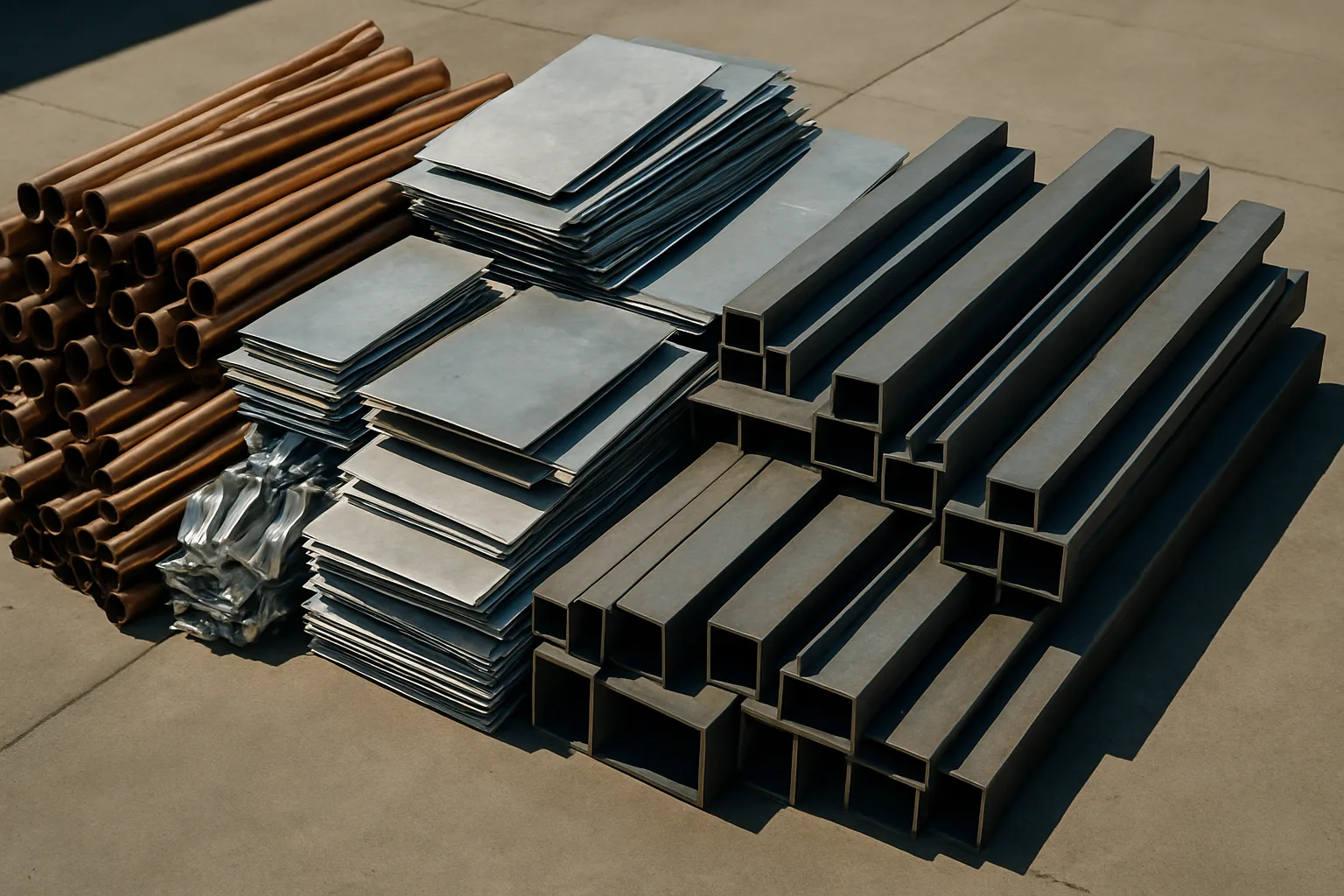
Not All Stainless Is Created Equal — And Your Yard Price Reflects That
You've got a pile of stainless steel sitting in your yard and you want to know what it's worth. Simple question, complicated answer. Stainless steel scrap is one of the most misunderstood materials in the recycling business — partly because it looks similar regardless of grade, and partly because the price spread between grades can be significant. Knowing your grades before you sell isn't just helpful. It's money.
Whether you're cleaning out a commercial kitchen in Long Beach, breaking down industrial equipment, or processing a mixed load at your facility, understanding stainless steel grades is the difference between leaving value on the table and getting paid what your material is actually worth. Let's break it down.
What Makes Stainless Steel Different From Regular Steel Scrap
Regular carbon steel is priced mostly on weight. Stainless is priced on chemistry. The value comes from the alloying elements — primarily nickel and chromium — and the grade determines how much of each is present. That's why steel scrap price today for a 304 stainless heat exchanger looks very different from what you'd get for a 430 refrigerator panel, even if they weigh exactly the same.
The key elements to understand:
- Chromium — All stainless steel contains at least 10.5% chromium. It's what creates corrosion resistance. Present in every grade.
- Nickel — Found in austenitic grades (the 200 and 300 series). Nickel is the expensive element. It drives price up significantly.
- Molybdenum — Found in 316 stainless. Adds corrosion resistance in harsh environments. Also adds value.
- Manganese — Present in 200-series grades as a partial nickel substitute. Lower value than 300-series.
Buyers bid more aggressively on high-nickel material because it costs more to source and has strong demand from stainless steel mills. That's why proper grade identification matters so much when you're trying to get the best scrap metal prices on a mixed stainless load.
The Main Stainless Steel Scrap Grades — What Each One Is Worth
Scrap yards and mill buyers sort stainless into several categories. Here's what you're likely to encounter and what drives the pricing on each.
304 Stainless Steel
This is the most common grade in the recycling stream. Food processing equipment, kitchen sinks, restaurant equipment, brewing tanks, architectural panels — most of it is 304. It contains roughly 18% chromium and 8% nickel. That nickel content is what makes it valuable. When buyers talk about stainless steel scrap grades and pricing, 304 is usually the baseline they price everything else against.
If you're in Long Beach or anywhere across California processing commercial food service equipment, the odds are high you're dealing with 304. It's clean, it's consistent, and most buyers know exactly what to do with it.
316 Stainless Steel
The premium grade in most recycling streams. Contains 16% chromium, 10% nickel, and 2% molybdenum. That molybdenum is the differentiator — it makes 316 more resistant to corrosive environments, so it's used heavily in marine hardware, pharmaceutical equipment, chemical processing, and medical devices. The added nickel and molybdenum mean it commands a higher price per pound than 304.
If you're pulling 316 out of a load and mixing it with 304, you're leaving money behind. Sort it separately. The price spread is real and it adds up fast on larger loads.
430 Stainless Steel
This is where sellers often get caught off guard. 430 is a ferritic grade — it contains about 17% chromium but little to no nickel. It's magnetic, which is how experienced yard operators identify it quickly. The absence of nickel drops the value considerably compared to 304 or 316.
430 shows up in appliance panels, automotive trim, and lower-cost kitchen equipment. It still has value — it's still stainless — but don't expect 304 pricing. If a buyer is quoting you a single blended price on a mixed stainless load without sorting, they're almost certainly pricing to the lower grade.
200-Series Stainless
The 200 series (201, 202) uses manganese to partially replace nickel, making it cheaper to produce but also lower in value at scrap. It's increasingly common in consumer goods and imported equipment. Many sellers don't realize they have 200-series material until a buyer XRF-tests it and the bid drops. Know what you have before you load a truck.
Specialty and High-Alloy Grades
Duplex stainless, super duplex, 904L, Hastelloy, Inconel — these high-alloy materials exist in niche industrial applications. If you're processing aerospace, chemical plant, or offshore equipment, you may encounter them. These grades can carry significant premiums, but they also require proper identification. Don't let specialty alloys get lumped into a generic stainless pile.
How to Identify Stainless Steel Grades Before You Sell
Visual identification only gets you so far. Stainless steel looks like stainless steel. Here's how professionals sort it:
- Magnet test — A basic first sort. Ferritic grades (like 430) are magnetic. Austenitic grades (304, 316) are non-magnetic or very weakly magnetic. Not a definitive grade identifier, but useful for a first pass.
- XRF analyzer — The gold standard. Handheld X-ray fluorescence guns read the elemental chemistry of the metal in seconds. Many yards and all serious buyers use them. If your buyer isn't using an XRF on high-value material, that's a flag.
- Mill certifications and markings — New or lightly used material often has stampings, tags, or certifications. Keep documentation when it exists — it can support your price.
- Source knowledge — Knowing where the material came from helps. Medical equipment is likely 316. Restaurant equipment is likely 304. Appliances are likely 430 or 200-series.
Proper identification before a sale is also the foundation of solid scrap metal inventory management. When you document what you have — grade, weight, source, photos — you're not just organized. You're in a stronger negotiating position. Platforms like the SMASH scrap metal auction marketplace are built around this idea: documented, graded inventory attracts more serious buyers and more competitive bids.
Stainless Steel Scrap Pricing — What Actually Moves the Number
The steel scrap price today for stainless is driven by several intersecting factors. Understanding them helps you time your sales and set realistic expectations.
Nickel prices on the LME — The London Metal Exchange nickel price is the single biggest driver of stainless scrap value. When nickel runs up, 304 and 316 scrap prices follow. When nickel drops, so do stainless grades. Watch the LME if you're holding inventory and deciding when to sell.
Mill demand — Stainless steel mills need scrap as feedstock. When mills are running hard and order books are full, they bid aggressively for clean, sorted stainless. Demand cycles affect your price directly.
Material cleanliness and preparation — Dirty stainless — mixed with carbon steel, coated, or contaminated — gets discounted. Clean, sorted material commands better pricing. This is true whether you're selling to a single local buyer or putting a load in front of multiple buyers through an auction format.
Load size and consistency — Large, consistent loads of a single grade are easier for mills to process and attract stronger interest. A mixed load of unknown grades leaves buyers pricing defensively. Sort your grades, document your inventory, and you put yourself in a better position before the first bid comes in.
This is exactly where SMASH adds value. Rather than calling one buyer and hoping they're having a good day, you put your documented load in front of vetted buyers who compete for it. More buyers means better price discovery — that's not hype, it's math. Sell your scrap metal on GetMyScrap and connect with a platform built to get you better outcomes on every load.
Selling Stainless Steel Scrap in Long Beach and Across California
Long Beach sits at the intersection of one of the country's busiest port complexes and a massive industrial base. That means there's consistent stainless scrap moving through the area — from food processing, marine and port equipment, pharmaceutical and biotech facilities, and industrial fabricators. If you're recycling stainless in Long Beach or anywhere in California, you have options. The question is whether you're using them.
Too many sellers in the region still rely on a single yard relationship and a phone call. That's not a bad thing if your buyer is fair — but you have no way to know if you're getting a fair price without competition. The market for stainless scrap in California is active. Mill demand, export activity through the port, and a robust manufacturing base all contribute to real price tension when multiple buyers are in the room.
If you want to understand scrap metal prices near me in real terms, the answer is straightforward: put your load in front of more buyers. Documented inventory, grade-sorted material, and a competitive auction format consistently produce better price discovery than a single phone call. Explore scrap metal selling guides to learn more about how to prepare your loads and maximize what you receive.
Whether you're selling a truckload of 304 restaurant equipment, a mixed pallet of 316 pharmaceutical parts, or sorting through a demolition haul, the approach is the same: know your grades, document your material, and sell where buyers have to compete for it. Get a fair price for your scrap today — start with the right information and the right platform.
Frequently Asked Questions
Q: What is the steel scrap price today for 304 stainless steel?
Stainless steel scrap prices fluctuate based on nickel prices, mill demand, and material cleanliness. There is no single fixed price — your actual offer depends on grade, quantity, preparation, and the buyer you're selling to. Always check current rates with multiple buyers before accepting an offer, and consider using a competitive auction format for larger loads.
Q: How do I tell the difference between 304 and 430 stainless scrap?
The simplest first test is a magnet. 430 is ferritic and will stick to a magnet. 304 is austenitic and is non-magnetic or very weakly magnetic. For definitive identification — especially on valuable loads — use an XRF analyzer. Many professional buyers bring their own. If your buyer is quoting you without testing your material, ask why.
Q: Does Long Beach have buyers for stainless steel scrap?
Yes. Long Beach and the surrounding Southern California region have an active scrap metal market with yards and buyers handling stainless on a regular basis. The port complex and industrial base generate consistent volume. To ensure you're getting competitive pricing, compare multiple buyers rather than defaulting to a single yard relationship.
Q: Does the grade of stainless steel really make a big price difference?
Yes — significantly. The price spread between 304 (nickel-bearing) and 430 (nickel-free) stainless can be substantial depending on current nickel prices. Selling mixed grades as a single lot typically means you're priced to the lowest common denominator. Sort by grade, document what you have, and sell accordingly.
Q: What is SMASH and how does it help me sell stainless steel scrap?
SMASH is a B2B scrap metal auction platform that connects sellers with vetted buyers across North America. Instead of calling one buyer and accepting a single offer, you list your documented load and buyers compete for it. This competitive format supports better price discovery on stainless steel and other non-ferrous and ferrous loads. There are no subscription fees — SMASH only wins when you do.
Disclaimer: Scrap metal prices fluctuate based on commodity markets, material grade, regional demand, and other factors. The pricing information in this article is general and educational. Always verify current rates with buyers before making selling decisions.
Stay current on scrap metal market trends and industry insights by following SMASH on LinkedIn.