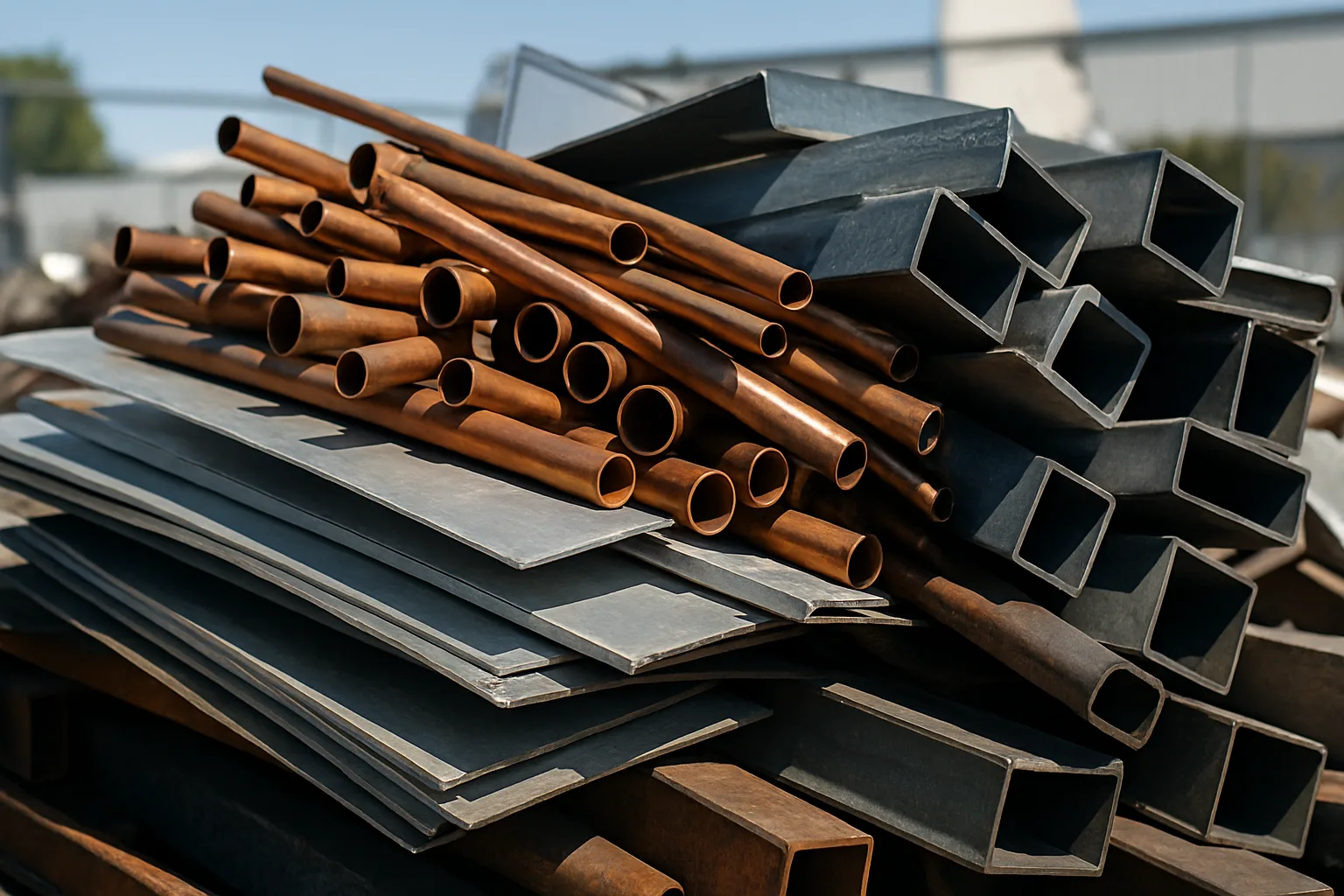
If you've noticed the numbers at your local yard shifting more than usual lately, you're not imagining it. Scrap metal prices in Tucson — and across the entire U.S. — have been moving in direct response to trade policy decisions made thousands of miles away. Tariffs on imported steel, aluminum, and copper don't just affect manufacturers and smelters. They ripple all the way down to the person hauling a load of copper pipe or a pallet of aluminum extrusions to the yard. Understanding why prices move — and how to position yourself when they do — is the difference between leaving money on the table and making the most of every load.
This isn't a macro-economics lecture. This is a practical breakdown of what's actually happening, what it means for yards and sellers in Tucson and across Arizona, and how smart sellers are using platforms like find the best price for your scrap on SMASH to cut through the noise and get real competitive bids — regardless of where the policy winds are blowing.
---What Tariffs Actually Do to the Scrap Metal Market
Tariffs are import taxes. When the U.S. government places a tariff on foreign steel or aluminum, it raises the cost of that imported material. That sounds like good news for domestic scrap — and sometimes it is. When imported metal gets more expensive, domestic mills and foundries lean harder on domestic scrap supply to fill the gap. More demand, same supply — prices move up.
But the relationship isn't always that clean. Tariffs can also trigger retaliatory trade measures from other countries. When key export markets for U.S. scrap close or get more expensive to access, that material has fewer places to go. Domestic supply builds up. Yards fill. And prices compress — even for high-value material like copper and aluminum.
Here's what that looks like on the ground in 2026:
- Steel scrap — Domestic mills are running at higher capacity, which supports HMS and shredded pricing. But export demand is inconsistent as trading partners navigate their own retaliatory postures.
- Copper — Still the most globally traded and globally priced metal. Tariff policy affects copper indirectly through currency moves and smelter demand signals. The copper scrap price today reflects not just U.S. policy but global industrial appetite, especially from Southeast Asian and South American processors.
- Aluminum — Heavily affected by Section 232-style trade actions. Domestic sheet and can sheet demand has been a mixed story in 2026, with some spec grades seeing stronger premiums and others lagging.
- Catalytic converters — PGM pricing (platinum, palladium, rhodium) runs on its own track, driven by mining output, automotive production trends, and refinery capacity. Tariffs on finished vehicles can indirectly affect how many cores enter the secondary market — but this is a longer-cycle effect.
The bottom line: trade policy adds volatility. And volatility rewards the seller who's watching the market closely — and punishes the one who just calls the same buyer every time without shopping around.
---Why Tucson Scrap Sellers Feel This Differently Than Other Markets
Geography matters in scrap. Tucson's position in southern Arizona puts it at an interesting crossroads. It's close to the U.S.-Mexico border, which means cross-border scrap flows — both legal export and import — are a real part of the regional picture. When tariff regimes shift, those flows shift too. A smelter or mill on the Mexican side of the border that historically bought Arizona copper or aluminum may pull back when the policy environment changes. That material stays domestic. Local yards see more supply with fewer outlets.
At the same time, Tucson has a significant base of industrial activity — mining support industries, manufacturing, and construction — that generates consistent scrap flows. Copper pipe, aluminum conduit, heavy equipment components, and catalytic converters from the region's vehicle population all move through local yards regularly. When you're generating volume, even small price swings per pound add up fast.
That's exactly why sellers with any meaningful volume in Tucson have started looking beyond single-buyer relationships. If your price is set by one phone call to one buyer, you're not discovering the market — you're accepting whatever that one buyer decides is fair that day. Tucson scrap metal services have evolved significantly, but the best prices still go to the sellers who know how to create competition.
---The Old Single-Buyer Model Is Broken — Here's the Case for Competition
Let's talk about what happens when trade policy creates uncertainty. Buyers get cautious. They hedge. They quote low because they're not sure where the market is heading. If you're calling one buyer — your usual contact, the guy you've dealt with for years — you're getting his hedged number. That's not the market. That's one person's risk management.
The sellers who did best during recent periods of tariff-driven volatility weren't the ones with the best connections. They were the ones who created real competition for their material. When multiple vetted buyers are bidding on your load, the price discovery is genuine. The market speaks. And in a tariff environment where domestic demand from mills is actually stronger — as it often is when imports get expensive — that competition can reveal a better number than you'd ever get from a single cold call.
This is exactly the problem that a scrap metal auction platform like SMASH was built to solve. Instead of one offer, you get competing bids from vetted buyers who are actually in the market for your material. No subscription fees. No guessing. Just documented loads, transparent bidding, and a clear outcome. Sell your scrap metal on GetMyScrap and connect with buyers who are actively looking for what you have — including copper, aluminum, ferrous loads, and catalytic converter cores.
More buyers means better price discovery. That's not a sales pitch — that's just how markets work.
---How Copper and Catalytic Converter Sellers Are Navigating 2026 Trade Volatility
Copper is the canary in the coal mine for trade tension. Because it's priced globally and used in everything from construction to EVs to power infrastructure, copper scrap prices respond quickly to tariff news, retaliatory moves, and shifts in industrial demand signals from major consuming nations.
For sellers in Arizona sitting on copper wire, copper pipe, bare bright, or #1 and #2 copper, the 2026 environment requires paying attention. The copper scrap price today can shift meaningfully within a week based on trade headlines, LME movement, and domestic mill buying signals. Sellers who check prices once a month and haul when it's convenient are leaving real money behind. Sellers who time their loads — even roughly — based on market signals and sell competitively are doing meaningfully better.
Catalytic converters are a different animal. PGM prices are less directly affected by steel and aluminum tariff policy, but they're not immune. When new vehicle tariffs push up car prices and slow new vehicle sales, older vehicles stay on the road longer. More miles mean more converter wear. That can actually support core volumes entering the scrap stream — though it plays out over months, not days.
For anyone looking to get the best price for catalytic converters, the same principle applies: document your cores, know your grade, and don't sell to the first buyer who calls you a number. Platforms that bring vetted buyers into a competitive bidding environment — with serial tracking and photo documentation — give you the transparency to know you're getting a real market price, not a lowball on a high-value material.
Want to get a fair price for your scrap today? Start with documentation and competition. Those two things move the needle more than anything else.
---What Smart Sellers Do When Trade Policy Creates Uncertainty
Volatility isn't just a threat. It's also an opportunity — if you know how to position. Here's what experienced scrap sellers do when the tariff environment is unsettled:
- Document everything. Photo documentation, packing lists, and accurate inventory descriptions give buyers confidence. More confidence means more competitive bids. Platforms like SMASH use inventory tools and photo documentation as standard practice — and it shows in the bid quality.
- Sell competitively, not out of habit. Your usual buyer is not your best buyer by default. When trade dynamics are shifting, market prices can diverge significantly from what a single buyer quotes. Create competition for your loads.
- Understand your material grades. Tariff policy affects different grades differently. HMS 1&2, shredded, bare bright copper, #1 and #2 insulated wire, aluminum extrusions — they each have their own demand profile. Know what you have and price it accordingly.
- Watch the signals, not just the number. LME copper pricing, domestic mill utilization reports, and trade policy headlines all move before local yard prices do. Sellers who read the leading indicators are better positioned.
- Use platforms built for transparency. A proper scrap metal auction platform doesn't just match you with a buyer — it creates a verifiable, documented transaction that protects both parties and ensures you know exactly what you got and why.
Explore scrap metal selling guides to go deeper on grading, timing, and how to get the most from every load you move.
---Closing: Tariffs Will Keep Moving — Your Strategy Shouldn't Stand Still
Trade policy in 2026 is not a one-time event. Tariff rates, retaliatory measures, and bilateral agreements are in constant motion. Scrap metal prices in Tucson — and everywhere else in North America — will continue to reflect that reality. The sellers who treat price as a fixed backdrop are going to keep getting squeezed. The sellers who treat price as a variable they can influence — through timing, documentation, and competitive selling — are going to keep finding opportunity in the same market.
SMASH exists because the old model — one buyer, one phone call, hope for the best — doesn't serve the seller. Competition does. Transparency does. Documented inventory does.
If you've got copper, aluminum, ferrous loads, or catalytic converter cores ready to move, don't settle for the first number you hear. Get a fair price for your scrap metal — request a pickup at getmyscrap.com and put your material in front of buyers who are actually competing for it.
---Frequently Asked Questions
Q: How do tariffs affect scrap metal prices in Tucson specifically?
Tariffs on imported steel and aluminum can increase domestic demand for scrap, which supports prices. But retaliatory measures from trading partners can reduce export demand, putting downward pressure on prices. Tucson's proximity to the U.S.-Mexico border makes it especially sensitive to shifts in cross-border scrap flows. Local sellers benefit most by staying informed and selling competitively rather than relying on a single buyer's quote.
Q: What is the copper scrap price today in Arizona?
Copper prices fluctuate daily based on LME pricing, trade policy signals, and domestic mill demand. We don't publish live spot prices here because they change constantly — always check current rates with multiple buyers or use a competitive platform to get real market bids. Disclaimer: All scrap metal prices fluctuate based on market conditions. Always verify current rates before selling.
Q: Where can I sell scrap metal near me in Tucson?
Tucson has local yard options, but the best prices come when you create competition for your material rather than selling to the first buyer you call. Using a platform that connects you with vetted buyers — like SMASH — gives you real price discovery on loads of any size.
Q: How do I get the best price for catalytic converters in Arizona?
Know your grades, document your cores with photos and serial numbers, and sell through a competitive channel rather than accepting the first offer. PGM values in catalytic converters can vary significantly by make, model, and grade — documentation and competition are the two biggest levers you have.
Q: Does scrap metal pick up service work for smaller loads in Tucson?
Yes. Whether you have a few hundred pounds or several tons, pickup and logistics options are available. The key is ensuring your load is documented and graded accurately before the pickup so buyers know exactly what they're bidding on — which leads to faster transactions and better prices.
---Stay ahead of scrap market shifts — follow SMASH on LinkedIn for trade policy updates, metal price insights, and practical advice for scrap sellers across North America.