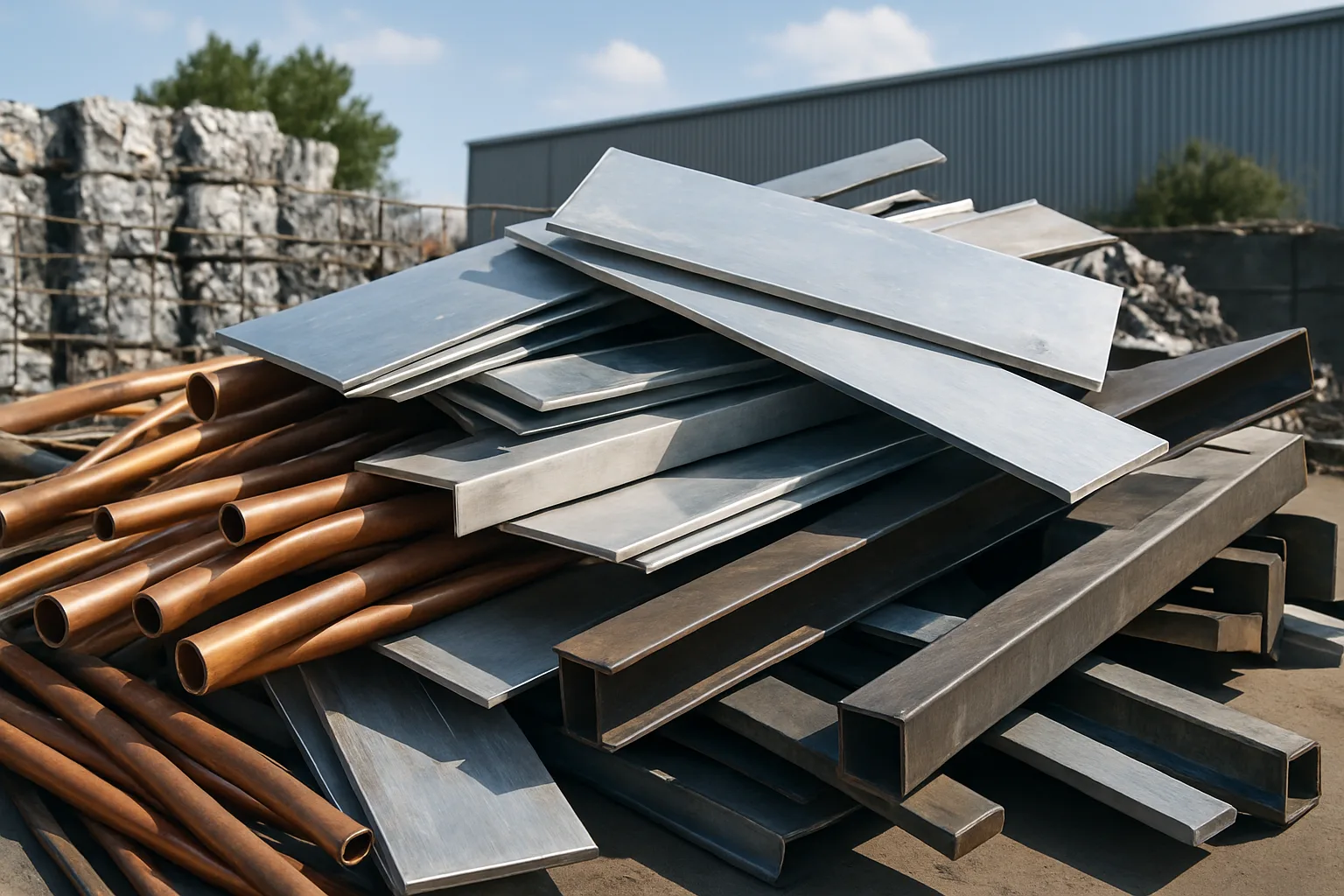
Why Scrap Metal Safety Is the Step Most Collectors Skip — And Why It Costs Them
Most people focus on the aluminum scrap price today before they think about what happens when a load shifts, a sharp edge catches skin, or fumes build up in an enclosed space. That's backwards. Whether you're a weekend collector hauling non-ferrous from a garage cleanout or a yard operator moving tons of mixed steel, the gear you wear and the habits you build protect your ability to keep working — and keep earning.
This guide lays out the protective equipment that matters, the practices that prevent injuries, and how smarter preparation makes you a better, faster, more profitable scrap seller. Safety and efficiency aren't opposites. They run together.
---The Real Risks in Scrap Metal Collection — Know What You're Handling
Scrap metal isn't uniform. One load might include clean aluminum sheet. The next might have corroded pipe, old battery acid residue, brake fluid-soaked brake rotors, or catalytic converter substrate dust. Each material carries its own hazard profile, and collectors who treat every load the same take on risk they don't need to.
Here's what you're actually dealing with in the field:
- Sharp edges and burrs — Cut steel, sheared aluminum, and broken copper pipe are all capable of deep lacerations. This is the most common injury category in scrap collection.
- Heavy load hazards — Engines, transmissions, and dense ferrous loads can weigh several hundred pounds. Improper lifting or unsecured loads cause crush injuries and back damage.
- Toxic residues — Catalytic converters can contain platinum-group metal dust. Old wiring may be coated in lead-based insulation. Radiators often hold ethylene glycol. None of that should end up on your hands or in your lungs.
- Rust and tetanus risk — Oxidized metal creates airborne particulate when disturbed and carries bacterial risk through skin breaks. Keep your tetanus shots current.
- Heat and sun exposure — In Bakersfield, California, summer temperatures regularly push past 100°F. Yards and outdoor collection sites offer little shade. Heat exhaustion is a real occupational hazard for collectors working mid-day loads.
Understanding your material before you touch it changes how you approach every pickup. Don't assume a load is clean just because it looks clean.
---Essential Protective Gear — The Minimum Kit Every Collector Should Own
You don't need a full industrial safety wardrobe to collect scrap responsibly. But there's a minimum kit that covers the most common hazards without slowing you down. If you're selling regularly — whether you're chasing the best scrap metal prices in Bakersfield or running loads across California — this gear pays for itself fast when it prevents a single injury that keeps you out of work.
1. Cut-Resistant Gloves (Not Standard Work Gloves)
Standard leather work gloves protect against abrasion. They don't protect against a sheared aluminum edge moving across your palm under pressure. Invest in ANSI Level A4 or A5 cut-resistant gloves. They're flexible enough for detail work and rated for the kind of contact that matters. Replace them when the outer shell shows wear — degraded gloves give false confidence.
2. Steel-Toed Boots — Composite or Steel Cap
Dropped loads, rolling steel tubing, and shifting material during unloading are all foot hazards. Standard sneakers or work boots don't cut it. ASTM-rated steel-toed footwear is the baseline. Composite toe options are lighter for collectors doing high-volume walking or climbing in and out of trucks repeatedly.
3. Safety Glasses or Goggles
Grinding, cutting, breaking down catalytic converters, or even just tossing scrap into a bin creates airborne fragments. ANSI Z87.1-rated safety glasses are the standard. If you're breaking down converters or using any cutting equipment, upgrade to sealed goggles. Eye injuries are among the most debilitating and most preventable in this work.
4. N95 Respirator or Better — Especially for Cats and Old Wire
Catalytic converter substrate dust contains platinum-group metals and ceramic particulate. Old insulation, especially pre-1980s wire, may contain lead. An N95 respirator filters out fine particulate when you're breaking down loads in enclosed spaces or working with cats. If you're doing this daily, a P100 half-mask respirator is worth the investment.
5. High-Visibility Vest
Yards are active environments. Forklifts, truck traffic, and moving equipment create visibility hazards. A Class 2 hi-vis vest takes ten seconds to put on and makes you visible to equipment operators at distance. Bakersfield yards — like yards across California — operate under Cal/OSHA guidelines that may require hi-vis in active vehicle areas.
6. Long Sleeves and Heavy-Duty Pants
Exposed skin and scrap don't mix. Wear long sleeves (moisture-wicking fabric works well in summer heat) and heavy denim or canvas pants. Cargo pants with reinforced knees are practical for collectors who kneel or crouch during loading.
---Best Practices for Scrap Handling — How Professionals Do It
Gear protects you when things go wrong. Good practices reduce how often things go wrong in the first place. These habits are what separate collectors who do this work for years without injury from those who get sidelined early.
- Sort before you load. Mixed loads create handling hazards — sharp edges hidden in bulk material, compressed springs under tension, glass embedded in non-ferrous. Sort at the source when you can. It also speeds up yard processing and may improve your price per pound by keeping material clean and separated.
- Lift with your legs, use equipment for heavy loads. A transmission weighs 100–200 lbs. An engine block can exceed 400 lbs. Never lift without assistance or mechanical help above your personal safe limit. Use engine hoists, pallet jacks, or truck-mounted cranes for heavy ferrous material.
- Secure loads before driving. Unsecured scrap shifts in transit, damages your truck bed, and creates road hazards. Use load straps rated for your weight. In California, unsecured loads are a traffic violation — a fine on top of a safety risk.
- Don't handle unknown material without identification. If you're not sure what a component is — especially in old appliances, HVAC equipment, or industrial castoffs — don't break it down without finding out first. Some materials require special handling or disposal. Capacitors in old equipment may hold charge. Sealed containers may be pressurized.
- Wash hands before eating or drinking. Heavy metals from scrap — lead, cadmium, nickel — transfer from hands to mouth easily. This is one of the simplest and most overlooked practices in the field. Keep hand wipes or a water jug in the truck.
- Know your heat limits in summer. Bakersfield summers are serious. If you're running loads from June through September in California's Central Valley, schedule heavy outdoor work for early morning, stay hydrated, and recognize heat exhaustion symptoms: heavy sweating, weakness, dizziness, nausea. Stop working and cool down — no load is worth a heat emergency.
Catalytic Converter Safety — A Special Category for Scrap Sellers
Catalytic converter scrap is one of the most valuable categories in the non-ferrous market. The platinum, palladium, and rhodium inside a cat can make a single unit worth significantly more than most other scrap by weight. That value attracts collectors, but the handling risks are specific and underappreciated.
When you sell your scrap metal on GetMyScrap, documentation matters — especially for cats. Platforms that require photo documentation, serial tracking, and VIN lookup create a verified paper trail that protects sellers and buyers. That transparency is exactly how find the best price for your scrap on SMASH — competitive, documented, auditable.
For handling, here's what matters with cats specifically:
- Wear your respirator when breaking down or cutting converters — the ceramic substrate creates fine dust.
- Handle converters individually, not in bulk piles, to avoid cross-contamination of substrate material.
- Photograph each unit before sale — make, model, serial number visible. This isn't just good safety practice. It's good business. Documented inventory gets better buyer confidence and can support better pricing.
- Know your state regulations. California has specific requirements around catalytic converter sales documentation. Non-compliance creates legal exposure, not just safety risk.
How Selling Smart Complements Safe Collecting — Use Tools That Work As Hard As You Do
Safety doesn't stop when you leave the yard. Smart selling practices protect your time, your money, and your reputation as a seller. If you're still calling one buyer and accepting whatever price you hear, you're leaving money on the table — and you have no baseline to know how much.
Whether you're looking for the best scrap metal prices in Bakersfield or trying to get a fair price for your scrap today, the answer is the same: competition reveals the market. When multiple vetted buyers bid on your load, you see what it's actually worth — not what one buyer decides to tell you.
SMASH operates as an auction platform for scrap sellers across North America. No subscription fees. Auto-invoicing. Documented inventory from photo upload to buyer confirmation. If you want to explore scrap metal selling guides and understand how to position your loads for better outcomes, the information is there. Safe collectors who document their material well are better positioned in this market than collectors who rush and guess.
The aluminum scrap price today fluctuates with commodity markets. You can't control the LME. You can control how well you document your load, how cleanly you sort your material, and how many buyers you put it in front of. That's where the edge is.
Disclaimer: Scrap metal prices fluctuate daily based on commodity markets, local demand, and material grade. Always verify current pricing at your local yard or through a verified platform before making selling decisions.
---Frequently Asked Questions
Q: What is the aluminum scrap price today in Bakersfield, California?
Aluminum scrap prices vary by grade — clean sheet, extrusions, cast, and mixed aluminum all price differently — and fluctuate daily with commodity markets. The best way to get an accurate current price in Bakersfield or anywhere in California is to check with multiple buyers or use a platform like SMASH that surfaces competitive bids. Never assume one quote reflects the market.
Q: Is it safe to collect and sell catalytic converters as scrap?
Yes, with the right precautions. Wear an N95 or better respirator when handling broken-down converters, use eye protection, and document each unit with photos and serial numbers. California has specific regulations around cat sales — know them before you sell. Proper documentation also protects you legally and can improve buyer confidence.
Q: How do I sell scrap metal online and get the best price near me?
Platforms that connect you to multiple vetted buyers — rather than a single local contact — give you better price discovery. List your load with clear photos, accurate weights, and sorted material descriptions. Competition between buyers is what reveals real market value, not a single phone call to one yard.
Q: What protective gear do I need to start collecting scrap metal safely?
At minimum: ANSI-rated cut-resistant gloves, steel-toed boots, ANSI Z87.1 safety glasses, and an N95 respirator for dusty or cat-related work. Add a hi-vis vest if you're working in active yard environments. Long sleeves and heavy pants protect against cuts and abrasion during loading and sorting.
Q: Can I get a scrap metal pickup in Bakersfield instead of hauling it myself?
Yes. Pickup services operate in Bakersfield and across California for qualified loads. Larger loads — mixed non-ferrous, bulk steel, commercial quantities of aluminum — are often eligible for scheduled pickup. Check with local services or platforms to confirm minimum load requirements and scheduling lead times in your area.
---Ready to turn your safe, sorted, documented loads into real cash? Sell your scrap metal on GetMyScrap and request a pickup when your load is ready — no guessing, no single-buyer pricing, just fair market value for material you worked to collect properly.
Stay current on scrap metal market trends and pricing shifts — follow SMASH on LinkedIn for industry updates, market insights, and no-fluff news from the scrap world.