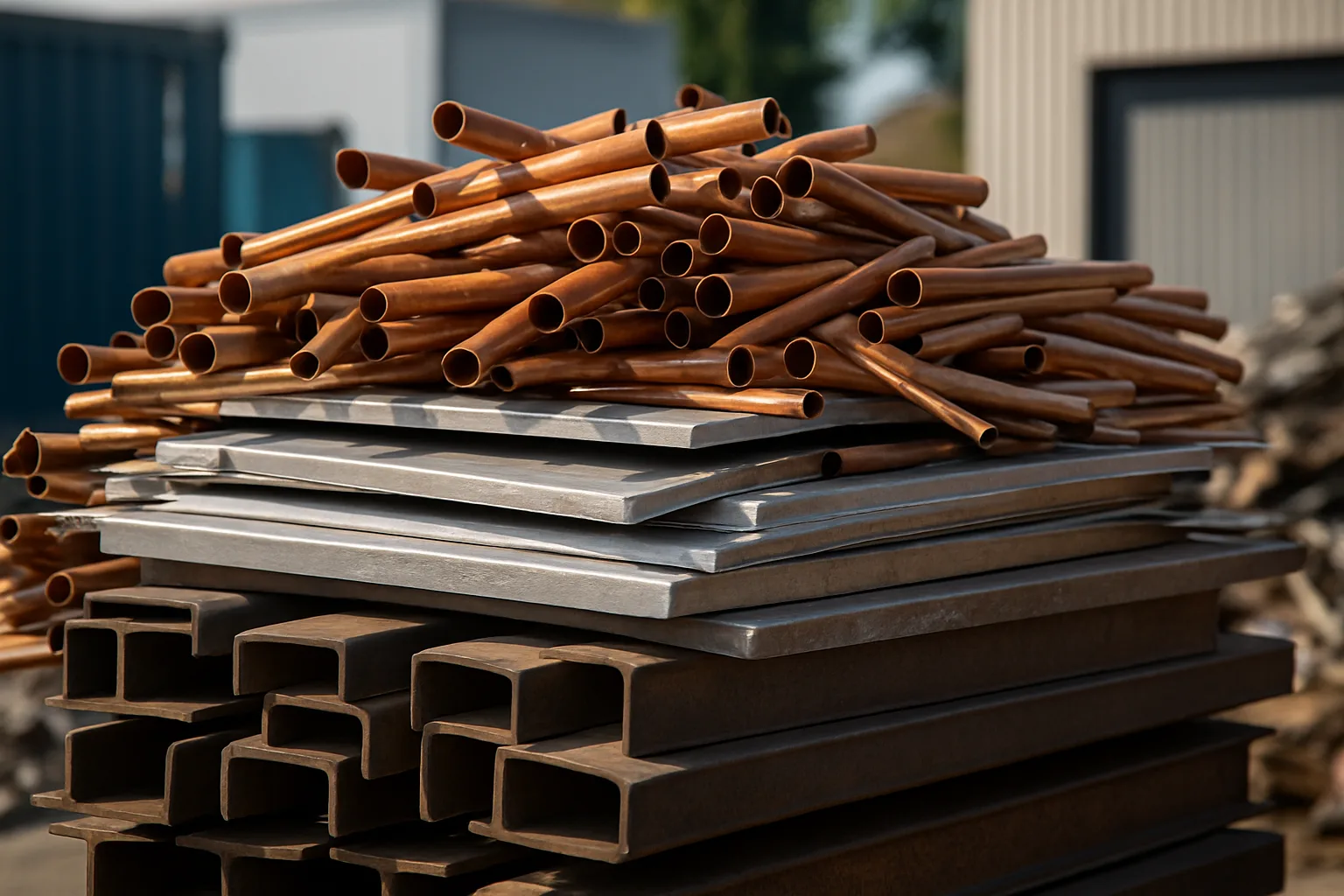
Most small-scale collectors leave money on the table — not because they're lazy, but because nobody told them how the pricing actually works. If you're hauling copper, aluminum, or catalytic converters to a single yard and taking whatever they offer, you're probably not getting the best price for scrap. The copper scrap price today fluctuates with global commodity markets, yard demand, and how well you've sorted your load. That last part is the one you can actually control.
This guide breaks down practical, actionable tips for small-scale collectors who want to earn more — not by working harder, but by working smarter. Whether you're scrapping out of a pickup truck in Dearborn or building a side income across Michigan, these strategies apply.
---Know What You Have Before You Show Up to the Yard
Walking into a scrap yard with a mixed, unsorted load is the fastest way to get paid the lowest rate on everything. Yards will downgrade your entire load to the least valuable material if they can't quickly identify what's in it. Sorting takes time on your end, but it consistently returns more money per pound.
Here's what you should be separating before you pull up:
- Copper grades: Bare bright copper (clean #1 wire), #1 copper pipe, #2 copper (fittings, oxidized pipe), and insulated wire all price out differently. Don't mix them.
- Aluminum: Extrusion, cast, sheet, and radiators are all separate categories. Clean aluminum gets a premium over contaminated or painted material.
- Steel and iron: Light iron, heavy steel, and prepared steel have different rates. Separate them from your non-ferrous materials entirely.
- Catalytic converters: Don't throw cats in with your general metal. They have their own pricing entirely — and it varies significantly by make, model, and serial number.
The cleaner and more sorted your load, the stronger your negotiating position. Yards pay for certainty. Give them that, and you earn more per pound.
---Understand How Scrap Metal Prices Today Actually Move
The scrap metal prices today you see posted at a local yard aren't random. They track the London Metal Exchange (LME) for non-ferrous metals like copper and aluminum, and the domestic steel futures markets for ferrous. Prices shift daily — sometimes sharply — based on global demand, energy costs, currency movements, and trade policy.
In 2026, copper has remained one of the more volatile commodities in the scrap market, influenced by ongoing infrastructure investment cycles and grid expansion demand. That doesn't mean prices are always high — it means they move, and timing matters. Checking prices before you haul is not paranoia. It's standard practice for anyone treating scrap collection as a real income stream.
A few habits that help:
- Check posted yard prices the morning you plan to haul — not the night before.
- Track week-over-week trends rather than reacting to single-day swings.
- Pay attention to copper and aluminum as your benchmark materials — they tend to lead the non-ferrous market.
- Know that catalytic converter pricing is driven by platinum group metals (PGMs), which move independently from base metals.
Platforms like the SMASH scrap metal auction marketplace aggregate buyer demand and create real price competition on loads — which gives sellers a better picture of what the market will actually pay versus what a single yard is willing to offer.
---Scrap Metal Recycling in Dearborn: What Local Collectors Should Know
Dearborn, Michigan sits in one of the most active scrap metal recycling corridors in the country. The density of automotive manufacturing, heavy industry, and demolition activity in this region means there's consistent supply — and consistent buyer presence. That's good for collectors who know how to position their loads correctly.
What that also means is competition among collectors is real. Yards in Dearborn and the broader Michigan market see high volume, and they price accordingly. If you're bringing in a small load of unsorted mixed material, you're competing against commercial haulers moving tons at a time. Your edge is quality and documentation — not volume.
For scrap metal recycling Dearborn sellers specifically, a few local realities apply:
- Catalytic converter theft has driven stricter documentation requirements at Michigan yards. Have your ID and be ready to show proof of ownership or origin on cats.
- Automotive scrap — brake rotors, alternators, starters, radiators — is abundant in this market. Knowing the difference between clean and dirty aluminum radiators will make a real difference in your payout.
- If you're pulling wire from demo jobs or renovation sites, stripping it to bare bright before you arrive will consistently return a premium over selling insulated wire.
You can sell your scrap metal on GetMyScrap and skip the guesswork on pricing — getting visibility into what your load is actually worth before you commit to a sale.
---Catalytic Converters: The Highest-Value Item Most Small Collectors Undersell
If you're collecting catalytic converters and selling them at face value to the first buyer who offers, you're almost certainly leaving money behind. Cats are one of the most complex pricing categories in scrap — and the spread between a low offer and a competitive offer on the same converter can be significant.
Prices on cats are driven by the platinum, palladium, and rhodium content inside the ceramic substrate. That content varies by vehicle make, model, year, and engine size. A Toyota Prius cat prices very differently than one off a domestic V8 truck. A pre-2010 unit prices differently than a more recent one.
To get the best price for catalytic converters, do this:
- Know the serial number. Platforms like SMASH use serial tracking to accurately identify converter specs — which means buyers bid with confidence, and sellers earn accordingly.
- Don't clean or cut. Buyers want intact units. Cutting a cat open destroys value.
- Document your inventory. Photo documentation of each unit — including the serial number — is both legally smart and commercially valuable in an auction format.
- Use competitive buyer networks. A single buyer offering you a flat price on a lot of cats has no incentive to push the number up. Multiple vetted buyers competing for your load does.
If you regularly collect cats, get a fair price for your scrap today by using platforms that create real competition — not just the first number thrown at you over a counter.
---Documentation and Inventory: The Habit That Separates Serious Collectors from Casual Ones
Small-scale collectors often skip documentation because it feels like overhead. It's not. It's protection and leverage — both at the same time.
Regulatory pressure on scrap yards has increased across Michigan and much of the U.S. in recent years, particularly around catalytic converters and certain grades of copper wire. Yards are required to verify seller identity and log transactions. If you show up with documented, traceable material, you move through faster and you're a preferred seller — yards deal with fewer compliance headaches on their end.
Beyond regulatory compliance, documentation builds your pricing power:
- Photos of your load give remote buyers the ability to bid — which means you're not limited to buyers who can physically inspect your material in person.
- Serial tracking on cats lets auction platforms match your units to accurate market data.
- Accurate weights and grades documented upfront reduce disputes at the time of sale.
SMASH builds this infrastructure into the selling process — photo documentation, VIN lookup for vehicle-sourced material, and serial tracking for cats are standard parts of the platform. That's not paperwork for its own sake. It's what allows competitive bidding to happen accurately. Explore scrap metal selling guides to get deeper into how documentation affects your payout.
---Stop Selling to One Buyer — Start Using Competition to Find the Real Market
Here's the core problem with how most small collectors operate: they have one relationship, one buyer, and one price. That's not a market. That's a ceiling.
More buyers means better price discovery. That's not a theory — it's how commodity markets work. When multiple vetted buyers compete for your load, the price reflects actual demand rather than what a single yard wants to pay that day. The copper scrap price today at one yard isn't the copper scrap price today — it's what that yard is willing to offer you based on their margin targets and their current inventory position.
SMASH operates as an auction marketplace for scrap metal — connecting sellers with vetted buyers and letting competition do the work. No subscription fees. No guessing. The platform wins when you win.
Whether you're in Dearborn hauling automotive scrap, running a route across Michigan picking up copper and aluminum, or accumulating a mix of cats, cores, and non-ferrous material — the principle holds. Single-buyer pricing is the old way. Auction-based transparency is how you find out what your load is actually worth.
If you're ready to stop guessing and start getting real market value for what you collect, sell your scrap metal on GetMyScrap and see what competitive pricing actually looks like for your material.
---Frequently Asked Questions
Q: What is the copper scrap price today in Dearborn, Michigan?
Copper scrap prices change daily based on commodity markets. The best way to get an accurate number is to check with local yards the morning of your haul, or use a platform like SMASH that surfaces competitive bids from multiple buyers. Bare bright copper consistently commands the highest rate — sorting and cleaning your material before selling makes a real difference.
Q: How do I find the best scrap metal prices near me?
Don't rely on a single yard's posted price. Call two or three buyers, or use an auction-based platform to let buyers compete for your load. Sorted, documented material with photos consistently attracts stronger offers than mixed, unsorted loads. Remember that prices fluctuate — check current rates the day you plan to sell.
Q: Do I need documentation to sell scrap metal in Michigan?
Yes. Michigan yards are required by law to verify seller identity and log transactions, especially for catalytic converters and certain copper materials. Bring valid government-issued ID. For cats, be prepared to show proof of origin. Documentation also protects you and strengthens your position with buyers.
Q: How do I get the best price for catalytic converters as a small collector?
Know the serial number on each unit, keep converters intact, and document them with photos before selling. Avoid selling to a single buyer at a flat rate — platforms that use serial tracking and competitive bidding give you access to buyers who understand exactly what the PGM content is worth. That's where the real price discovery happens.
Q: Is it worth sorting scrap metal before going to the yard?
Absolutely. Sorting your load — separating bare bright copper from insulated wire, clean aluminum from painted aluminum, cats from general metal — directly impacts your payout. Yards price mixed loads at the lowest-grade rate. A sorted load takes more time to prepare but consistently earns more per pound across every material category.
---Disclaimer: Scrap metal prices fluctuate daily based on commodity markets and local yard conditions. Always verify current rates before selling. Nothing in this article constitutes a guaranteed price or market prediction.
Ready to stop settling for the first number someone throws at you? Get a fair price for your scrap metal — request a pickup at getmyscrap.com and find out what your load is actually worth in a competitive market.
Stay current on scrap metal market trends and pricing insights — follow SMASH on LinkedIn for regular industry updates and commodity market news.