Why Knowing Your Metal Could Put More Cash in Your Pocket
Most people leave money on the table before they even reach the yard. They haul in a mixed pile, take whatever the counter offers, and drive home thinking they did fine. But here's the reality: not all metal is worth the same, and misidentifying what you have — or letting someone else do it for you — can cost you serious money. If you're chasing the copper scrap price today, knowing how to tell copper from brass or aluminum from steel is the difference between a good payday and a wasted trip.
This guide breaks down a practical, hands-on method for identifying common scrap metals using two tools you already have: your eyes and a magnet. Whether you're cleaning out a garage in Sacramento, pulling wire from a demolition job, or sorting a pile of mixed non-ferrous, this will help you sort smarter and sell better.
The Two-Step Test Every Scrapper Should Know
You don't need a lab. You need a strong magnet — ideally a rare earth (neodymium) magnet, which you can grab at any hardware store for a few dollars — and decent lighting. These two tools will help you sort the majority of what you find into the right categories before you load up the truck.
Here's the basic logic behind it:
- Step 1 — The Magnet Test: Hold the magnet close to the piece. If it sticks, you have a ferrous metal (iron or steel). If it doesn't stick, you have a non-ferrous metal — and non-ferrous is almost always worth more.
- Step 2 — The Visual Test: Once you've ruled out ferrous, look at color, surface finish, weight, and flexibility. These clues narrow it down fast.
Simple? Yes. Effective? Absolutely. Most experienced scrappers run this two-step mentally on every piece they pick up. Get in the habit early and your sorting speed — and your payout — will improve.
Identifying Common Non-Ferrous Metals by Eye
Non-ferrous metals are where the real value lives. Copper, aluminum, brass, stainless steel, and lead all fail the magnet test, but each has distinct visual characteristics. Here's how to tell them apart.
Copper
Fresh copper is unmistakable — it's a reddish-orange color, almost like a new penny. Over time it oxidizes to a dull brown or develops a green patina (verdigris), especially on pipes or fittings exposed to moisture. Copper is heavy for its size, bends easily without cracking, and feels dense in the hand. It's one of the most valuable metals per pound you'll find in a mixed pile.
Common copper sources include:
- Electrical wire (stripped or insulated)
- Plumbing pipe and fittings
- Transformer windings
- HVAC coils and refrigeration units
- Copper tubing from appliances
Brass
Brass is a copper-zinc alloy and gets confused with copper constantly. The key difference: brass has a yellower, more golden tone compared to copper's reddish hue. It's also harder and heavier than aluminum, and it won't stick to a magnet. You'll find brass in plumbing valves, fittings, keys, shell casings, and decorative fixtures. It pays well — usually less than copper but significantly more than aluminum.
Aluminum
Aluminum is silver-gray, lightweight, and dull. It won't stick to a magnet and won't rust (it oxidizes with a white powder instead). The giveaway is weight — pick up a piece of aluminum versus a similar-sized piece of copper and the difference is immediately obvious. Aluminum comes in many grades: cast aluminum (heavy, rough texture, from engine blocks and wheels), sheet aluminum (thin, flat, from siding or gutters), and extrusions (frames, channels, window profiles).
Stainless Steel
Here's where people get caught. Some stainless steel is non-magnetic — specifically 304-grade austenitic stainless — while other grades (like 430 ferritic) will attract a magnet weakly. The visual cue: stainless has a bright, silvery, often brushed or polished surface. It's harder and heavier than aluminum. If a silver-colored piece doesn't stick firmly to a magnet, do a scratch test — aluminum scratches easily, stainless resists it. Stainless pays more per pound than regular steel but less than copper or brass.
Lead
Lead is dark gray, very heavy, and soft. You can scratch it easily with a key or even a fingernail. It doesn't stick to a magnet. Lead is commonly found in old pipe, wheel weights, roofing flashing, and some old batteries. Handle it carefully — lead is a hazardous material and some yards have restrictions on how they accept it.
Ferrous Metals: Don't Dismiss the Magnetic Pile
If your magnet sticks, you're dealing with iron or steel. These are lower value per pound than non-ferrous metals, but volume matters — and understanding the grades still affects your payout. Steel comes in several forms:
- Light iron: Sheet metal, car body panels, thin-gauge steel. Lowest value per ton.
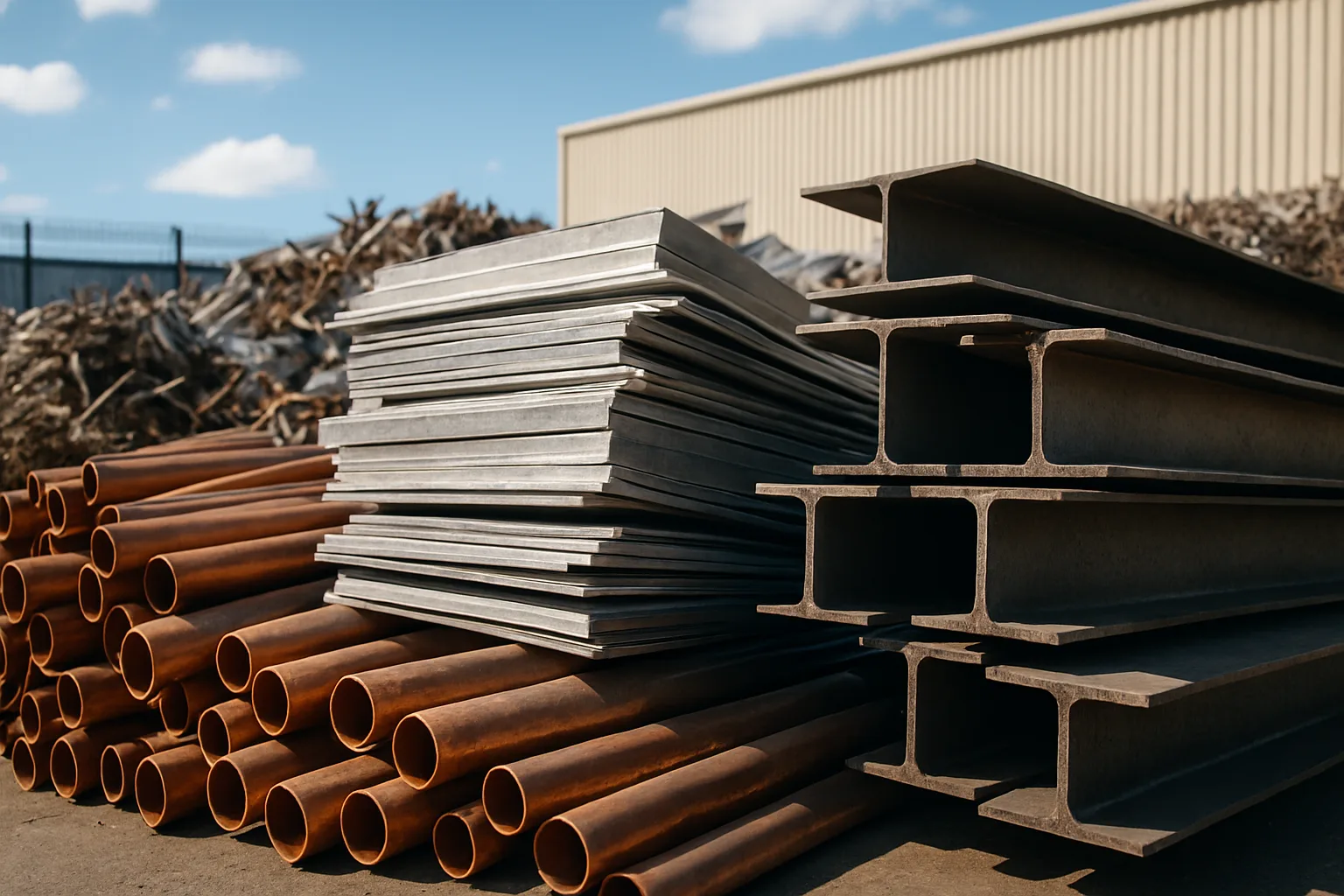
- Heavy melting steel (HMS): Structural steel, I-beams, thick plate. Higher value than light iron.
- Cast iron: Heavy, brittle, rough surface. Engine blocks, stove bodies, radiators. Pays a separate rate.
- Auto shred: Whole or crushed vehicles processed through a shredder. Yards price this differently than clean steel.
Don't mix your grades. A load of heavy steel contaminated with light iron gets priced at the lower rate. Separate them before you show up, and you'll get paid for what you actually brought.
Catalytic Converters: The High-Value Wildcard
If you find a catalytic converter on a vehicle or in a parts pile, treat it separately. Cats contain platinum group metals (PGMs) — platinum, palladium, and rhodium — and their value varies widely based on the make, model, and series number. A magnet won't help you here. What matters is the serial number on the body of the converter and the specific substrate inside.
Don't guess and don't let a yard lump it in with your general scrap. If you want the best price for catalytic converters, you need a buyer who looks up the specific converter, not one who throws a flat offer at you. Platforms like compare scrap metal bids from verified buyers so you can see what your cats are actually worth on the open market — not just what one yard decides to tell you.
In Sacramento and across California, catalytic converter theft laws have also tightened. Make sure any cats you're selling come with proper documentation — title, bill of sale, or proof of ownership — to avoid issues at the yard.
How to Sell Smarter Once You Know What You Have
Identification is step one. Getting paid properly for what you identified is step two. Too many people sort their metal carefully and then hand it over to a single buyer without questioning the price. That's the old way.
The smarter move is to know your grades, know your weights, and bring your load to a buyer who can price it accurately. For Sacramento residents and California-based scrappers, Sacramento scrap metal services through GetMyScrap connect you to buyers who know what they're looking at — and who compete for your material.
If you want to sell your scrap metal on GetMyScrap, the process is straightforward: tell them what you have, get a quote, and schedule a pickup. No hauling across town with a truck full of copper just to be told the price dropped. If you're ready to get a fair price for your scrap today, start with what's in this guide — know your metal, know your grade, and go in with information on your side.
SMASH takes this a step further for larger loads. The platform connects sellers with vetted buyers who bid competitively — which means better price discovery than a single phone call to one yard. No subscription. No guessing. If you want to explore scrap metal selling guides and understand how the process works from sort to sale, the resources are there.
Whether you're hauling a few hundred pounds of copper wire or sorting a full load of mixed non-ferrous, SMASH helps you understand what competition looks like for your material. More buyers. Real bids. Transparent process.
You've done the work of identifying what you have. Make sure the sale reflects it. When you're ready, request a pickup at getmyscrap.com and let the market — not one yard's chalkboard — tell you what your scrap is worth.
Frequently Asked Questions
Q: What is the copper scrap price today in Sacramento?
Copper scrap prices change daily based on commodity markets, so there's no fixed number we can give here. Bare bright copper wire, #1 copper, and #2 copper all pay different rates. Check with local Sacramento yards or platforms like GetMyScrap for real-time pricing — and always verify the grade they're quoting before you accept an offer.
Q: How do I tell the difference between copper and brass?
Copper is reddish-orange. Brass is yellower and more golden. Both are heavy and non-magnetic. If you're unsure, look at the color in natural light — brass leans toward gold, copper leans toward orange-red. Brass is usually found in valves, fittings, and keys, while copper shows up more often in wire and pipe.
Q: Will a regular refrigerator magnet work for the magnet test?
It will work on obvious ferrous metal, but a refrigerator magnet is weak and can miss thin-gauge steel or weakly magnetic stainless. A neodymium (rare earth) magnet gives you a much clearer read and costs only a few dollars at any hardware store. It's worth adding one to your toolbox if you sort scrap regularly.
Q: Where can I find scrap metal recycling near me in Sacramento?
Sacramento has a solid network of scrap yards across the metro area. For pickups and price comparisons without hauling everything yourself, GetMyScrap connects you to buyers serving the Sacramento region. You can also look into SMASH for competitive bidding on larger non-ferrous loads.
Q: Do I need to strip copper wire before selling it?
Stripped wire (bare bright copper) pays a higher rate per pound than insulated wire. Whether stripping is worth your time depends on the insulation thickness and how much wire you have. Thin wire with heavy insulation often isn't worth stripping manually — ask your buyer what they're paying for each grade before you commit hours of labor to it.
Prices fluctuate based on market conditions. Always verify current rates directly with a buyer or yard before making selling decisions.
Stay current on scrap metal market trends and pricing insights — follow SMASH on LinkedIn for regular industry updates that help you sell smarter.