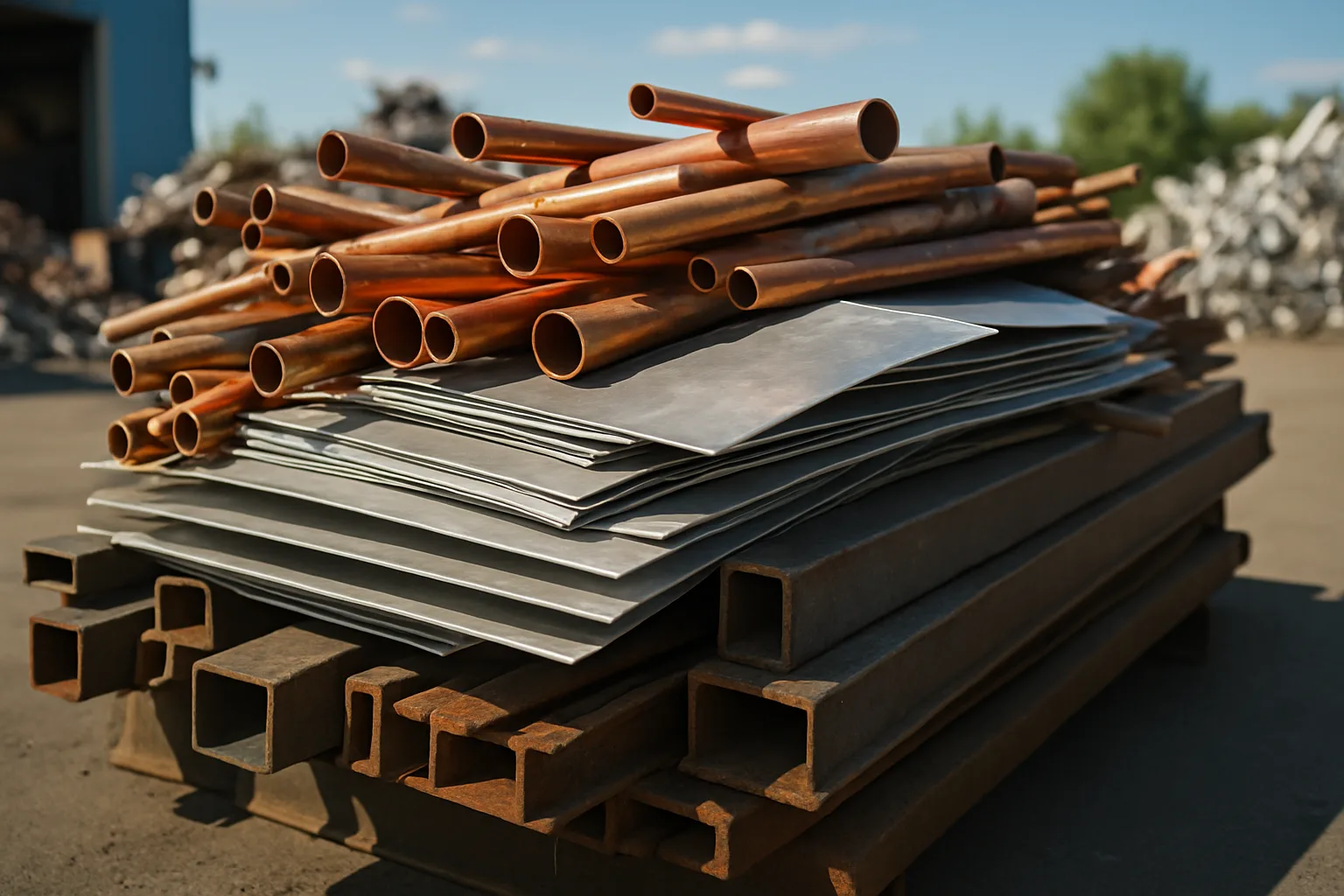
Most people drive past construction dumpsters, dead appliances on the curb, and stripped-out HVAC units without giving them a second thought. But if you know what you're looking at, that's money sitting on the street. Starting a small scrap metal collection side business in New York is one of the most accessible ways to build a real income stream — no storefront, no employees, no inventory you have to buy first. You collect what others throw away, sort it, and sell your scrap metal on GetMyScrap for cash. That's the model.
This isn't a get-rich-quick pitch. It takes hustle, a truck or van, some basic knowledge of metals, and a plan for getting competitive prices. That last part is where most people leave serious money on the table. If you're selling to the first yard that calls back, you're probably not getting the best scrap metal prices. This guide breaks down how to set up your side business the right way — and how to stop guessing at what your loads are worth.
---What Metals Are Actually Worth Collecting in New York?
Not all scrap is worth your time. New York — both the city and the broader New York state area — generates enormous volumes of construction, demolition, and municipal scrap. But your margin lives in what you choose to collect. Focusing on high-value metals from the start keeps your per-trip income solid without hauling half a truck of low-grade steel.
Here's a quick breakdown of what to prioritize:
- Copper — The crown jewel of non-ferrous scrap. Bare bright copper wire, copper pipe, and bus bar all command strong prices. If you can sell copper consistently, your side business becomes real income fast.
- Aluminum — Rims, extrusions, sheet aluminum, and cast aluminum add up quickly by volume. Aluminium scrap value per kg varies by grade, so sorting your material before you sell always pays off.
- Catalytic converters — High-value, high-demand, and frequently available from auto shops, junkyards, and fleet operators. If you want the best price for catalytic converters, you need multiple buyers competing — not one buyer making you an offer you can't verify.
- Brass — Fittings, valves, and plumbing hardware. Common in renovation debris and building teardowns across New York City.
- Stainless steel — Commercial kitchen equipment, restaurant supply, and hospital surplus generate a lot of it.
- Steel and iron — Lower price per pound but easy to source in volume. Structural steel, appliances, and car bodies. Good filler for heavier loads.
When you're starting out, focus on copper and aluminum. They're easy to identify, consistently priced above ferrous material, and in constant demand from buyers across the region.
---How to Source Scrap Metal Consistently (Without Spending a Fortune)
The single biggest challenge for a new scrap collector isn't finding buyers — it's building reliable sources. New York is dense with opportunity, but so is the competition. You need systems, not just luck.
Start with relationships. Plumbers, electricians, HVAC contractors, roofers, and general contractors all generate scrap on every job. Most of them aren't running organized scrap programs — they're just paying to dump it. Call five contractors this week and offer to haul their scrap for free in exchange for the material. That's a lead generation strategy, not a sales pitch.
Other reliable sources to build into your pipeline:
- Auto repair shops — Used catalytic converters pile up fast. Shops want them gone. This is one of the fastest ways to move into higher-value scrap. Look for shops doing volume exhaust work.
- Property managers and building supers — In New York City especially, building turnover generates appliances, copper plumbing, radiators, and HVAC cores regularly.
- Demolition and renovation crews — Follow permit activity in your area. Where there's demo work, there's scrap.
- Craigslist and Facebook Marketplace "free" listings — People post free appliances and metal constantly. Be the first to respond.
- Municipal scrap events and surplus auctions — Cities and counties periodically move surplus equipment and vehicles. Worth monitoring.
Document every source. Keep a simple spreadsheet with contact info, what they generate, how often, and what you paid (if anything). This is how a casual pickup turns into a repeatable business.
---Understanding Scrap Metal Prices Today — And Why You Shouldn't Guess
Scrap metal prices today move constantly. Copper, aluminum, and catalytic converter pricing all react to commodity markets, global demand, and regional supply conditions. What the yard down the street offered you last month may be meaningfully different from what the market supports right now — and the difference matters when you're running a side business with real overhead.
Most new collectors make the same mistake: they call one yard, get a price, and take it. There's no baseline, no comparison, and no way to know if that number is fair. You're essentially trusting a single buyer to self-report market value. That's not a business strategy.
A smarter move is to compare scrap metal bids from verified buyers before you commit to a sale. Platforms built around the auction model — where multiple buyers see your load and compete — are specifically designed to replace the "one call, one price" approach that keeps small collectors undervalued.
SMASH operates on exactly that model. Instead of you guessing at scrap metal prices near me and hoping for the best, a scrap metal auction creates real competition. Vetted buyers bid. You see actual offers. That's price discovery — not a number someone read you over the phone. For a side business where margins matter, this difference is material.
Disclaimer: Scrap metal prices fluctuate daily based on commodity markets, regional demand, and material grade. Always verify current rates before selling any load.
---Setting Up Your Operation — Trucks, Tools, and Paperwork
You don't need much to start. But you do need the right things.
Vehicle: A half-ton pickup truck handles most residential and small commercial loads. If you plan to move larger volumes — appliances, structural steel, industrial scrap — you'll want at least a three-quarter-ton truck or a cargo van with a trailer. Don't buy new. Find a used work truck that can take abuse, because it will.
Tools: Bolt cutters, a reciprocating saw, heavy-duty magnets (to separate ferrous from non-ferrous quickly), gloves, safety glasses, and a decent scale. Knowing the weight of your load before you arrive at a yard or auction platform puts you in a stronger negotiating position.
Documentation: New York state has regulations around scrap metal purchases — yards are required to record seller information, and certain materials (like catalytic converters) have additional documentation requirements. Keep bills of lading (BOLs), weight tickets, and source records for every load. Proper photo documentation of your material also gives buyers more confidence when bidding on your inventory — especially for higher-value loads like cats and non-ferrous metals.
Business structure: Even as a side business, registering as a sole proprietor or LLC protects you and makes it easier to open a business bank account, track expenses, and handle taxes. Talk to an accountant early. Truck expenses, fuel, tools, and yard fees can all be deductible.
If you're operating anywhere near New York City, also familiarize yourself with local ordinances around scrap metal transport and secondary material handling. Regulations have tightened in recent years. Know the rules before a surprise inspection becomes a problem.
---How to Get the Best Scrap Metal Prices as a Small Operator
Small operators in New York often assume the big yards won't give them the time of day. That's sometimes true — but it's less about size and more about how you show up. Buyers want clean, sorted, documented loads. If you deliver chaos, you get a low price. If you deliver organized material with clear specs, you get a better conversation.
Here's what separates collectors who make real money from those who are just hauling:
- Sort before you sell. Mixed loads always get priced at the lowest grade in the mix. Separating copper from aluminum, and bright wire from insulated wire, takes thirty minutes and can meaningfully change your payout.
- Know your grades. Bare bright copper, #1 copper, #2 copper — these aren't just labels. They're price tiers. Same with aluminum: cast, sheet, extrusion, and rims all price differently.
- Use competition as leverage. One buyer's offer is just one data point. The SMASH scrap metal auction model puts your load in front of multiple vetted buyers simultaneously. More buyers mean better price discovery. You don't have to accept the first number you hear.
- Time your sales when possible. Selling into strength — when commodity prices are moving up — beats panic-selling when prices are depressed. Track copper and aluminum futures as a rough guide.
- Build volume before you sell. If you're hauling small loads every few days, your per-trip overhead is eating your margin. Accumulate where you can, and move larger loads less frequently for better economics.
For New York scrap metal services, understanding the local buyer landscape helps too. New York state has a dense network of recycling facilities, but pricing varies across the metro area and upstate regions. Don't assume your nearest yard is your best option.
Ready to stop leaving money on the table? Get a fair price for your scrap today and start building a side business that actually pays. You can also explore scrap metal selling guides to sharpen your knowledge on grades, pricing, and sourcing strategies.
---Frequently Asked Questions
Q: Do I need a license to collect and sell scrap metal in New York?
New York state requires scrap metal processors and dealers to comply with secondary metal theft prevention laws, which include recording seller identification and maintaining transaction records. Requirements vary by volume and business type. If you're operating as a business rather than an individual selling occasional scrap, check with your local municipality and the New York State Department of Environmental Conservation for current licensing and compliance requirements.
Q: How do I find the best scrap metal prices near me in New York?
Don't rely on a single yard's quote. Call at least three local buyers, check commodity price benchmarks for copper and aluminum, and consider using a platform like SMASH that puts your load in front of multiple verified buyers. Competition reveals the real market price — one call doesn't.
Q: Is selling catalytic converters legal, and how do I get the best price?
Yes, selling used catalytic converters is legal, but New York — like many states — has tightened regulations around cat sales to combat theft. You'll need to document the source of your converters (VIN numbers, bills of sale, or supplier records). For the best price for catalytic converters, use a platform where multiple buyers can bid rather than accepting a single dealer's offer.
Q: What's the minimum load size worth selling?
It depends on the metal. For copper and aluminum, even 50–100 pounds is worth a trip if you're already moving. For steel and iron, you want volume — at least a few hundred pounds to make the haul economical. Accumulate mixed loads and sort before selling to maximize every trip.
Q: Can I run a scrap metal side business part-time while working full-time?
Absolutely — many successful small operators start this way. Weekend pickups, evening contractor calls, and early-morning Craigslist runs are all compatible with a full-time schedule. The key is building reliable source relationships so you're not starting from scratch every week. Once your pipeline is consistent, the volume follows.
---Building a scrap metal side business in New York takes work, but the infrastructure is there if you know how to use it. Sort your loads, document your material, build source relationships, and stop accepting the first price you're offered. When you're ready to move your next load, request a pickup at getmyscrap.com and get a fair price for your scrap metal — without the guesswork.
Follow SMASH on LinkedIn for scrap metal market updates, pricing insights, and industry news worth tracking.